What is the point of Street photography, what am I missing and should it matter to me?
Right then, I'll get right to it, I just don't get street photography, dunno why it just leaves me cold, shots of homeless people sleeping rough (Yeah I get that) a guy riding a bike, a girl passing a road end, ad infinitum! Why does it interest so many people but leave me absolutely cold? this could be a rant or a waffle but i'm not sure where this is going to go or even if I should let this out into the public domain but here goes!
The Point of Street Photography: Seeing Beyond the Pavement
Understanding the Allure and Purpose of Capturing Life on the Streets
Street photography: for some, the very phrase conjures images of bustling avenues, candid expressions, or the play of light and shadow across the faces of strangers. For others, it raises honest questions—“I don’t get it. What’s the point? Am I missing something, or am I simply not that interested in other people?” Such curiosity, skepticism, or even indifference is more common than one might think when encountering a genre so rooted in the chaos and ordinariness of everyday life.
What Is Street Photography, Really?
At its core, street photography is the art of observation. Unlike portraiture, which asks for a subject’s cooperation, or landscape, which seeks the grandeur of nature, street photography dwells in the spontaneous, the unscripted, and the fleeting. It is a dance between the photographer and the world as it is—a record of humanity’s theatre playing out in public spaces.
But the definition is slippery. Is it merely candid photos of people in the streets? Not quite. Street photography is less about the street itself and more about the human condition as revealed in everyday settings: markets, metro stations, back alleys, or the hush of a rain-soaked square. It is as much about gesture, atmosphere, and serendipity as it is about people.
Searching for Meaning: Why Photograph Strangers?
The question, “What’s the point?” is both profound and practical. What do these images, often devoid of context and narrative, offer to those who make and view them?
Preserving the Ordinary
Street photography elevates the everyday. Its practitioners seek moments that would otherwise vanish—an elderly couple sharing a quiet laugh, a child peering through a bus window, the chiaroscuro of sunlight falling on a passerby’s face. These fragments, captured and frozen, become relics of a time and place, testaments to the beauty woven into the fabric of ordinary life.
Social Commentary
Some photographers use the medium to comment on society—the disparities, the joys, the struggles that define city living. From the playful anarchy of children at play to the solitary figures lost in their own worlds, street photography can be a mirror reflecting the spirit and mood of an era. Think of Vivian Maier’s quietly poetic Chicago, Henri Cartier-Bresson’s split-second Parisian dramas, or Garry Winogrand’s chaotic New York streets. Their work distills life, hinting at stories without telling them outright.
Visual Storytelling
Every photograph is an invitation: to imagine, to empathise, to wonder. Street photography asks the viewer to fill in the gaps, to invent narratives for strangers, to recognise the universal in the particular. It is an exploration—sometimes playful, sometimes poignant—of shared human experience.
Am I Missing Something?
If street photography leaves you cold, it may be reassuring to know that not every genre resonates with every person. You may wonder if you are missing a secret code or deeper truth. In reality, street photography’s magic is subtle. Its rewards are found not just in spectacle but in the act of seeing—of noticing the small dramas unfolding on sidewalks, the choreography of crowds, the poetry of happenstance.
Some people are naturally drawn to observing—and imagining—other lives; others are not. Interest in street photography often correlates with curiosity about human behaviour, the quirks and idiosyncrasies of strangers, or a fascination with the collective experience of city living. If your own curiosity leans elsewhere—towards nature, abstraction, or the comfort of familiar faces—that’s simply a reflection of personal taste.
Is It About Other People?
Street photography is, often, about others—yet not always in the obvious sense. Sometimes the “subject” is emotion itself, or the interplay of shapes, or the tension between movement and stillness. Sometimes it is about the architecture of the street, the play of colour, the weather’s mood. The best street photographers rarely objectify their subjects; instead, they honour the unknown, seeking dignity and interest in the everyday.
And yet, the genre does ask for a kind of openness. It requires a willingness to look outward, to find intrigue in strangers, to be attentive to the world’s infinite variety. If this doesn’t appeal, it might simply mean your creative compass points elsewhere.
The Challenge—and the Joy—of Street Photography
There is a challenge in street photography that makes it exhilarating for those who pursue it. The photographer must be alert, patient, and discreet. They must anticipate moments before they happen, blend into the crowd, and capture emotion without intrusion. There are no studio lights, no second takes. The unpredictability of the street is both obstacle and muse.
For many, this rawness is part of the appeal. Anyone with a camera can try, but not everyone can see. Street photography rewards those who train their eyes to notice the unnoticed, who find poetry in the prosaic. The best practitioners are less interested in technical perfection and more passionate about feeling, atmosphere, and authenticity.
What If You’re Not Interested?
Let’s return to the honest question: “Am I just not that interested in other people?” The answer, perhaps, is yes—and that is entirely valid. Photography is a vast universe, and street photography is but one star. If your heart beats faster for landscapes, for abstract patterns, for the interplay of light and form, then that is your path. If you are unmoved by snapshots of strangers, you are not missing out; you are simply attuned to a different wavelength.
Creativity flourishes in diversity. Some find meaning in the bustle of the city, others in the serenity of nature, others still in the carefully composed still life. Street photography is not superior or essential—it is simply one way of seeing, one approach to storytelling, one adventure among many.
Could You Give It a Chance?
If, however, you are curious, you might try viewing street photography with fresh eyes. Look beyond faces and crowds. Notice gesture, mood, the interplay of elements. Consider the historical value: these images, decades hence, become visual archives, revealing the fashion, architecture, and spirit of a bygone era. Perhaps, in time, you’ll begin to spot moments that surprise you—an unexpected alignment, a fleeting interaction, a hidden humour.
If you ever pick up a camera and wander the streets, you could just let curiosity be your guide. Photograph not just people, but atmosphere, texture, rhythm. Let yourself be surprised by what you see. Or, if not, savour the genres that speak to you; appreciation is not a contest.
Conclusion: The Point Is Perspective
Street photography is, in essence, about perspective. It asks us to be witnesses to the world’s unfolding stories, to find interest in the everyday, to record the ephemeral. Its point is not universal—it is personal, subjective, and sometimes elusive. For some, it becomes a lifelong pursuit; for others, it is a mystery best admired from afar.
If you remain unconvinced, know that your experience is just as valid as that of the street photographer lost in a crowd. Art is not obligation; it is invitation. The streets, with all their chaos and beauty, are there for those who wish to see—and for those who would rather look elsewhere.
In the end, perhaps the greatest gift of street photography is not in its images, but in the act of noticing—of walking through a city and realising that every moment, however mundane, contains a story waiting to be seen. Whether or not you choose to look is entirely up to you.
Enough waffle!
Is the picture of a homeless guy on a bench reading a paper and smoking a cigarette something I should care about?
Or did I just get into Landscapes because I like piccies with no people in em???
Jules.
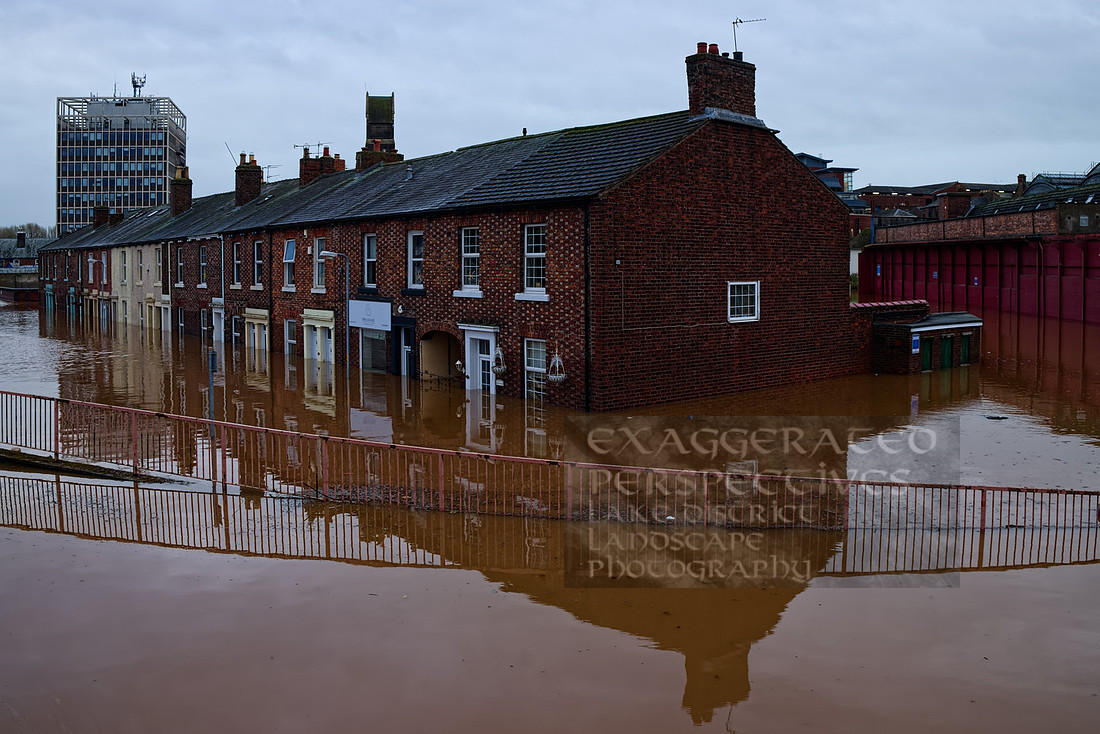
A street from 2015, see nothing happening here!