How sensors vanish, processors hide, prices rise, and every shipment remains “just around the corner”
The Official Story
They want you to believe the delays are caused by “global demand”, “component shortages” and “unexpected logistical headwinds”. Convenient phrases, certainly. But ask yourself this: have you ever actually seen a logistical headwind? Has anyone photographed one? Of course not. The autofocus could not lock on.
The Sensor Vaults
Deep beneath an undisclosed industrial estate lies the alleged Sensor Reserve: climate-controlled chambers stacked floor to ceiling with pristine full-frame chips. Each is guarded by a retired product manager trained to answer every question with, “We cannot comment on future releases.” The sensors are not missing. They are merely waiting for the precise moment when your current camera begins to feel emotionally inadequate.
The Processor Preservation Programme
Meanwhile, the newest imaging processors are said to be living under assumed names inside ordinary kitchen appliances. That “smart” toaster may, in fact, be capable of 40 frames per second with blackout-free viewing. Manufacturers insist the chips are allocated according to need, which explains why a flagship camera is delayed eighteen months while a toothbrush gains subject-detection autofocus.
The Pipeline That Never Ends
Every camera begins its journey through the sacred pipeline: announcement, teaser, development announcement, specification correction, regional delay, firmware promise, limited allocation, influencer unboxing, and finally—just as stock appears—the rumour of a Mark II. The pipeline is not designed to deliver products. It is designed to convert patience into pre-orders.
The Price Escalation Algorithm
Prices are supposedly calculated from materials, research and exchange rates. Nonsense. The true formula is whispered to be: previous model price, plus one premium lens filter, multiplied by the number of times reviewers say “game-changing”. If buyers hesitate, the launch edition receives a commemorative strap and the word heritage. The price then becomes beyond question.
The Department of Reassuring Excuses
- “Demand exceeded expectations” — despite six months of pre-launch hype.
- “A key component is unavailable” — almost certainly the on/off switch.
- “Shipping conditions remain challenging” — the boxes have developed standards.
- “We are prioritising quality” — production has paused while someone redesigns the menu.
- “Availability will improve next quarter” — a phrase legally protected from contact with any calendar.
The Leaked Investigative Timeline
|
Date |
What Our Investigators “Discovered” |
|
January |
A revolutionary camera is teased in silhouette. Analysts confirm it has corners and may contain a sensor. |
|
February |
The development announcement confirms development is continuing. No product is shown, but a senior executive holds a lens cap with great significance. |
|
March |
A mysterious component shortage emerges. Warehouse photographs reveal 40,000 batteries arranged to spell “Q4”. |
|
April |
Pre-orders open for eleven minutes. Every unit is reportedly purchased by three reviewers and one man who operates a suspiciously well-stocked online marketplace account. |
|
June |
The first shipment leaves the factory, circles the globe twice and is last seen waiting for a firmware update at customs. |
|
August |
A price adjustment is announced “to reflect market conditions”. The market conditions are later identified as enthusiasm. |
|
October |
Customers receive an email saying availability has improved. A footnote clarifies that “availability” refers to the brochure. |
|
December |
The camera finally reaches shops. Within hours, a rumour site publishes the specifications of its replacement. |
How to Resist
The only defence is radical: keep using the camera you already own. This alarms the industry because it proves photographs can be made without a launch event, a waiting list or a processor named after a mythological creature. Should temptation return, repeat the forbidden sentence: “My current gear is fine.” Then step away from the rumour site before the next development announcement develops.
Satire: This piece is fictional and intended as a playful parody of product delays, marketing language and gear-acquisition anxiety. It makes no factual allegations about any company.
]]>
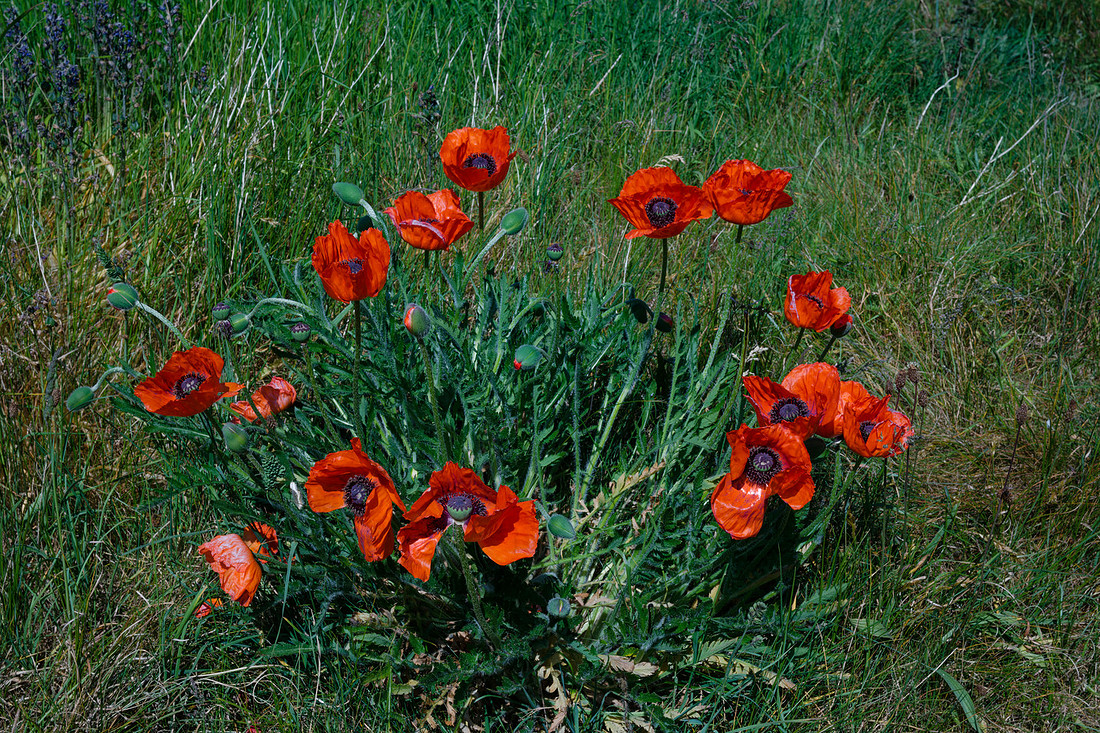
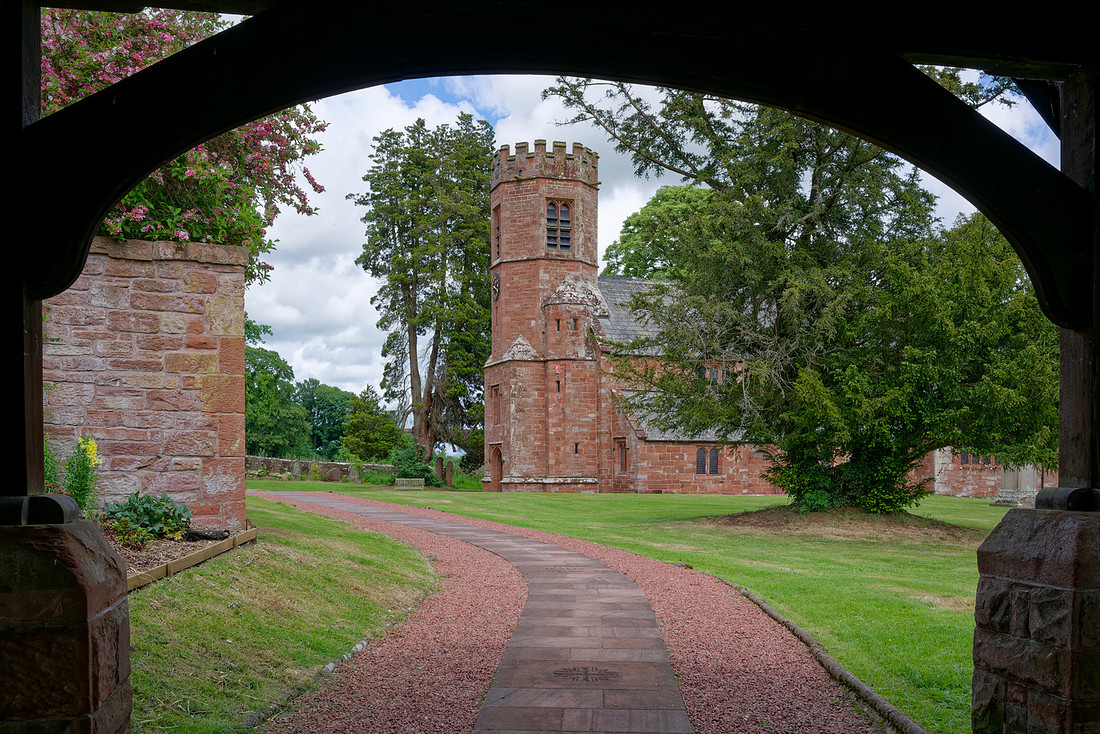
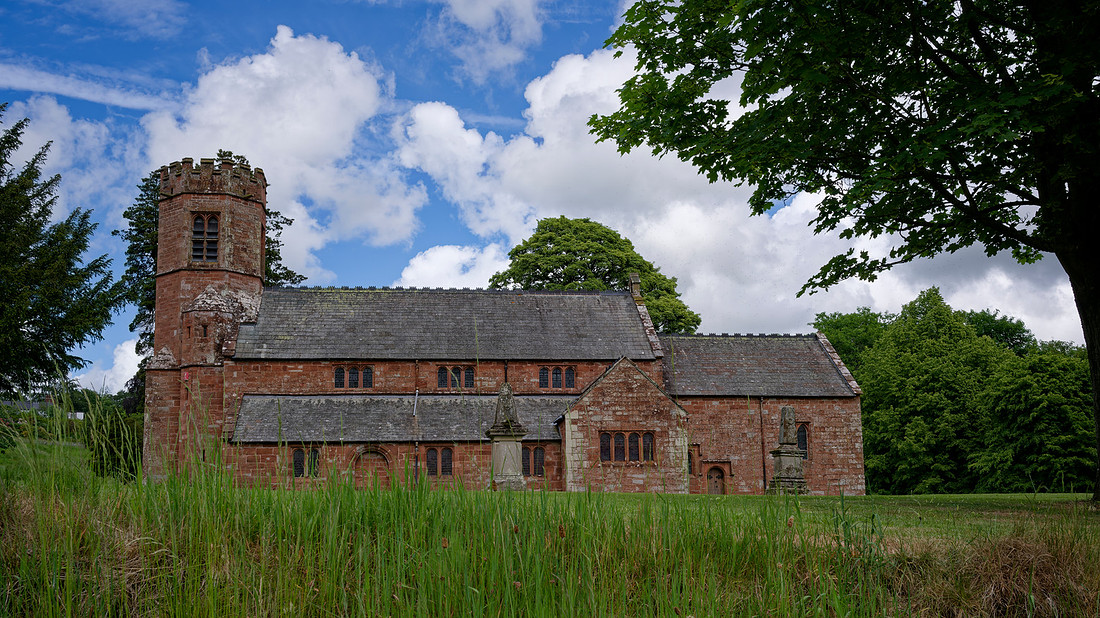
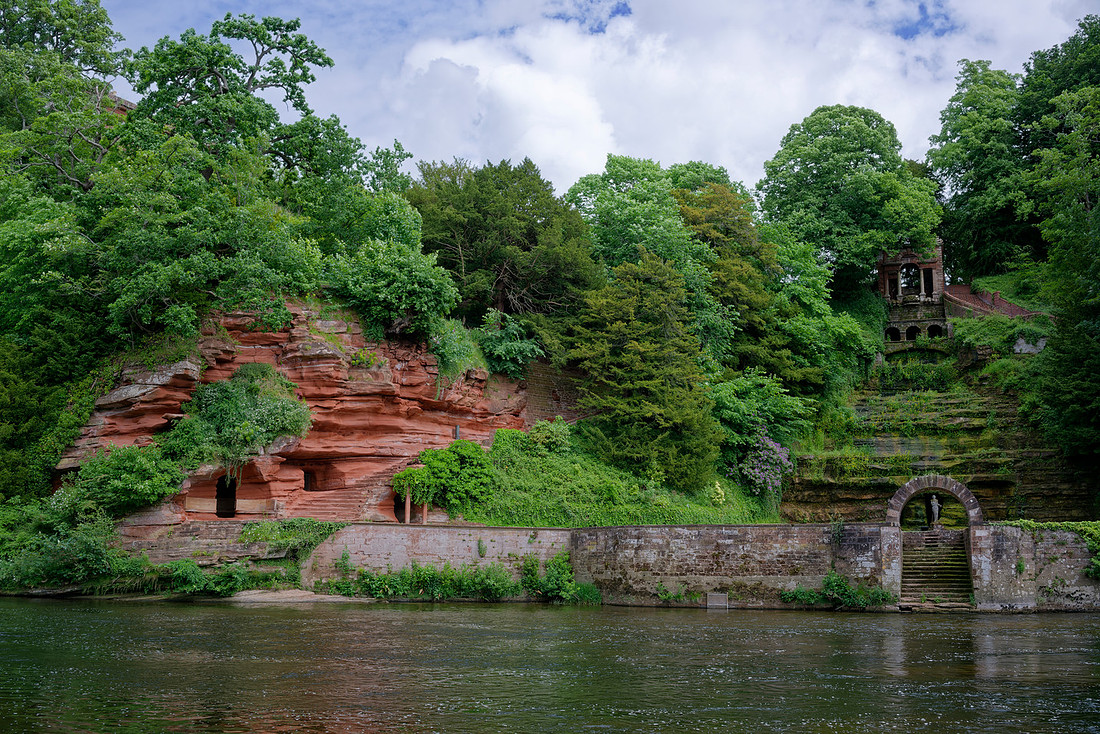
Scenic photography is often treated as a search for the spectacular: the wide view, the dramatic sky, the mountain ridge or sweeping coastline. But the more often a photographer returns to a place, the less the obvious view may satisfy. Familiarity changes the task. The landscape no longer needs to be discovered; instead, it has to be re-seen.
For example, imagine returning repeatedly to the same lake. On the first visit, the natural photograph might be the broad reflection of hills in still water. On later visits, that image may feel too easy, even too expected. The challenge shifts toward smaller discoveries: reeds bent by wind, frost on a wooden jetty, a single ripple breaking the reflected sky, or the way evening light catches mud at the shoreline. The grand vista gives way to details that feel more personal.
There is also a melancholy in returning. The place may be unchanged, but the photographer is not. A path, a beach, a valley or a viewpoint can accumulate memory. A photograph made there is never only of the landscape; it is also of the act of coming back. The same tree photographed in spring rain, summer haze, autumn colour and winter fog becomes a record of time passing, not just seasonal variation. Repetition can make the work quieter, more reflective, and perhaps more honest.
A good example is the familiar local viewpoint. Tourists may photograph it once, at sunset, aiming for the postcard version. Someone who returns every week may begin to notice what the postcard excludes: the dull days, the empty car park, the worn fence, the changing cloud base, the way sheep tracks cut across a field, or how mist erases the background entirely. These images may be less immediately dramatic, but they can say more about attachment and attention.
The theme also raises the question of originality. Finding a “different” photograph does not always mean using an unusual lens or extreme composition. It may mean standing in the same place but responding to a different condition: hard midday light instead of golden hour, rain instead of clarity, absence instead of spectacle. A grand vista might become nearly abstract if photographed through low cloud; a famous view might become intimate if only one stone wall, one branch or one patch of light is allowed into the frame.
· A mountain pass: first photographed as a dramatic panorama, later as lichen on rocks, boot prints in snow, or cloud shadows moving over scree.
· A woodland path: first seen as a tunnel of trees, later as fallen leaves, bark texture, fungi, puddles, or shafts of light.
· A coastline: first captured as cliffs and sea, later as tide marks, seaweed, erosion, shells, rusting railings, or the same headland disappearing into mist.
· An urban viewpoint: first photographed as skyline or architecture, later as reflections in windows, weather stains, weeds in paving, or human traces left behind.
· A field near home: first dismissed as ordinary, later transformed by frost, fog, harvest, lambing, or low winter sun.
Returning to the same place again and again transforms scenic photography from an act of collection into an act of attention: the photographer stops asking, “What is the view?” and begins asking, “What have I not yet noticed?”
]]>
Using more than one camera system or sensor format is “in” partly because it gives photographers and filmmakers more flexibility and creative options than relying on one setup for everything.
Here’s the practical reason:
- Different tools suit different jobs. A full-frame camera might be great for low light, shallow depth of field, and high image quality, while Micro Four Thirds or APS-C may be lighter, cheaper, and better for travel, wildlife reach, or video.
- Hybrid shooting is common now. Many people shoot stills, video, reels, behind-the-scenes clips, and social content, so one camera may not cover every need comfortably.
- Lens and size trade-offs matter. Smaller sensor systems can make telephoto setups much more portable; larger sensors often give more control over background blur and dynamic range.
- Content creators want redundancy. Two systems can mean backup bodies, different focal lengths ready to go, or a stills/video split during jobs.
- Brands have specialised strengths. One system may have better autofocus, another better colour, stabilisation, compact lenses, or video features.
- The internet makes gear mixing look normal. YouTube, reviews, and influencer culture make multi-system ownership visible and fashionable, even when it is not always necessary.
The downside is that it can become expensive and complicated: batteries, menus, lens mounts, colour matching, accessories, and file workflows all become harder.
So the short answer is: it’s “in” because modern creators value flexibility, portability, redundancy, and specialisation — but it only makes sense if the extra system solves a real problem rather than just following gear trends.
sensor size differences
Sensor size mainly affects field of view, depth of field, low-light performance, dynamic range, lens size, and overall system size.
Common sensor formats
From larger to smaller:
- Medium format — larger than full-frame; very high detail and dynamic range, usually expensive and slower.
- Full-frame — about the size of 35mm film; popular for professional stills and video.
- APS-C — smaller than full-frame; common in enthusiast and semi-pro cameras.
- Micro Four Thirds — smaller again; compact bodies and lenses, strong for travel, wildlife, and video.
- 1-inch and smaller sensors — used in premium compacts, drones, action cameras, and phones.
The big differences
1. Field of view and crop factor
A smaller sensor captures a smaller portion of the image projected by the lens. This makes the view look more “zoomed in.”
For example:
- A 50mm lens on full-frame behaves like 50mm.
- A 50mm lens on APS-C looks roughly like a 75mm lens on full-frame.
- A 50mm lens on Micro Four Thirds looks like about 100mm full-frame equivalent.
This is called crop factor.
2. Depth of field
Larger sensors make it easier to get a blurred background.
Smaller sensors give more depth of field, meaning more of the scene stays in focus.
That is why:
- Full-frame is often favoured for portraits, weddings, cinematic looks, and low-light work.
- Micro Four Thirds or smaller sensors can be useful for wildlife, macro, documentary, and video where keeping focus is easier.
3. Low-light performance
Larger sensors usually collect more total light, so they often produce:
- Cleaner images at high ISO
- Less noise
- Better shadow detail
But modern smaller sensors are very good now, especially with good lenses, stabilisation, and software processing.
4. Dynamic range
Dynamic range is the ability to hold detail in bright highlights and dark shadows.
Larger sensors often have an advantage, especially in difficult lighting, but camera generation and sensor technology matter a lot too.
5. Lens size and portability
Smaller sensors allow smaller lenses, especially telephoto lenses.
That is a big reason people like APS-C or Micro Four Thirds for:
- Travel
- Wildlife
- Street photography
- Hiking
- Video rigs
- Long-lens shooting
A 600mm-equivalent setup on Micro Four Thirds can be much smaller and lighter than a similar full-frame setup.
6. Cost
Larger sensor systems usually cost more, especially lenses.
Smaller sensor systems can be cheaper and easier to carry, though high-end APS-C or Micro Four Thirds gear can still be expensive.
Simple way to think about it
Larger sensor = more image quality potential, more background blur, better low light, bigger and more expensive gear.
Smaller sensor = more compact, more reach, easier focus, often cheaper, but less extreme background blur and usually less low-light advantage.
So the best sensor size is not automatically the biggest one — it depends on what you shoot and how you like to work.
pros and cons of full-frame vs APS-C
Full-frame vs APS-C: pros and cons
Full-frame pros
- Better low-light performance
Full-frame sensors are larger, so they usually handle high ISO better and produce cleaner files in poor light. - Shallower depth of field
Easier to get strong background blur, which is useful for portraits, weddings, events, and cinematic video. - Wider field of view with lenses
A 24mm lens behaves like a true 24mm lens, which is useful for landscapes, interiors, architecture, and wide video work. - Usually better dynamic range
Full-frame cameras often hold more highlight and shadow detail, especially in difficult lighting. - Professional lens selection
Many premium lenses are designed with full-frame users in mind.
Full-frame cons
- More expensive
Bodies and especially lenses usually cost more. - Larger and heavier
A full-frame setup can become bulky, particularly with fast zooms or telephoto lenses. - Telephoto reach is less convenient
Wildlife and sports shooters may need longer, heavier, more expensive lenses to fill the frame. - Shallow focus can be harder to manage
At wide apertures, keeping subjects sharp can be more demanding.
APS-C pros
- Smaller and lighter system
APS-C cameras and lenses are often easier to carry for travel, hiking, street photography, and everyday use. - Lower cost
APS-C bodies and lenses are often more affordable, though high-end gear can still be expensive. - Extra apparent reach
The crop factor makes telephoto lenses appear longer. A 300mm lens on APS-C often frames like roughly 450mm on full-frame, depending on the brand. - More depth of field
Useful for wildlife, macro, documentary, video, and situations where keeping more of the subject in focus matters. - Good balance of quality and portability
Modern APS-C cameras can produce excellent images without the size and cost of full-frame.
APS-C cons
- Less low-light advantage
APS-C sensors are smaller, so they usually show more noise at high ISO compared with similar-generation full-frame cameras. - Harder to get very shallow background blur
You can still blur backgrounds, but you may need faster lenses, longer focal lengths, or more subject-background separation. - Wide-angle can be trickier
Because of crop factor, a 24mm lens behaves more like a 35–38mm equivalent, so true wide-angle work may need dedicated APS-C wide lenses. - Some systems have fewer premium APS-C lenses
This depends heavily on the camera brand.
Simple summary
Choose full-frame if you prioritise: low light, background blur, dynamic range, wide-angle work, and maximum image quality.
Choose APS-C if you prioritise: portability, cost, telephoto reach, travel convenience, and a lighter everyday kit.
For many people, APS-C is the more practical choice, while full-frame is the better choice when image quality, low light, or shallow depth of field are the main priorities.
]]>
For a long time, Sigma lenses were a big part of my camera kit. They offered incredible image quality, solid build quality, and excellent value for money. In many ways, they helped me create some of my favorite photographs.
But over time, I found myself reaching a point where technical performance wasn't the only thing that mattered anymore. Photography had become more about the overall experience, and that's what ultimately led me to make the switch to an all-Fuji setup.
It's About the System, Not Just the Lens
Sigma lenses are fantastic, but I realized I was constantly mixing and matching gear from different manufacturers. While that worked fine on paper, it never felt completely cohesive in practice.
With Fuji, everything feels like it belongs together. The cameras, lenses, controls, and even the design philosophy all seem to work toward the same goal: making photography enjoyable.
Fuji's lens lineup strikes a balance that works better for me. I can carry a couple of lenses all day without thinking about it, which means I end up shooting more.
I Prefer the Fuji Rendering
This is entirely subjective, but I just love the way Fuji files look.
There's something about the color science and the character of many Fuji lenses that resonates with my style. Sigma lenses are incredibly sharp, sometimes almost clinically sharp, but I found myself spending more time in post-processing trying to achieve the look I wanted.
With Fuji, I often feel like I'm much closer to the final image straight out of camera.
The Fuji Experience Keeps Me Inspired
Photography is supposed to be fun.
The tactile controls, aperture rings, film simulations, and overall shooting experience make me want to pick up my camera and head out the door. That's something I can't measure on a spec sheet, but it's probably the most important factor of all.
When gear inspires you to create, it's doing its job.
Does This Mean Sigma Isn't Good?
Absolutely not.
Sigma still makes some of the best lenses available today, and for many photographers they remain an outstanding choice. This isn't really a story about Sigma doing anything wrong.
It's simply a story about finding the system that fits me best.
Why does the Sigma Zoom ring have to turn the opposite way to Fuji?
Biggerst bugbear!
Because Sigma and Fuji use different design conventions for the zoom mechanism.
In practice, it comes down to manufacturer heritage and mechanical standardisation:
- Fuji zooms generally follow Fuji’s own direction, where the zoom ring turns one way to go from wide to telephoto.
- Sigma lenses often follow Sigma’s established convention, especially because Sigma designs lenses across multiple mounts — Sony, Canon, Nikon, L-mount, Fuji X, etc.
- Rather than redesigning the internal zoom mechanism and ring direction for every mount, Sigma often keeps the same operational feel across versions.
- The result is that on Fuji bodies, a Sigma zoom can feel “backwards” compared with native Fujifilm lenses.
Zoom ring direction affects usability because it changes how quickly and instinctively you can react while shooting.
When all your lenses zoom the same way, your hand builds muscle memory. You don’t have to think: if you want to zoom in, your fingers automatically turn the ring in the direction they’ve learned. But when one lens turns the opposite way, that automatic habit breaks. You may start turning the ring the “wrong” way, lose a moment, then correct yourself.
That matters most in situations where timing is important, such as:
- Street photography, where a subject may only be in position for a second.
- Events or weddings, where expressions and gestures disappear quickly.
- Travel photography, where you’re often reacting rather than carefully setting up.
- Video, where turning the zoom the wrong way mid-shot can ruin a movement.
It also affects the overall feel of the system. A lens can be optically excellent, but if it behaves differently from the rest of your kit, it can feel less integrated. That inconsistency creates a small mental interruption every time you switch lenses.
So the issue isn’t really image quality. It’s flow. Native Fuji lenses tend to feel predictable together, while a Sigma zoom that turns the opposite way can make the kit feel slightly less natural in everyday use.
Final Thoughts
- Switching to an all-Fuji setup wasn't about chasing better image quality or following a trend. It was about simplifying my gear, reducing weight, embracing a shooting experience I genuinely enjoy, and building a kit that encourages me to get out and make photographs.
- Sigma gave me incredible results, and I have no regrets about using their lenses. But at this stage of my photography journey, Fuji just feels like home.
It’s one of those small ergonomic things that doesn’t show up in image-quality tests, but in real use it can be surprisingly irritating — especially if you switch lenses quickly or rely on muscle memory. For a piece about moving from Sigma to Fuji, this is actually a strong point: the issue isn’t that Sigma is bad; it’s that the system doesn’t feel fully unified.
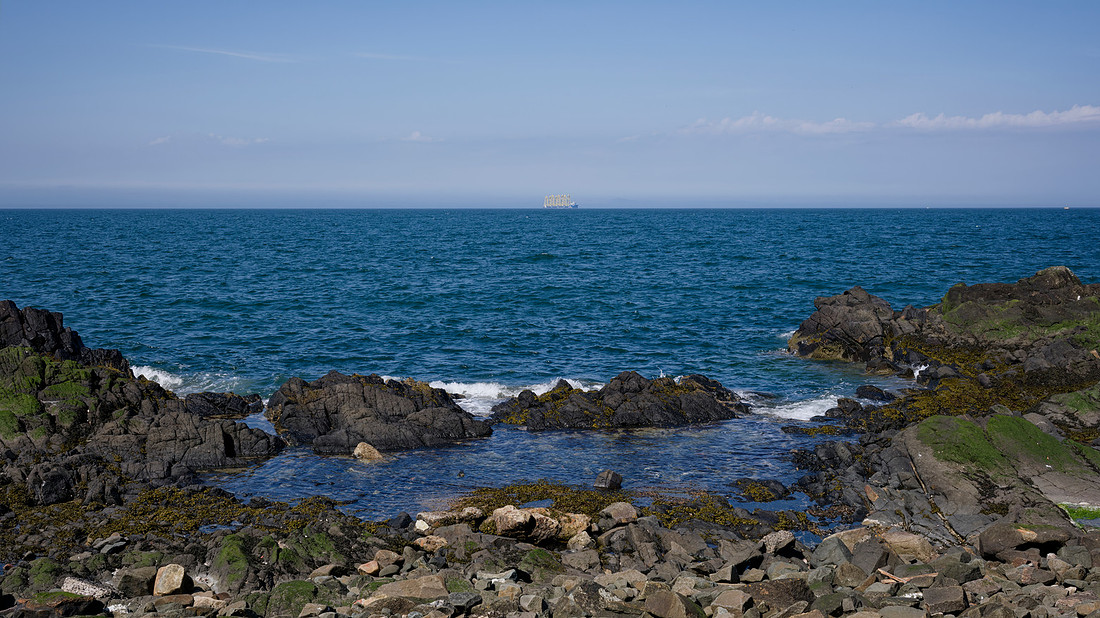
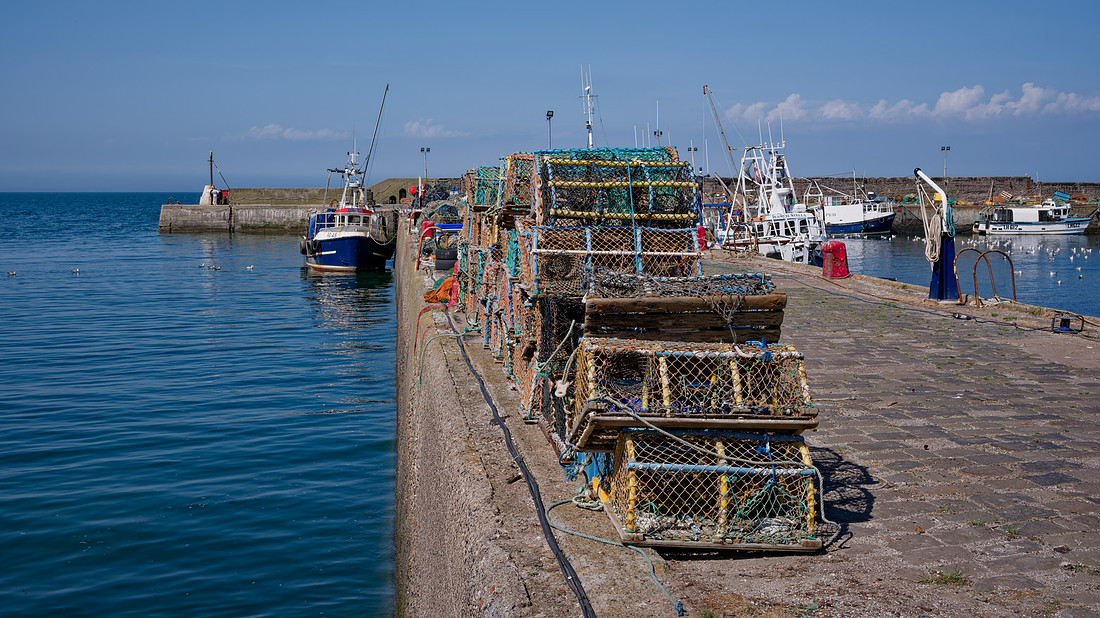
]]>
The Fujifilm X-T5, X-H2, and X-H2S sit close together in Fujifilm’s APS-C mirrorless range, but they are designed for different priorities. The X-T5 is the most photography-focused and compact of the three, the X-H2 is the high-resolution hybrid workhorse, and the X-H2S is the speed-oriented flagship for action and demanding video work. All three use the Fujifilm X mount, offer in-body image stabilisation, weather-sealed magnesium-alloy construction, and Fujifilm’s latest colour science, but their sensors, body design, video features, and performance emphasis differ significantly.
Headline Differences
|
Camera |
Best For |
Main Strength |
Main Trade-off |
|
Fujifilm X-T5 |
Photography, travel, landscape, street, everyday carry |
40.2MP detail in a smaller, dial-led body |
Less video-centric body and lower-end EVF than the X-H models |
|
Fujifilm X-H2 |
Hybrid stills/video, studio, commercial, landscape, creators |
40.2MP resolution plus stronger pro handling and 8K video |
Larger, heavier, and more expensive than the X-T5 |
|
Fujifilm X-H2S |
Sports, wildlife, events, fast action, high-end video |
Stacked 26.1MP sensor with very fast readout and up to 40fps electronic shooting |
Lower resolution and higher price compared with the X-T5 |
Image Quality and Resolution
The X-T5 and X-H2 share Fujifilm’s 40.2MP X-Trans CMOS 5 HR sensor, making them the strongest choices when maximum detail, cropping flexibility, and large prints matter. This gives both cameras a clear advantage for landscape, architecture, product photography, studio work, and any situation where fine detail is the priority. Both also support Pixel Shift Multi-Shot for extremely high-resolution output when the subject and camera are static.
The X-H2S uses a lower-resolution 26.1MP stacked sensor. On paper, this gives up detail compared with the 40.2MP models, but its stacked design is built for speed rather than maximum resolution. In practice, the X-H2S is the better choice when subject movement, burst shooting, rolling-shutter control, and video readout performance matter more than large-file detail.
Speed, Burst Shooting, and Action Performance
The X-H2S is the clear winner for action. Its stacked sensor enables much faster electronic shooting, with headline continuous shooting of up to 40fps. That makes it the most suitable body for wildlife, sport, motorsport, birds in flight, and fast-moving event work. The faster sensor readout also helps reduce rolling-shutter distortion when using the electronic shutter.
The X-T5 and X-H2 are still fast cameras, with mechanical burst shooting suitable for general action, documentary work, weddings, and family photography. However, they are not built around speed in the same way as the X-H2S. If action is only an occasional requirement, either 40MP body is more than capable; if action is central to your shooting, the X-H2S is the safer choice.
Autofocus and Subject Tracking
All three cameras use Fujifilm’s modern autofocus system with subject-detection capabilities, making them strong performers for people, animals, vehicles, and general subject tracking. The X-T5 and X-H2 benefit from the same generation of processing and are excellent for portraits, travel, weddings, and everyday photography.
The X-H2S has the advantage when tracking fast or erratic subjects because the stacked sensor provides faster readout and better responsiveness during high-speed shooting. For demanding sports and wildlife work, this is more important than megapixel count. For slower or more predictable subjects, the X-T5 and X-H2 autofocus performance will be more than sufficient.
Video Capabilities
The X-T5 is capable of serious video, including high-resolution 6.2K recording, but it is primarily a stills-first camera. Its tilting screen, smaller body, and traditional dial layout are excellent for photography but less ideal for solo video production, vlogging, rigging, or frequent angle changes.
The X-H2 is the better hybrid body for creators who want both 40.2MP stills and advanced video features. Its 8K capability, fully articulating screen, larger grip, and pro-style control layout make it better suited to tripod work, interviews, commercial shoots, and hybrid production. It is the strongest choice if you want high-resolution stills and high-resolution video in one body.
The X-H2S is the strongest video camera of the three for motion-heavy work. Although it does not offer the same 40.2MP stills resolution as the X-T5 or X-H2, its stacked sensor gives it better readout performance, making it better suited to fast motion, handheld filming, sports video, and professional workflows where rolling shutter and responsiveness are key concerns.
Body Design, Handling, and Controls
The X-T5 has the most traditional Fujifilm shooting experience. Its dedicated ISO, shutter speed, and exposure compensation dials make it especially appealing to photographers who like visible, tactile controls. It is also the smallest and lightest of the three, which makes it more comfortable for travel, street photography, hiking, and everyday use.
The X-H2 and X-H2S use Fujifilm’s more modern professional body style, with a deeper grip, top status display, PASM-style controls, and a fully articulating rear screen. This design is better for large lenses, video rigs, long shooting sessions, and users coming from DSLR or cinema-style workflows. The trade-off is size and weight: the X-H bodies are less discreet and less compact than the X-T5.
Viewfinder, Screen, Storage, and Workflow
The X-H2 and X-H2S have higher-resolution electronic viewfinders than the X-T5, which is useful for critical composition, manual focus, and long professional shoots. They also use a fully articulating screen, which is more flexible for video and self-recording. The X-T5’s three-way tilting screen is better aligned with stills photography, particularly waist-level shooting and portrait-orientation compositions.
Storage is another practical difference. The X-T5 uses dual SD card slots, which are convenient and affordable. The X-H2 and X-H2S include CFexpress support alongside SD, giving them faster write speeds and a more robust workflow for high-bitrate video, long bursts, and professional production. If you already own SD cards and mainly shoot stills, the X-T5 is simpler and cheaper to run. If you shoot heavy video or fast bursts, the X-H bodies are better equipped.
Which One Should You Buy?
- Choose the Fujifilm X-T5 if your priority is photography, portability, classic controls, and maximum image detail at the best value. It is the most enjoyable choice for travel, landscapes, street photography, portraits, and everyday shooting.
- Choose the Fujifilm X-H2 if you want the 40.2MP sensor but prefer a larger professional body, stronger video features, 8K recording, a better EVF, and CFexpress support. It is the best all-round hybrid option.
- Choose the Fujifilm X-H2S if you shoot fast action, wildlife, sport, events, or serious video. Its lower resolution is outweighed by speed, stacked-sensor performance, and superior responsiveness for moving subjects.
Bottom Line
For most photographers, the X-T5 is the most compelling choice because it delivers the same 40.2MP image quality as the X-H2 in a smaller, more affordable, more traditional body. The X-H2 is the better pick for hybrid creators who need high-resolution stills and advanced video in one camera. The X-H2S is the specialist: expensive and lower in resolution, but unmatched here for speed, action, and demanding video work.

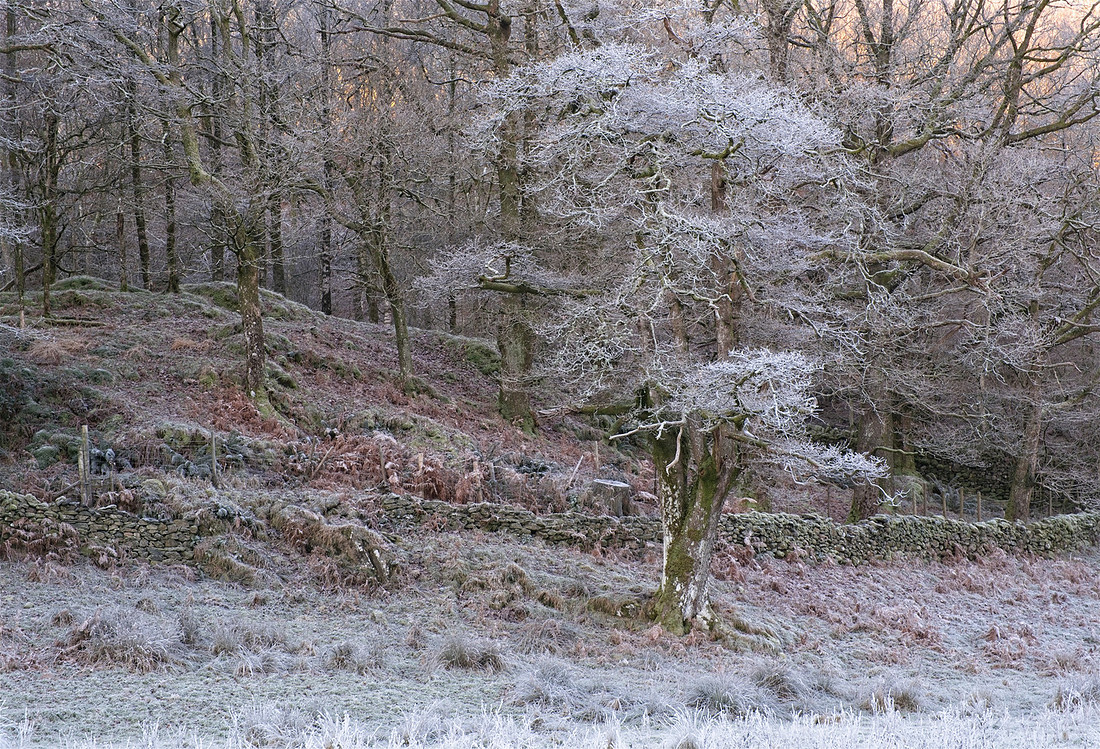
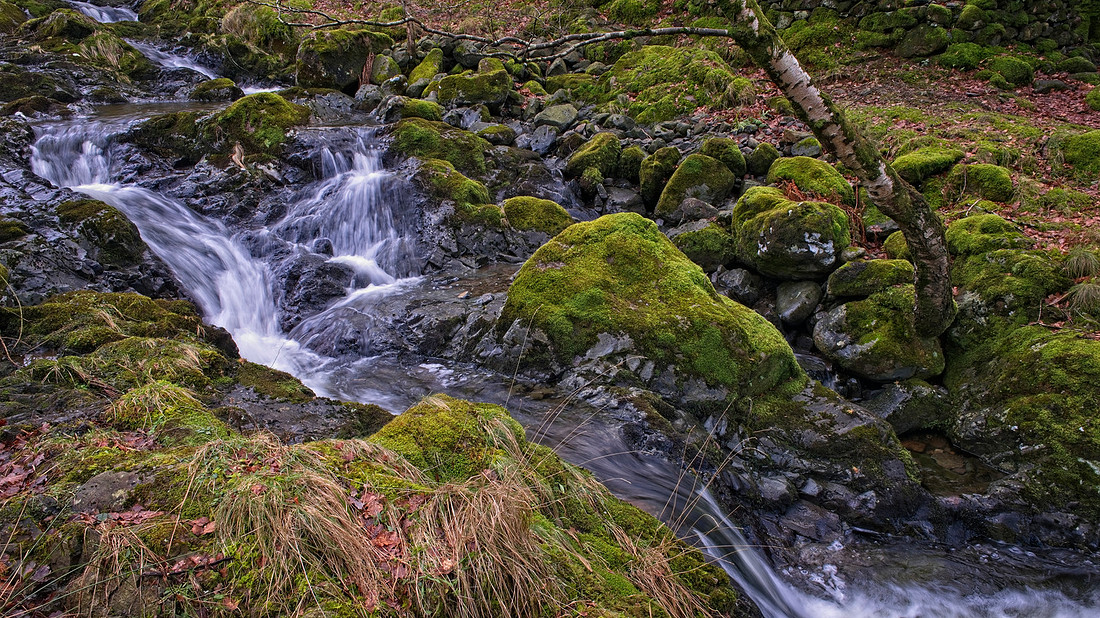
]]>
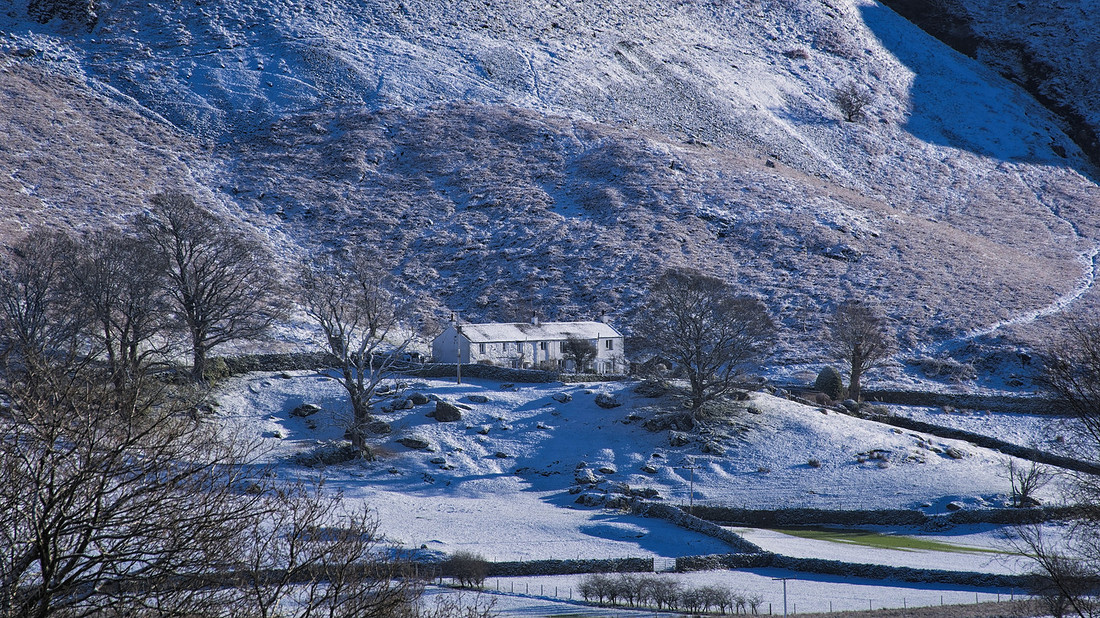
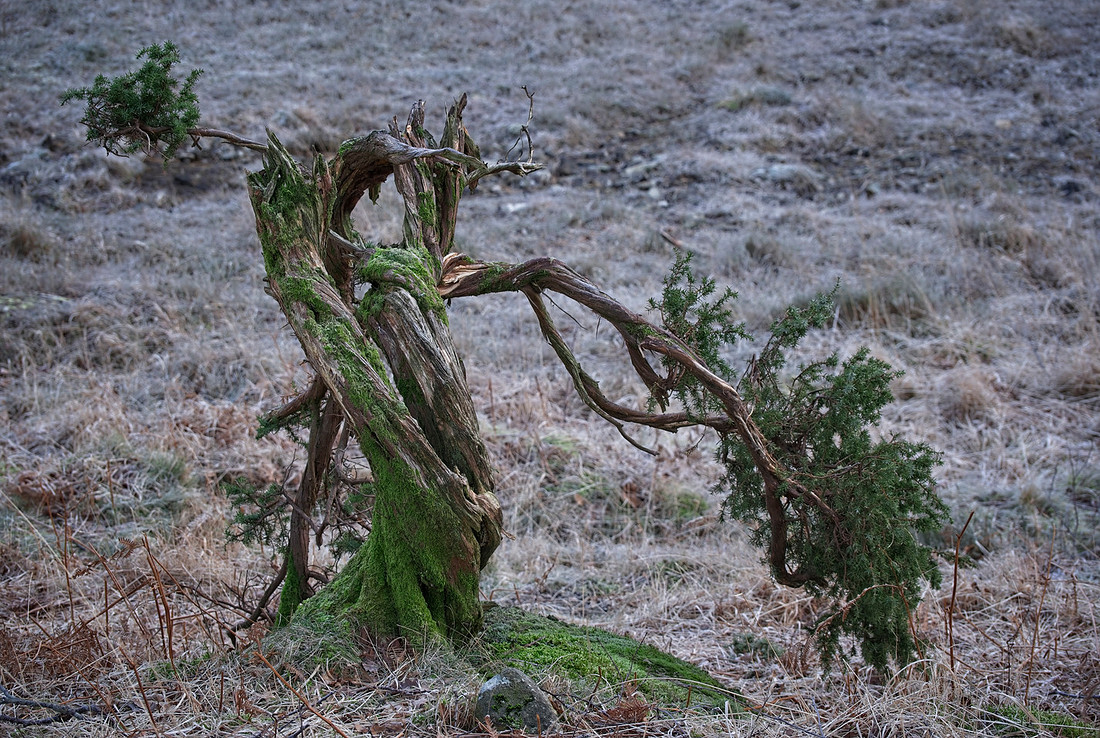
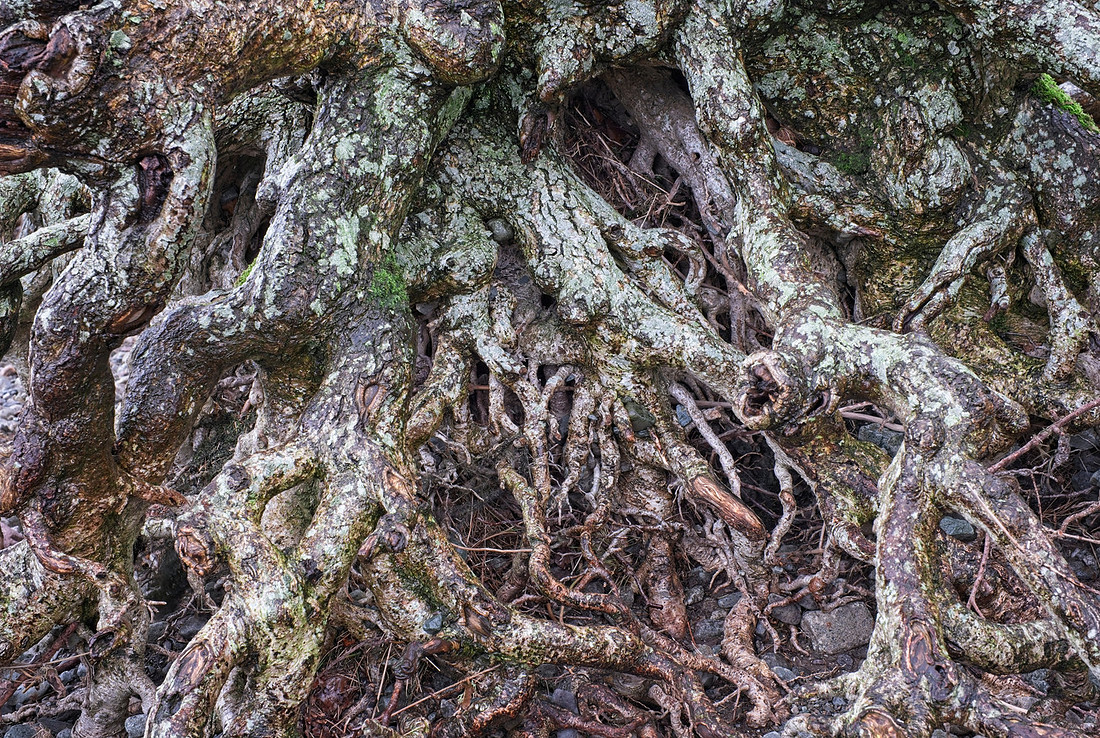
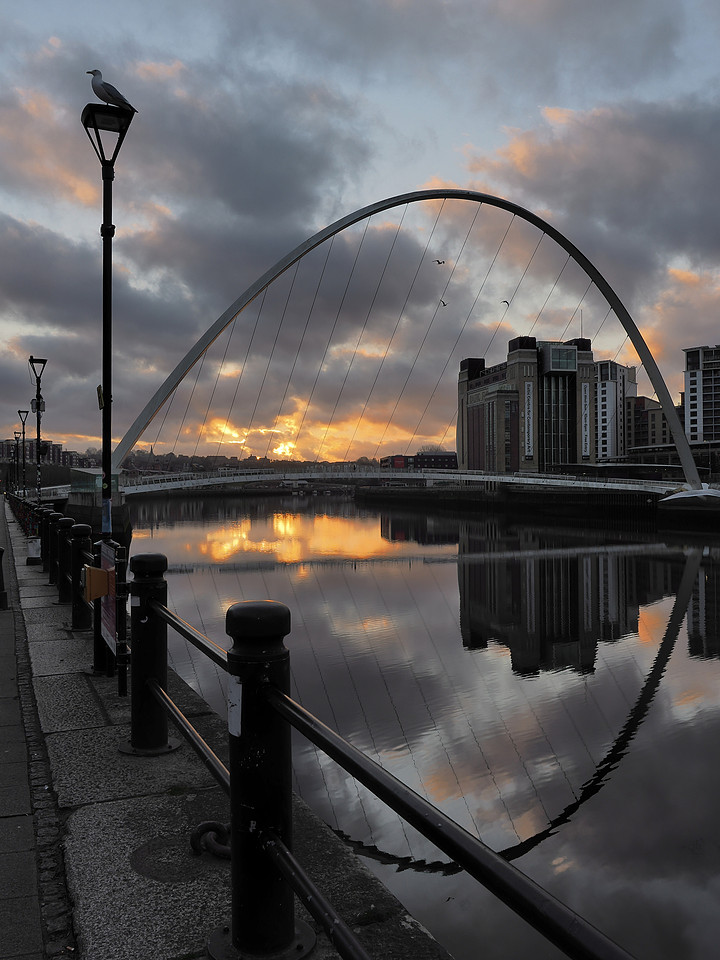
Examples of Photography Techniques: Practical techniques can help turn observation into stronger images. The rule of thirds involves imagining the frame divided into nine equal parts by two horizontal and two vertical lines. Placing the main subject along these lines, or where they intersect, often creates a more balanced and dynamic composition than placing everything in the centre. In a landscape, for example, the horizon might sit on the upper third to emphasise the land, or on the lower third to give more importance to the sky. Leading lines use visible paths, roads, fences, railings, shadows, or architectural edges to guide the viewer’s eye through the photograph. These lines can create depth and movement, especially when they lead towards the main subject or disappear into the distance. Framing means using natural or built elements, such as doorways, windows, arches, branches, or gaps between buildings, to surround the subject and draw attention to it. This can make an image feel more intentional and layered. Depth of field controls how much of the image appears sharp. A wide aperture can blur the background and isolate a subject, which is useful for portraits or close-up details, while a smaller aperture keeps more of the scene in focus, making it effective for landscapes and documentary images. Silhouettes are created by placing a subject against a brighter background, such as a sunset or strong window light, so that the subject becomes a dark shape. This removes small details and makes gesture, outline, and mood more important. Reflections in water, glass, mirrors, or polished surfaces can introduce symmetry, repetition, or visual surprise, encouraging the viewer to look twice. Shadows can add drama, pattern, and contrast; a simple wall or street can become visually interesting when strong light creates bold shapes across it. Finally, motion blur uses a slower shutter speed to show movement rather than freeze it. Flowing water, passing traffic, or people walking through a city can appear energetic and atmospheric when some movement is allowed to blur. Each of these techniques helps the photographer make deliberate choices, transforming ordinary scenes into images with structure, mood, and meaning.
]]>
When I think about the perfect camera system for travel and landscapes, I don’t just think about image quality. I think about how far I can walk with it, how quickly I can get it out of the bag, and whether I’ll still want to carry it after a full day on hills, coast paths, city streets, or woodland trails.
That is where OM System cameras make a lot of sense to me. Formerly part of the Olympus camera world, OM System has kept the things many outdoor photographers loved: compact bodies, small but serious lenses, strong weather sealing, excellent stabilisation, and a set of clever in-camera tools that feel genuinely useful rather than gimmicky.
Travelling Lighter Changes Everything
There is a point on almost every trip when camera gear stops being exciting and starts becoming luggage. A big full-frame setup can be wonderful when you are standing beside the car, but it feels very different halfway up a hill, in airport security, or after eight hours of walking around a new city.
The Micro Four Thirds system helps solve that problem. Because of the 2x crop factor, OM System lenses can give you useful wide, standard, and telephoto coverage without needing a huge bag. For landscape and travel photography, that extra freedom matters. You can carry a proper kit, react to different scenes, and still enjoy the journey.
The Lenses I’d Build a Travel Kit Around
If I were putting together an OM System kit for travel and landscapes, I would start with lenses that reduce the number of times I need to stop, swap glass, and risk dust, rain, or sea spray getting into the camera.
- M.Zuiko 12-100mm f/4 PRO: This would be my do-it-all travel lens. With an effective 24-200mm range, it covers wide city scenes, mountain views, details, portraits, and compressed landscapes without needing a lens change.
- M.Zuiko 12-40mm f/2.8 PRO II: This feels like the dependable everyday landscape option: sharp, bright, compact, and well matched to bodies such as the OM-1 or OM-5.
- M.Zuiko 8-25mm f/4 PRO: For big views, dramatic foregrounds, interiors, and sweeping coastal scenes, this lens gives an ultra-wide perspective while still staying practical for filters.
- M.Zuiko 40-150mm f/4 PRO: This is the lens I would want for distant hills, isolated peaks, layered landscapes, or wildlife glimpses while travelling. It delivers serious reach without becoming a burden.
Computational Features That Actually Help
One of the things I like most about OM System is that many of its clever features are designed for real outdoor situations. These are not just menu fillers. They can genuinely change what you need to carry and how you work in the field.
- Handheld High Res Shot is useful when you find a quiet landscape scene and want extra detail without setting up a tripod.
- Live ND is ideal for softening waterfalls, streams, waves, or moving clouds when you have not packed physical neutral density filters.
- Live Composite makes night photography, light trails, star trails, and light painting much more approachable.
- In-camera focus stacking is perfect for landscapes with close foreground interest, such as rocks, flowers, roots, or textures, where you still want a sharp background.
- Starry Sky AF takes some of the frustration out of focusing on stars in the dark.
Why Stabilisation Matters More Than People Think
Good image stabilisation sounds like a spec-sheet feature until you are actually out shooting. Then it becomes the difference between getting the shot and watching the light disappear while you set up a tripod. OM System’s in-body image stabilisation is one of the biggest reasons I would trust the system for travel.
Being able to handhold slower shutter speeds is incredibly useful at dawn, dusk, in forests, inside churches or museums, and on windy viewpoints where tripods are awkward. It also encourages a more fluid way of working: see the light, frame the shot, take the image, and keep moving.
Weather Sealing Gives You Confidence
Landscape photographers rarely get perfect conditions. Mist, drizzle, sand, salt spray, snow, and muddy paths are all part of the experience. A camera that feels fragile can make you hesitate, and hesitation is often when the best light disappears.
That is why the weather sealing on cameras such as the OM-1 and OM-5 is so appealing. It does not mean you should be careless, but it does mean you can keep shooting with more confidence when the weather turns interesting.
My Take: A System Built for the Journey
For me, the biggest appeal of OM System is not one single feature. It is the way everything works together. The bodies are compact, the lenses are sensibly sized, the stabilisation is excellent, and the computational tools are genuinely useful for the sort of scenes travel and landscape photographers often encounter.
If I were heading out for a long walk, a coastal weekend, a mountain trip, or a city break where I wanted to stay light but still come home with serious images, OM System would be very high on my list. It is a camera system that seems designed not just for image quality, but for actually getting out there and making photographs.
Not had too much time with OM or Olympus but the system is definitely valid in 2026, I am looking forward to the next OM body, that I believe will put all of the "Anti" Micro four thirds arguments to bed once and for all!
lovely cameras and a lovely system as is...
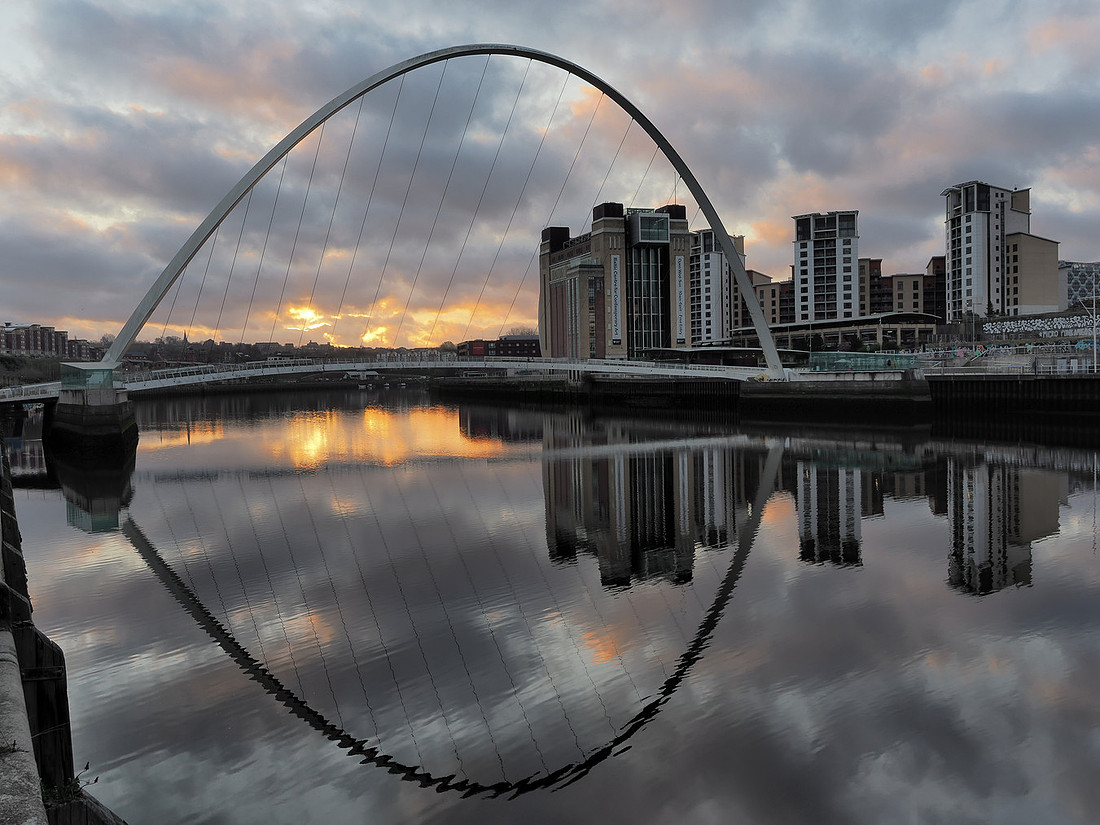
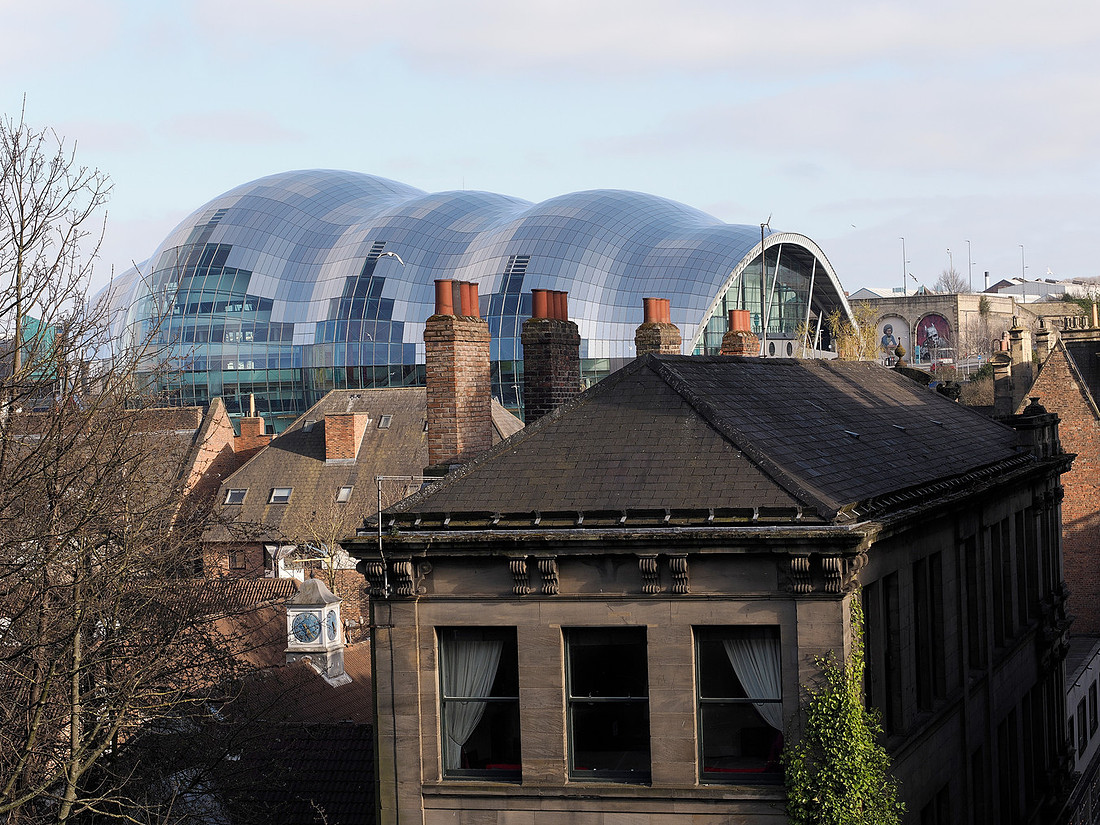
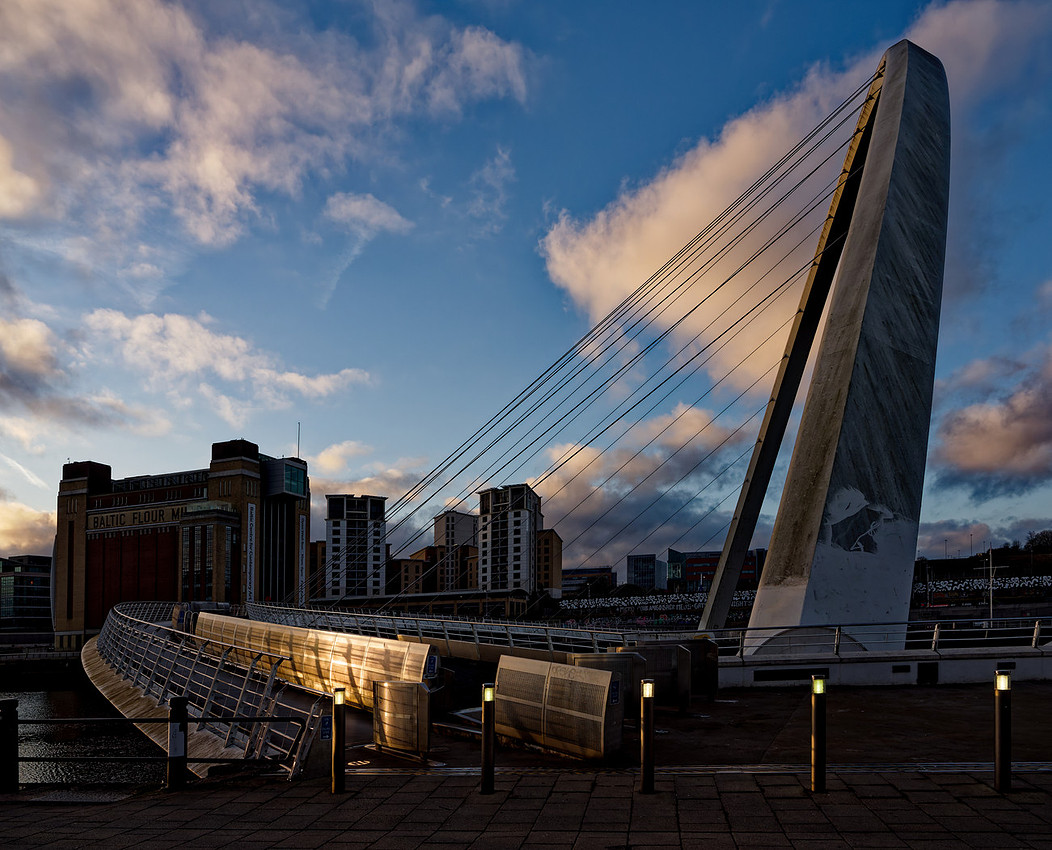
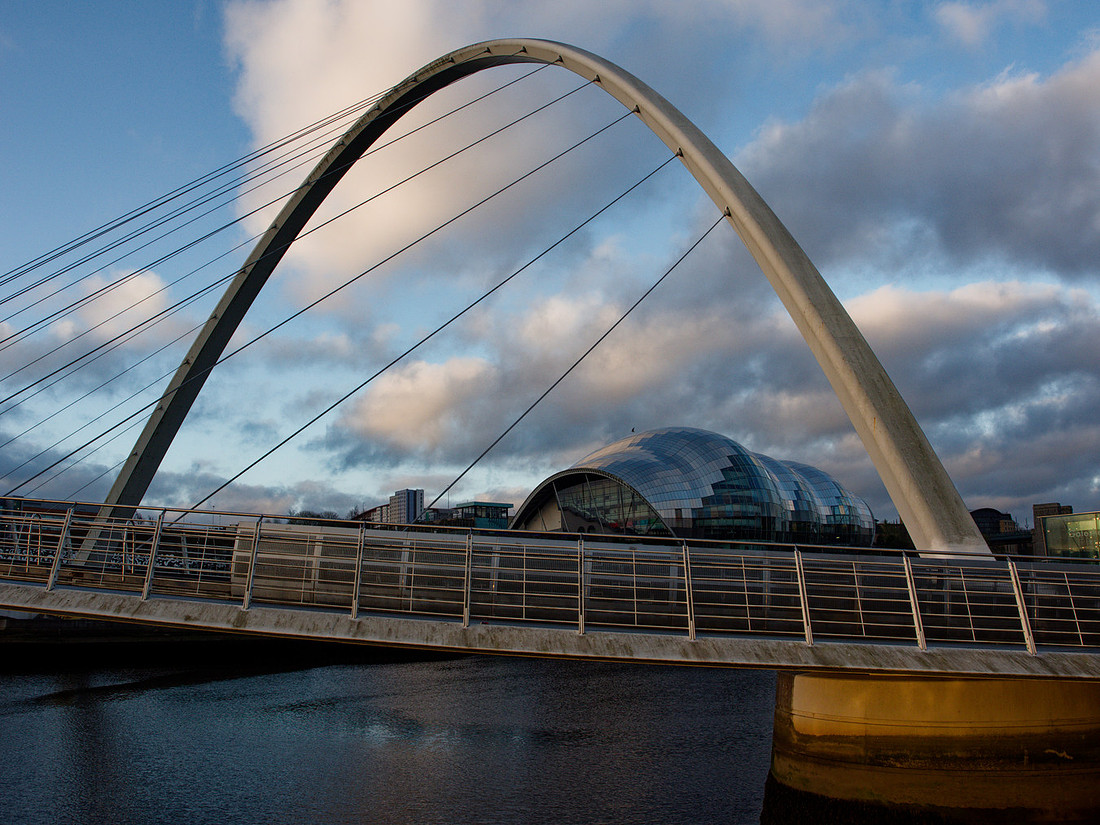
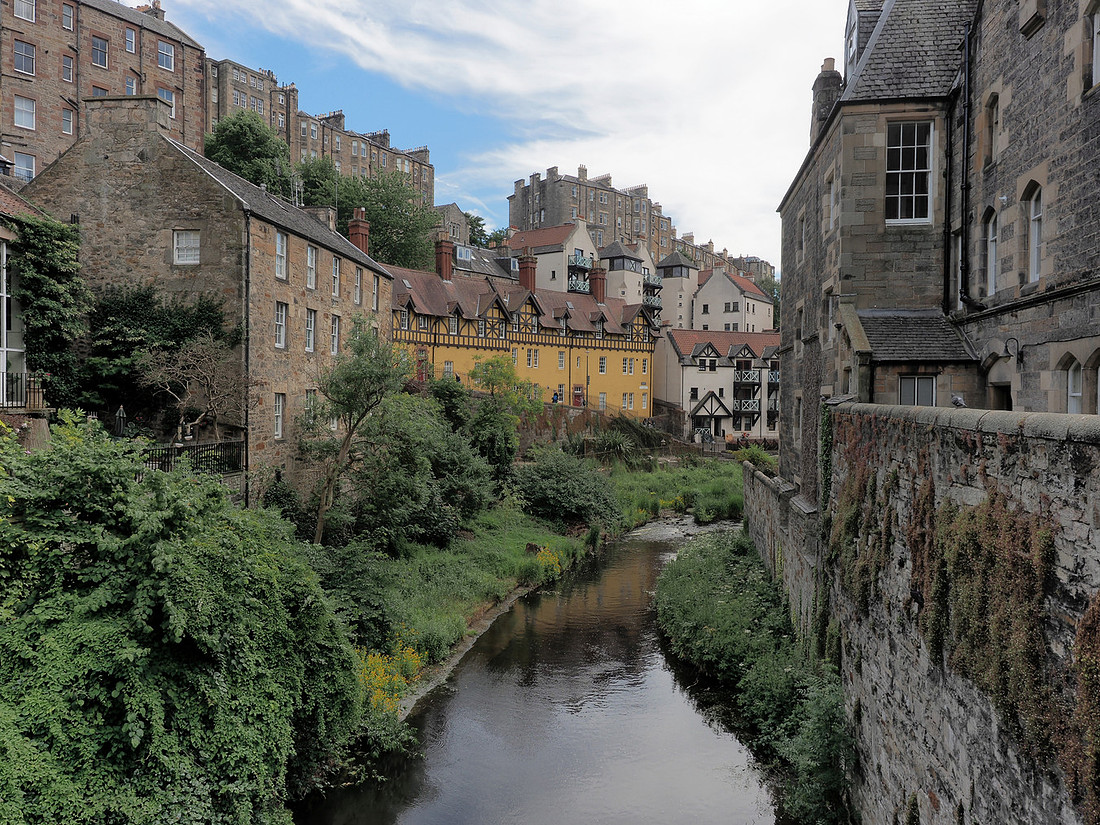
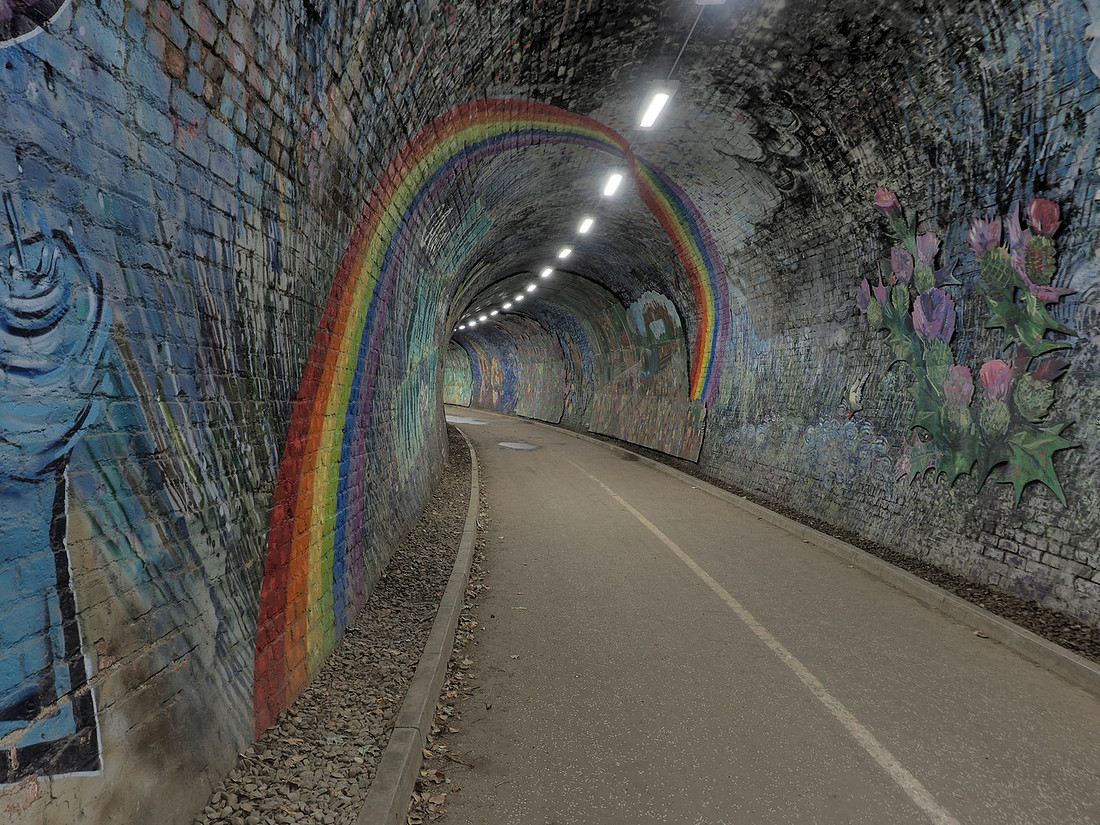
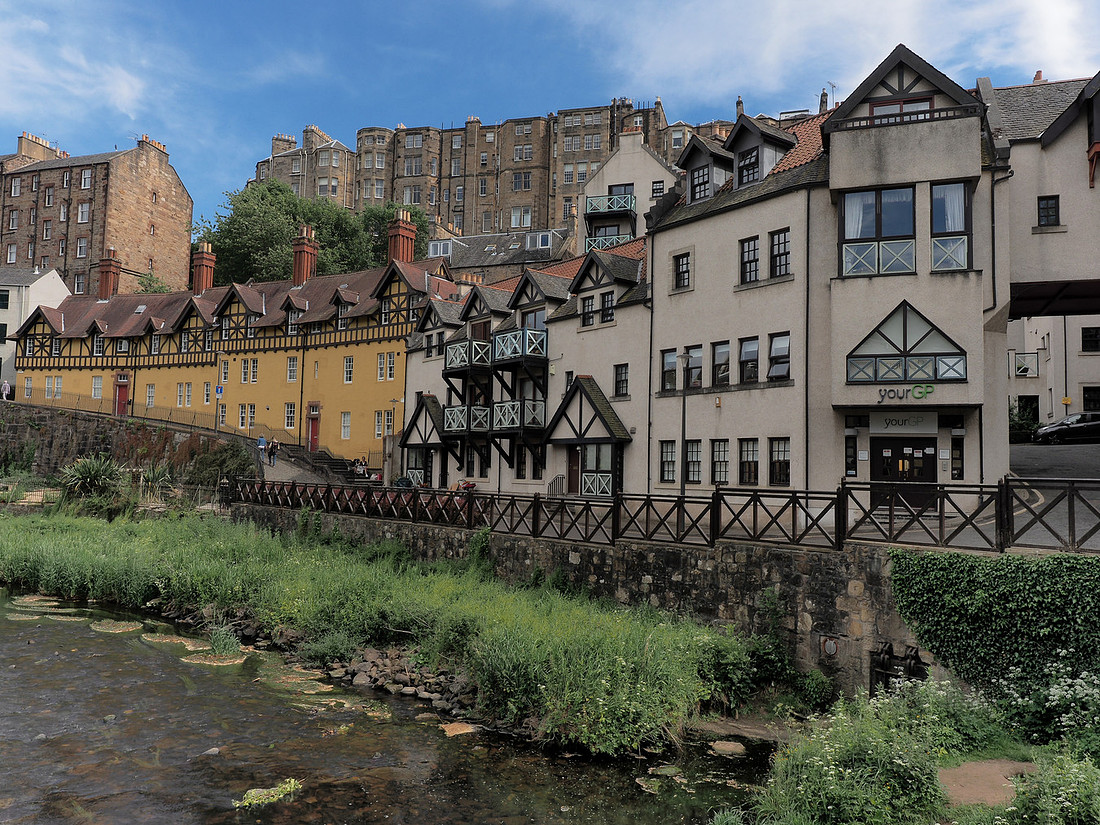
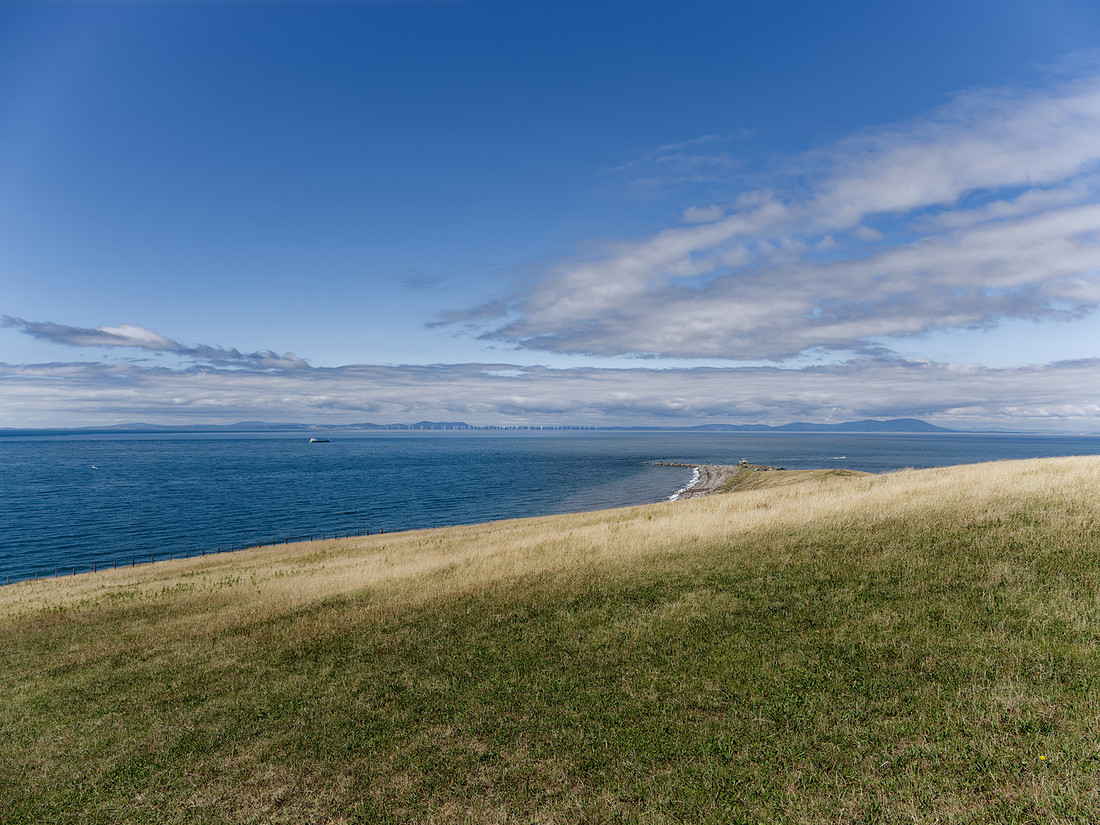
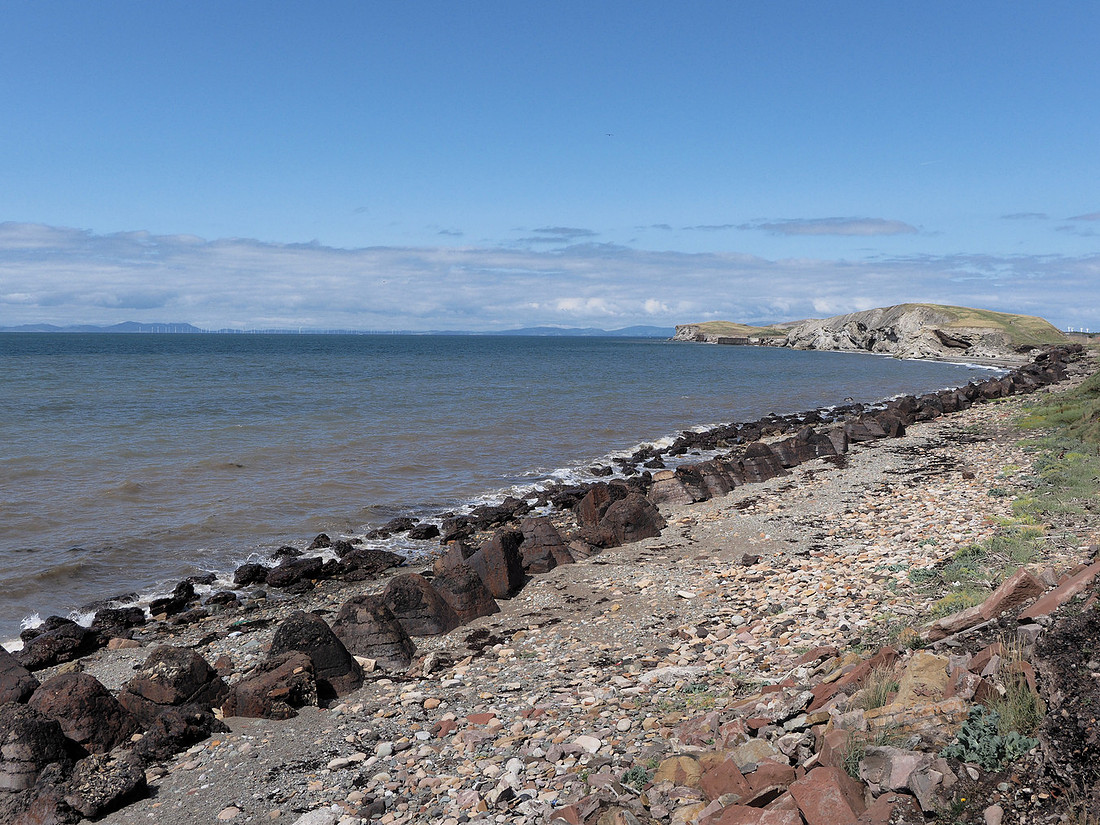
There was a time when I carried my camera almost everywhere. It was less an object than a companion, a small permission slip to be curious. I noticed puddles after rain, the slant of afternoon light across brick, the shape of strangers passing through a station, the quiet geometry of ordinary streets. Photography made the world feel newly available to me, as if every walk might reveal something worth keeping.
Then, slowly and almost without my noticing, that feeling faded. The camera stayed at home more often. When I did take it out, I found myself second-guessing everything: the composition, the light, the subject, even the reason for taking the photograph in the first place. Colour seemed especially noisy. It demanded decisions I did not feel able to make. Was the sky too flat? Was the red sign distracting? Did the scene look dull, or was I the dull one?
I told myself I had lost my eye. What I had really lost, I think, was trust. I had become too concerned with making pictures that looked finished, polished, impressive. I was chasing the kind of image that might make sense to other people before it had made sense to me. The more I tried to force inspiration, the further away it moved.
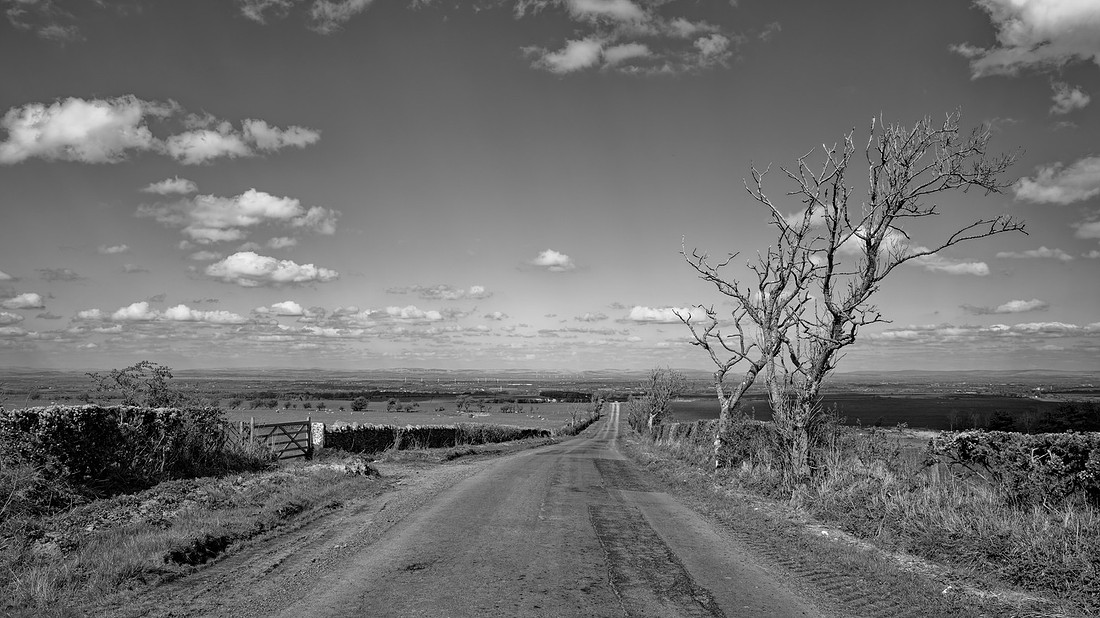
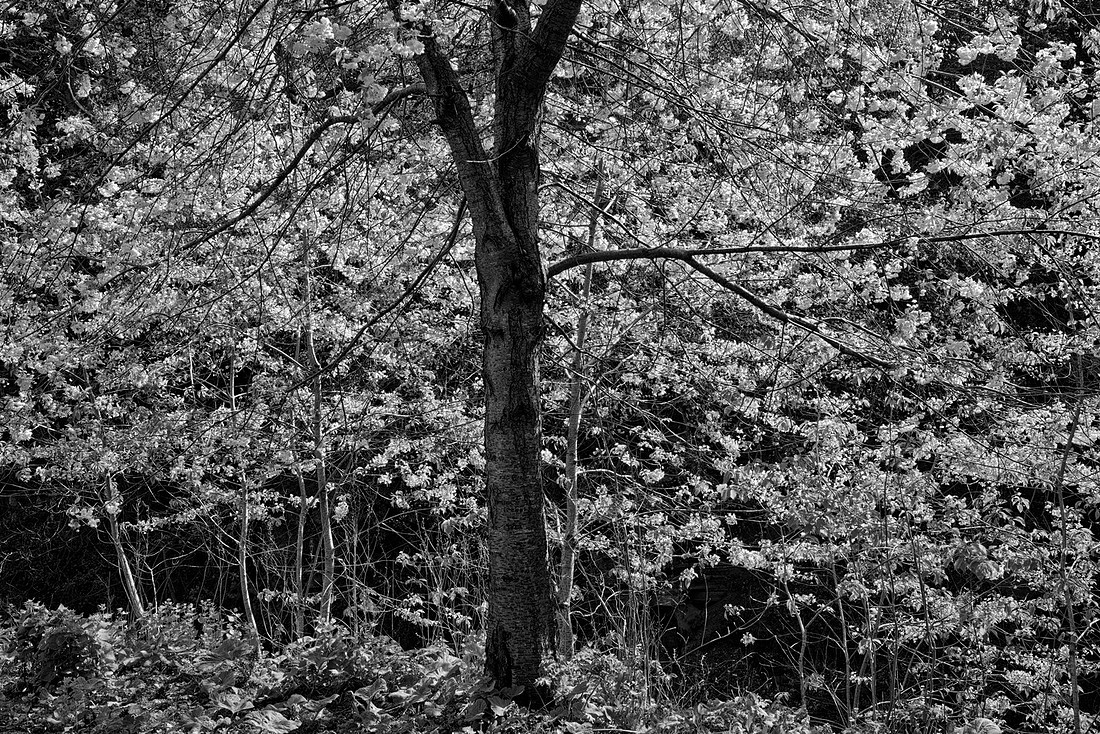
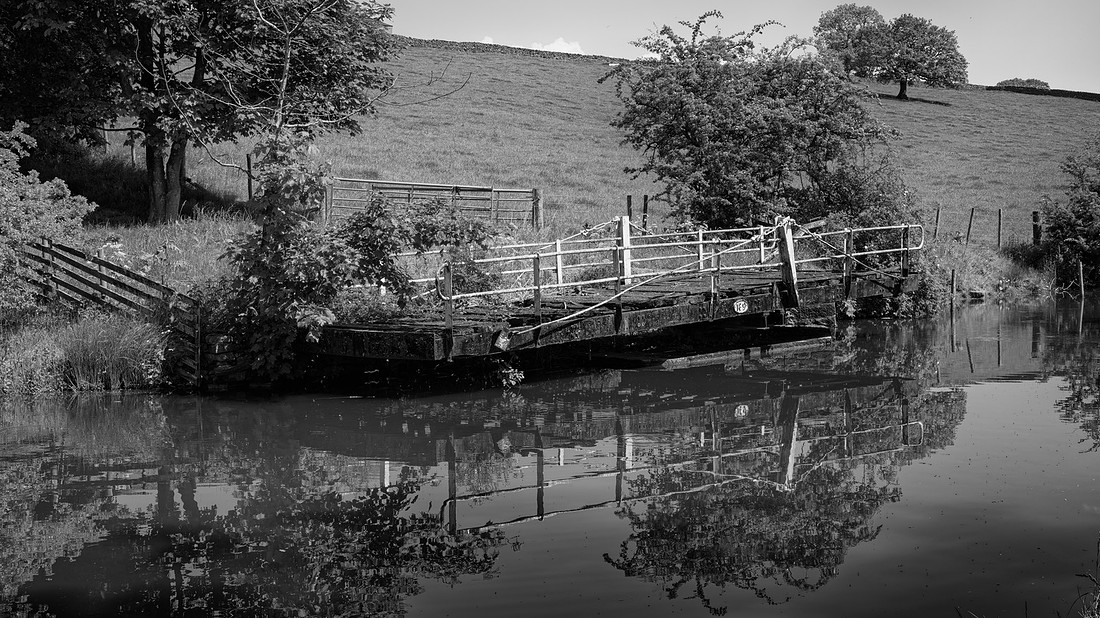
Black and white gave me a way back. At first, it was a practical choice, almost a trick. If colour was overwhelming me, I would remove it. I would stop asking the image to be vibrant and start asking whether it had shape, contrast, texture, mood. Without colour, the world became simpler but not smaller. In fact, it opened up. A wet pavement became a ribbon of silver. A cloudy sky became a study in weight and softness. A face, a wall, a tree, a doorway: each seemed to carry more presence when I stopped looking for brightness and began looking for tone.
There is a discipline to black and white photography that I had forgotten I needed. It asks you to slow down. It rewards patience. It does not hide a weak image behind a beautiful colour palette. It makes you pay attention to the bones of a photograph: where the light falls, where the darkness gathers, how lines lead the eye, how silence can become part of the frame. I began to understand that my problem had not been a lack of subjects. It had been a lack of attention.
The more I worked in monochrome, the less I felt the need to produce something remarkable every time I lifted the camera. I began making photographs for the pleasure of noticing again. Some were ordinary. Some failed completely. A few surprised me. But even the failures felt useful because they were evidence that I was looking, trying, responding. The camera became lighter in my hands. The pressure eased. I was no longer trying to prove that I was a photographer; I was simply practising how to see.
Black and white did not magically restore my creativity. It did something better: it gave me a smaller doorway back into it. It reminded me that photography is not only about capturing what is in front of the lens, but about being awake enough to recognise it. It taught me that limitation can be generous, that removing one element can reveal others, and that sometimes the quickest way to recover a lost instinct is to stop demanding that it return all at once.
I still have days when I feel creatively flat. I still come home with images that do not say what I hoped they would say. But now I know that the answer is not always to look harder. Sometimes it is to look more simply. Through black and white, I have found my way back to shadows, shapes, light, and the quiet thrill of noticing. I am learning to see again, one frame at a time.
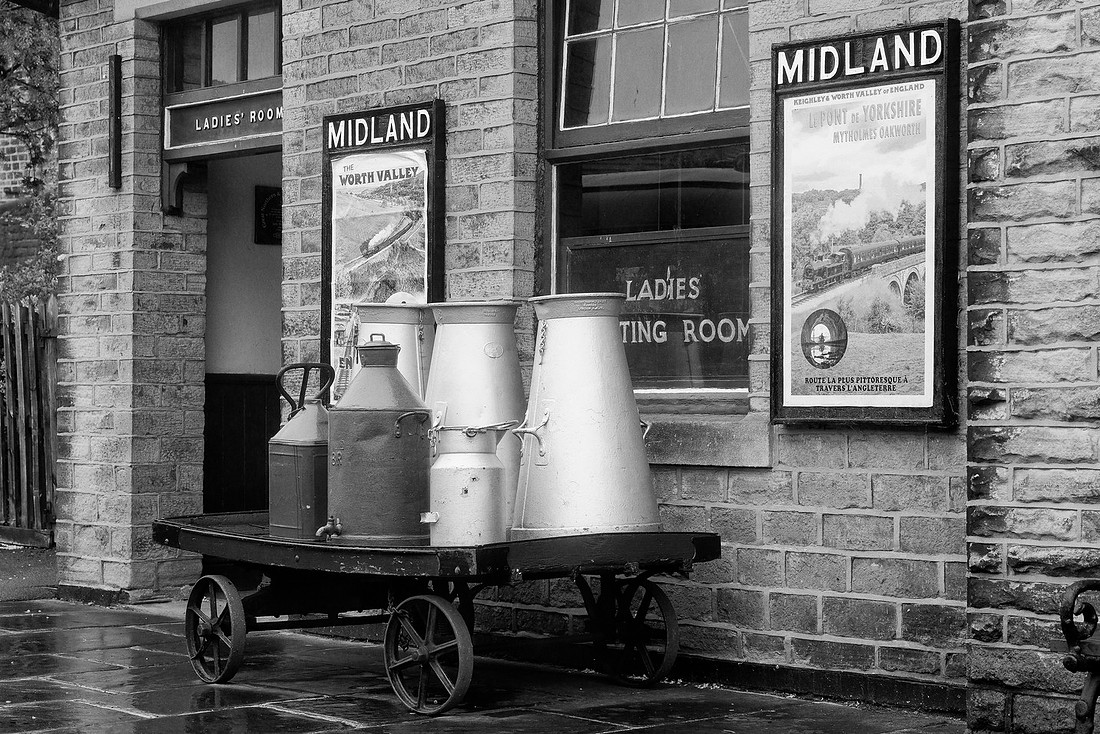
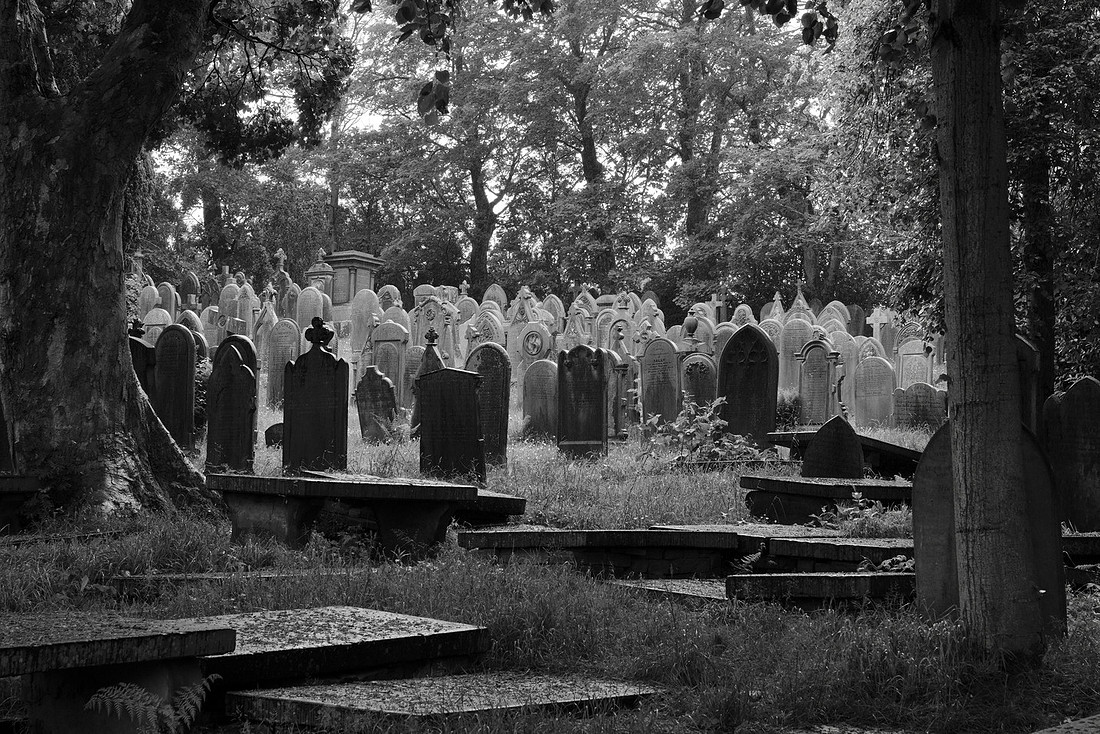
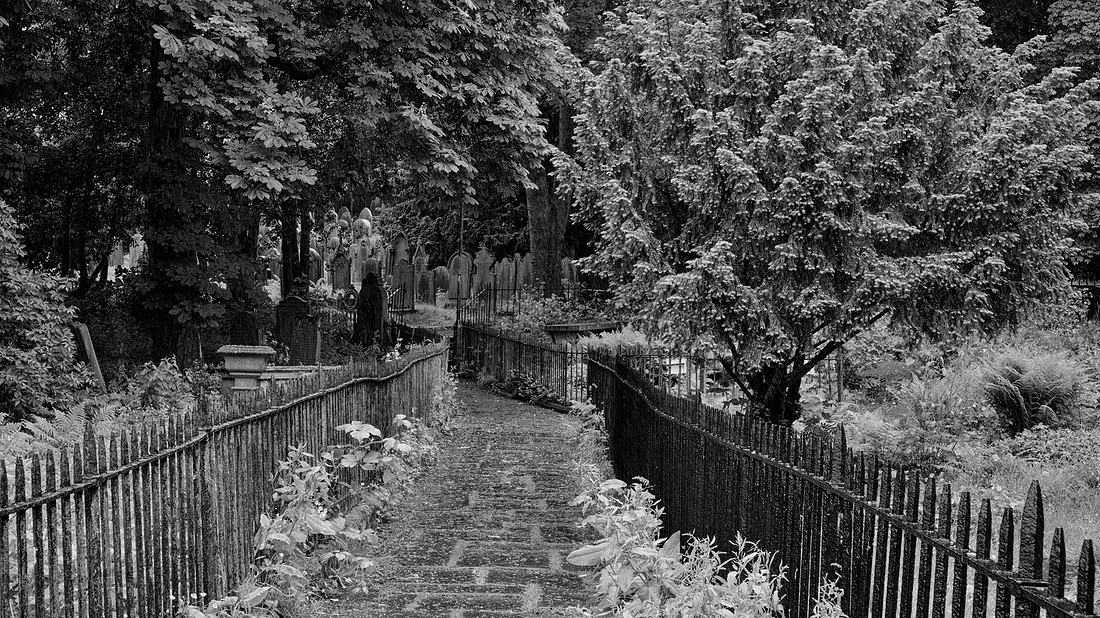
]]>
Fujifilm “X” System :
“The Camera System That Gets Almost Everything Right”
Fujifilm’s X System is “just about right for pretty much everything” because it hits a rare balance: small enough to carry, capable enough for serious work, and enjoyable enough to make you want to shoot. A few reasons it works so well: APS-C sweet spot: The sensor size gives strong image quality without making bodies and lenses huge. Excellent lenses: Fujifilm has a deep X-mount lens range, from tiny primes to professional zooms. Colour and JPEGs: Fuji’s film simulations are a big part of the appeal—great-looking results straight out of camera. Tactile controls: Shutter speed dials, aperture rings, and exposure compensation make the cameras feel intuitive and photographic. Portable but serious: It is lighter than many full-frame systems, but still good for travel, street, portrait, documentary, landscape, family, and even professional work. Good video options: Recent X-series bodies are genuinely capable hybrid cameras. Character: The system has a distinct look and feel, which matters more than specs sometimes.
In Summary:
A few reasons it works so well:
- APS-C sweet spot: The sensor size gives strong image quality without making bodies and lenses huge.
- Excellent lenses: Fujifilm has a deep X-mount lens range, from tiny primes to professional zooms.
- Colour and JPEGs: Fuji’s film simulations are a big part of the appeal—great-looking results straight out of camera.
- Tactile controls: Shutter speed dials, aperture rings, and exposure compensation make the cameras feel intuitive and photographic.
- Portable but serious: It is lighter than many full-frame systems, but still good for travel, street, portrait, documentary, landscape, family, and even professional work.
- Good video options: Recent X-series bodies are genuinely capable hybrid cameras.
- Character: The system has a distinct look and feel, which matters more than specs sometimes.
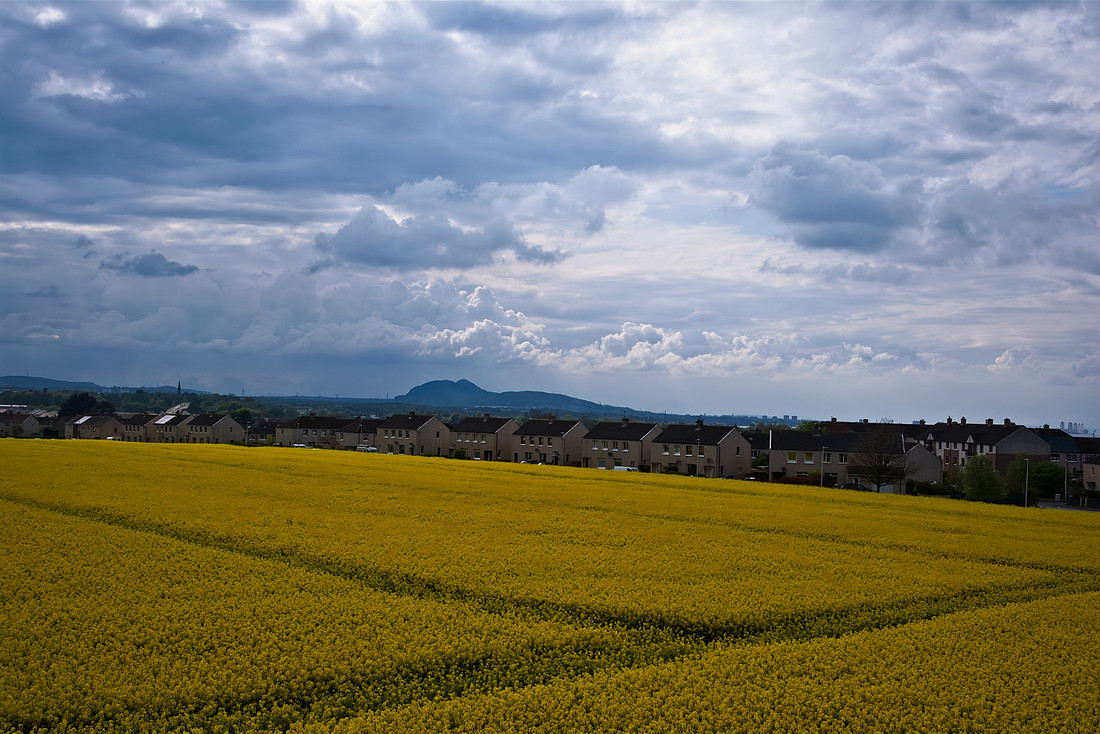
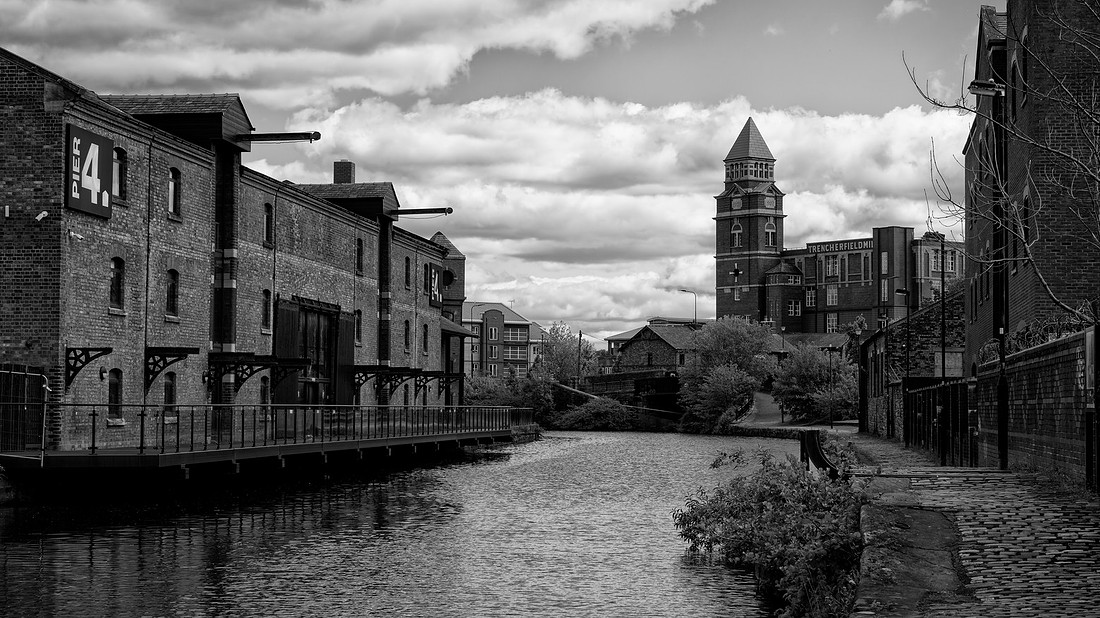
]]>
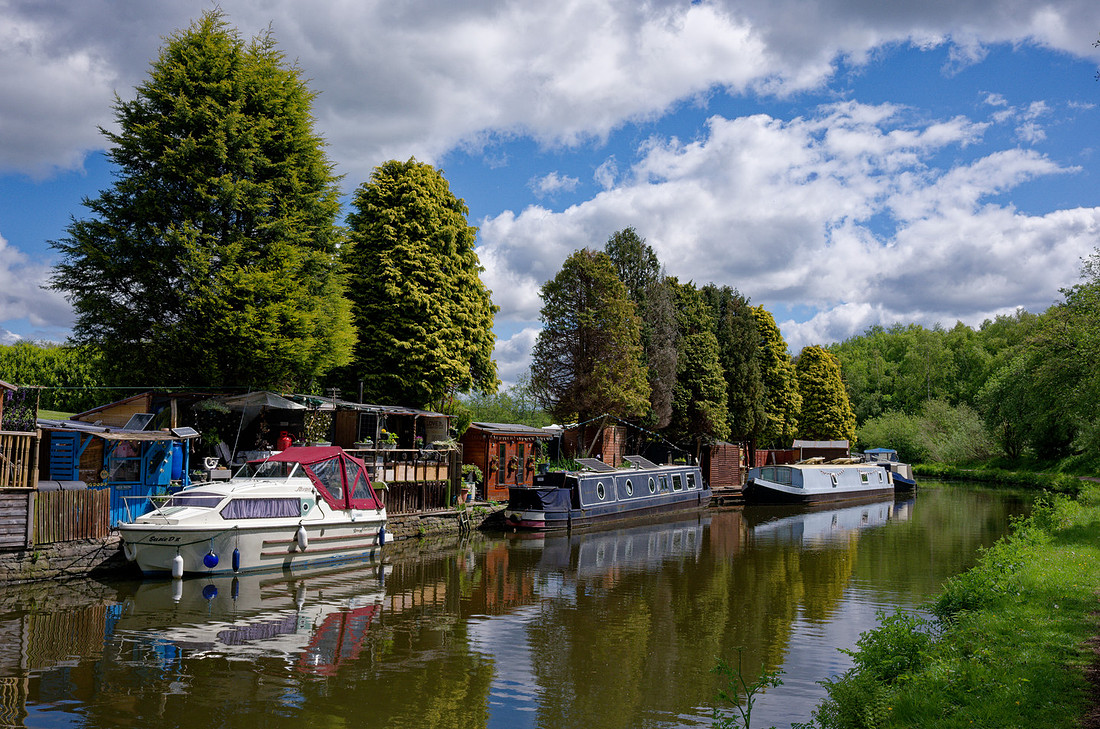
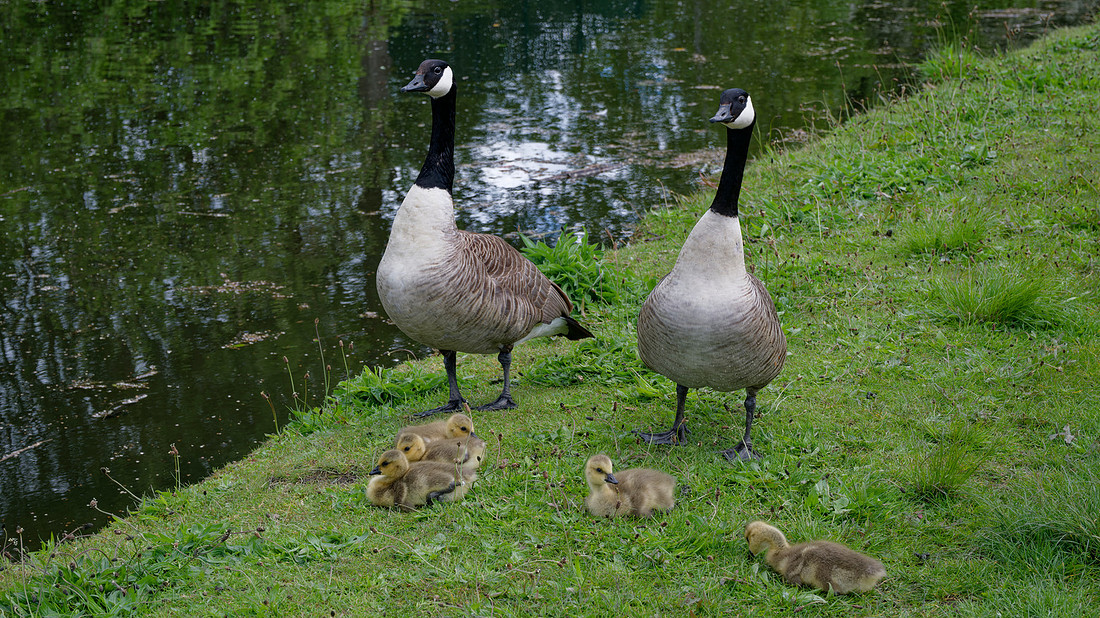
Well why do I? Well recently my photography has changed, since I can't go fellwalking anymore I have to take a more leisurely approach. So I have embraced travel photography "Sort of", more travel/scenic with a bent (Or is that bend???) towards Canals and Industrial Heritage, with my lack of wellbeing I have to at the same time re-embrace a lighter system once again, tried OM systems but just couldn't get on with it despite loving the cameras themselves, so Fuji, your'e up, AGAIN! So lets take a look at some of the reasons why?
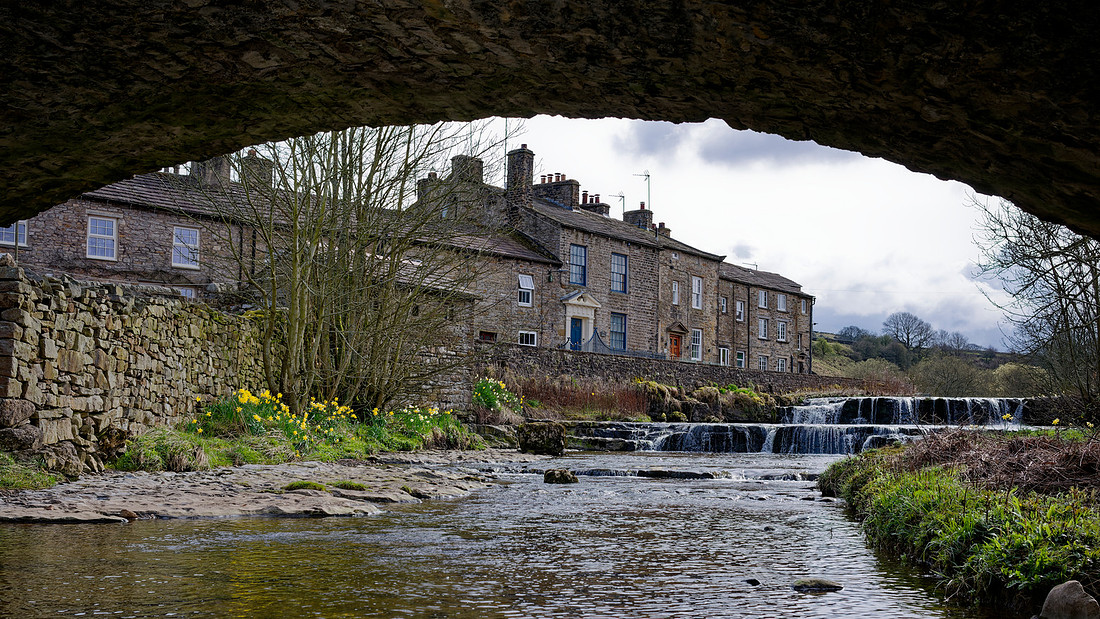
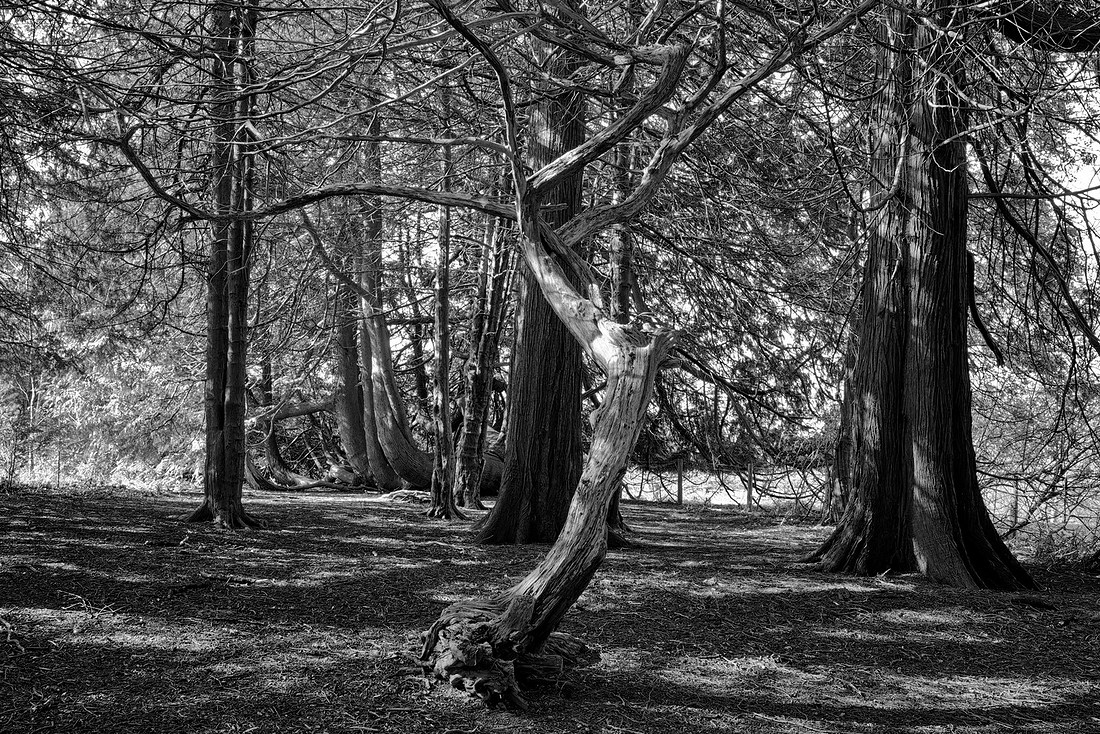
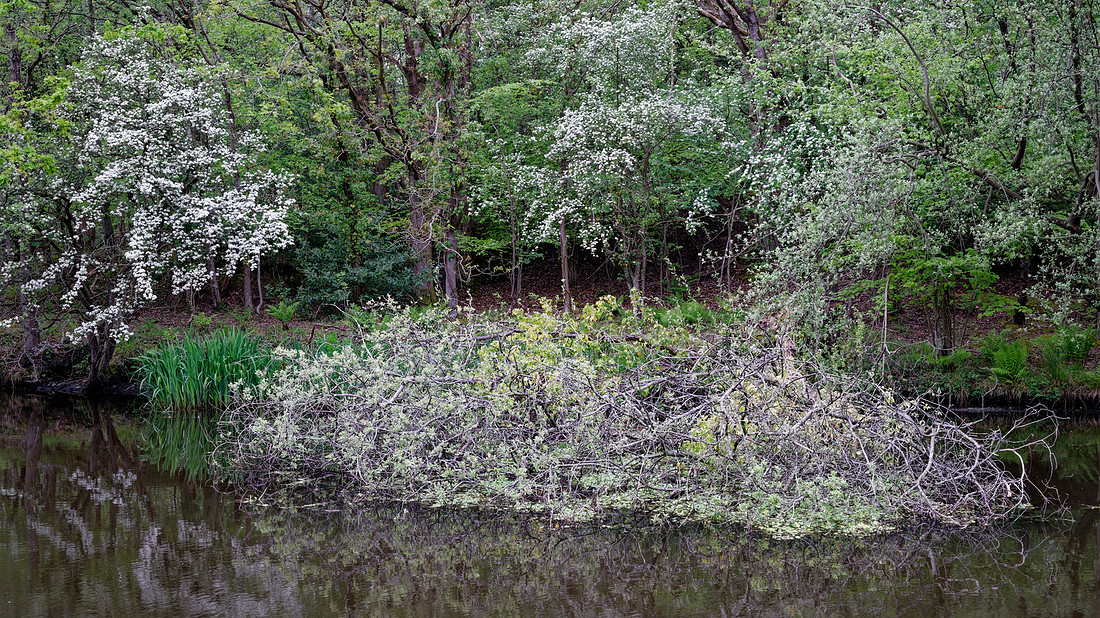
It’s probably because Fujifilm X cameras reward the feeling of photography, not just the result.
A lot of people keep coming back to them for a mix of reasons like these:
1. They make photography feel intentional
The shutter dials, aperture rings, exposure compensation, and tactile controls make shooting feel more hands-on. You’re not just operating a device—you’re making decisions.
2. The images have character
Fujifilm’s colour science and film simulations often give photos a distinctive look straight out of camera. If you like a certain mood or tone, Fuji makes it easy to fall back in love with your own images.
3. They’re inspiring to carry
X-series cameras are often compact, beautifully designed, and enjoyable to use. A camera you want to pick up is a camera you use more.
4. They balance modern and nostalgic
They give you digital convenience, but with an experience that feels closer to classic photography. That combination can be hard to replace once you’ve gotten used to it.
5. The system has a strong identity
Fujifilm doesn’t always chase the same priorities as other brands. Instead of feeling generic, the X system tends to feel like it has a point of view—and that resonates with some photographers more than pure specs do.
6. They fit a certain kind of photographer
If you care about process, aesthetics, storytelling, colour, and enjoyment—not just autofocus speed or sensor size—Fuji often feels like “home.”
If you care about process, aesthetics, storytelling, colour, and the simple enjoyment of making images—not just autofocus speed or sensor size—Fuji often feels like home.
If photography is as much about process, colour, storytelling, and enjoyment as it is about technical performance, Fujifilm often feels less like a tool and more like home.
There you have it, so I'm back with the big ole "X".
]]>
 Gear Acquisition Syndrome (G.A.S.)
Here is a clearer breakdown of Gear Acquisition Syndrome, including its common causes, underlying beliefs, and practical ways to manage it.
Common causes
- Constant exposure to reviews, demos, and influencer content
- The belief that better gear will automatically improve results
- The excitement of buying and researching equipment
- Comparing your setup with other people’s
- Fear of missing out on new releases or “must-have” tools
- Using shopping as a substitute for practice or creative work
Key realisations
- New gear rarely fixes weak habits, lack of skill, or lack of focus.
- Most improvement comes from practice, experience, and consistency.
- Owning more options can actually slow decision-making.
- Many favourite works are created with simple, limited tools.
- The thrill of buying often fades faster than expected.
Realistic assumptions
- Some upgrades are genuinely useful when they solve a clear problem.
- Not every purchase is irrational; timing and purpose matter.
- Good gear can improve workflow, reliability, or comfort.
- The problem begins when buying becomes emotional rather than practical.
- One well-chosen tool is often better than several overlapping ones.
Underlying drivers
- Creative insecurity
- Perfectionism
- Procrastination disguised as preparation
- Identity attachment, such as the idea that “serious people own serious gear”
- Boredom or lack of direction
- Marketing pressure and social validation
Practical cures
- Set a waiting period before any purchase.
- Define the problem before buying: what exactly will this solve?
- Use what you already own for a fixed period.
- Create a budget and clear buying rules.
- Sell unused gear before buying more.
- Focus on projects completed, not items owned.
- Limit the time you spend watching gear content.
- Track how often your current equipment is actually used.
Simple rule for buying
Buy only when all three of these conditions are true:
- You can name a specific limitation.
- Your current gear cannot solve it reasonably.
- The new purchase supports real work, not just excitement.
Gear Acquisition Syndrome (G.A.S.) in Photography
Gear Acquisition Syndrome in photography is the tendency to believe that buying more or better equipment will lead to better work. In reality, improvement usually comes from practice, restraint, and learning how to use existing tools well.
Common causes
- Constant exposure to reviews, demonstrations, and influencer content
- The belief that better gear will automatically improve results
- The excitement of researching and buying equipment
- Comparing your setup with other people’s
- Fear of missing out on new releases or “must-have” tools
- Using shopping as a substitute for practice or creative work
Key realisations
- New gear rarely fixes weak habits, lack of skill, or lack of focus.
- Most improvement comes from practice, experience, and consistency.
- Owning more options can make decision-making slower and more difficult.
- Many excellent photographs are made with simple, limited tools.
- The excitement of buying usually fades faster than expected.
Realistic assumptions
- Some upgrades are genuinely useful when they solve a clear problem.
- Not every purchase is irrational; timing and purpose matter.
- Good equipment can improve workflow, reliability, and comfort.
- The problem begins when buying becomes emotional rather than practical.
- One well-chosen tool is often more valuable than several overlapping ones.
Underlying drivers
- Creative insecurity
- Perfectionism
- Procrastination disguised as preparation
- Identity attachment, such as the belief that “serious photographers own serious gear”
- Boredom or lack of direction
- Marketing pressure and social validation
Practical cures
- Set a waiting period before making any purchase.
- Define the problem first: what exactly will this solve?
- Commit to using what you already own for a fixed period.
- Create a budget and clear buying rules.
- Sell unused gear before buying more.
- Focus on projects completed, not items owned.
- Limit the time spent consuming gear-related content.
- Track how often your current equipment is actually used.
Simple rule for buying
Buy only when all three of these conditions are true:
- You can name a specific limitation.
- Your current gear cannot solve it reasonably.
- The new purchase supports real work, not just excitement.
Why two sets of parameters, well I wanted to look at whether it’s just a Photography thing or it could be anything really and the upshot to me at least is that we are not as alone as we may think!
]]>
Exploring the Boundaries Between Enhancement and Manipulation
With the advent of digital photography, post-processing has become an integral part of the photographic workflow. From simple adjustments like cropping and exposure correction to more advanced techniques such as retouching and compositing, the possibilities are seemingly endless. However, as digital tools grow ever more powerful, the question arises: when does enhancement cross the line and become manipulation?
Many photographers embrace post-processing as a means to realise their creative vision, arguing that it allows for greater artistic expression and technical refinement. Yet, others warn that excessive editing risks undermining the authenticity of the image, leading to a 'slippery slope' where the boundary between reality and fiction becomes blurred. This debate is particularly relevant in fields like photojournalism, where the integrity of the photograph is paramount.
Ultimately, the answer may depend on the purpose of the image and the expectations of its audience. While post-processing can certainly elevate a photograph, it is important for photographers to consider the ethical implications and maintain transparency about their editing practices. In an age where digital manipulation is easier than ever, striking the right balance between enhancement and honesty remains an ongoing challenge.
A purist’s approach
The purist’s approach to digital photography is grounded in the principle of minimal intervention. Purist photographers seek to capture the essence of a scene as it naturally unfolds, relying on their skill in composition, timing, and the use of available light rather than post-processing techniques. Their editing is typically limited to the most basic adjustments—such as cropping, minor exposure tweaks, or correcting horizon lines—ensuring that the fundamental reality of the photograph remains untouched.
Transparency is central to the purist philosophy; photographers may openly disclose any adjustments made, often preferring to shoot in formats like RAW to preserve the highest possible fidelity. This approach is particularly valued in genres such as documentary, street, and nature photography, where the authenticity of the subject and its environment is paramount. In these fields, purists honour the integrity of their work, presenting images that reflect the world as it truly is, unembellished and unfiltered.
While digital tools have expanded creative possibilities, the purist’s path serves as an important reminder of the enduring value of honest representation in photography. It stands as a counterpoint to extensive manipulation, championing the power and beauty of authenticity.
Absolutely, there remains a meaningful place for the purist’s approach in digital photography. For those who champion authenticity and strive to preserve the original character of a scene, the purist method revolves around minimal intervention. This philosophy emphasises capturing moments as they unfold, relying primarily on composition, timing, and natural light rather than digital enhancement. Any edits performed are typically restricted to basic corrections—such as cropping, modest exposure adjustments, or straightening horizons—that do not alter the fundamental reality of the image.
A purist photographer might even adopt a transparent workflow, clearly stating what, if any, post-processing has occurred, and often favouring formats like RAW to retain maximum fidelity. In fields such as documentary, street, or nature photography, this approach honours the integrity of the subject and the environment, seeking to share the world as it truly is, unfiltered and unembellished. Though digital tools offer a vast array of possibilities, the purist’s path remains a valuable counterpoint—reminding us of the power and beauty found in honest representation.
kick back against A.I. generation
As artificial intelligence becomes increasingly prevalent in the creation and manipulation of images, a growing movement among photographers and artists pushes back against the rise of AI-generated content. This resistance stems from concerns about authenticity, originality, and the value of human creativity. Many purists argue that AI tools, while impressive, can undermine the unique perspective and emotional connection that comes from an artist’s personal engagement with their subject. For these individuals, the act of capturing a moment—relying on skill, intuition, and a deep understanding of light and composition—remains irreplaceable. By rejecting or limiting the use of AI in their workflow, they champion the enduring significance of honest, human-made imagery and uphold the integrity of the photographic art form. This stance echoes the broader purist philosophy, emphasizing transparency, minimal intervention, and a commitment to representing the world as it is, rather than as it might be imagined or artificially constructed.
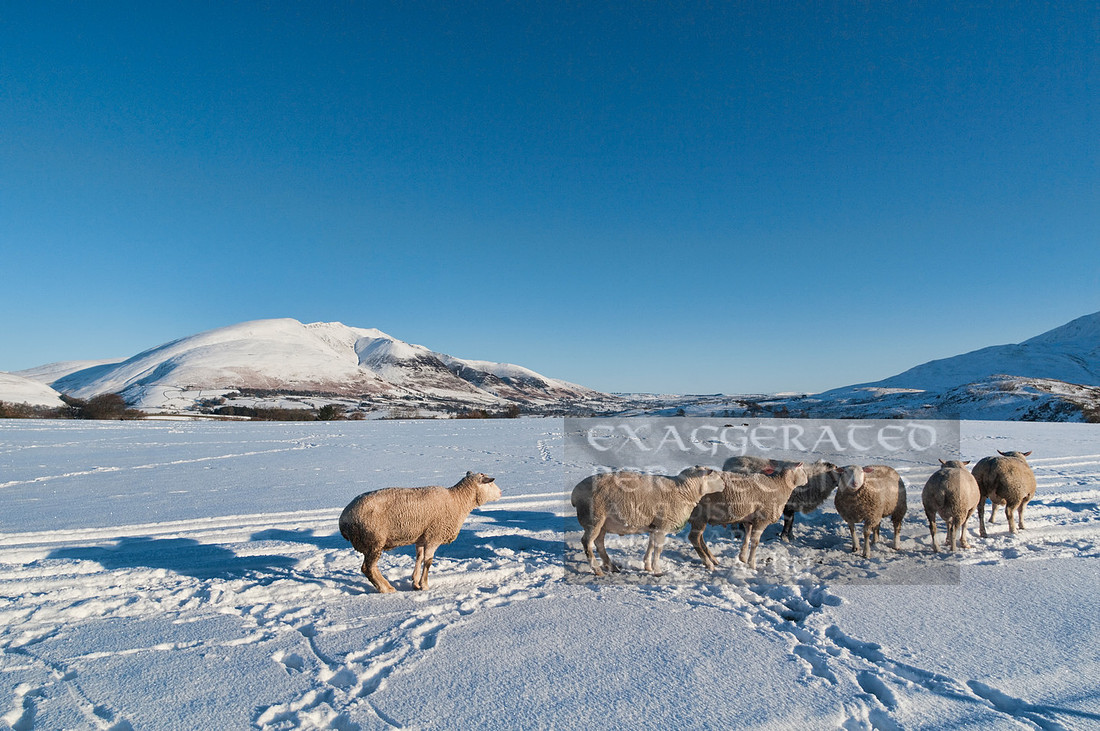
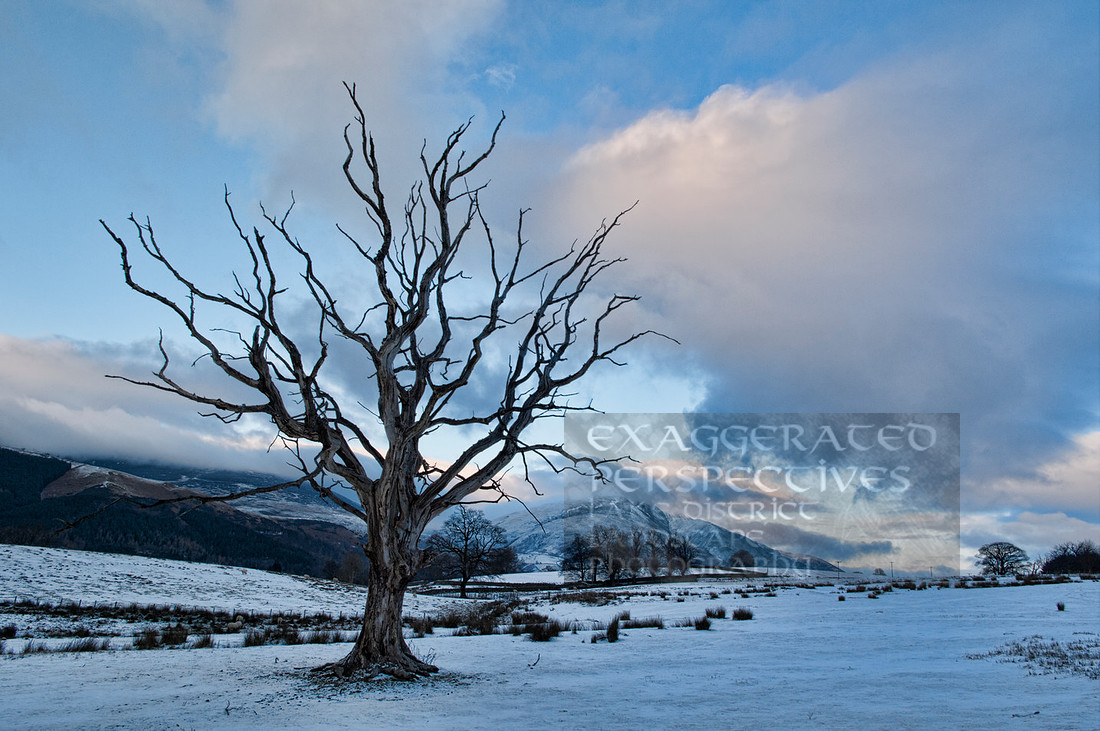
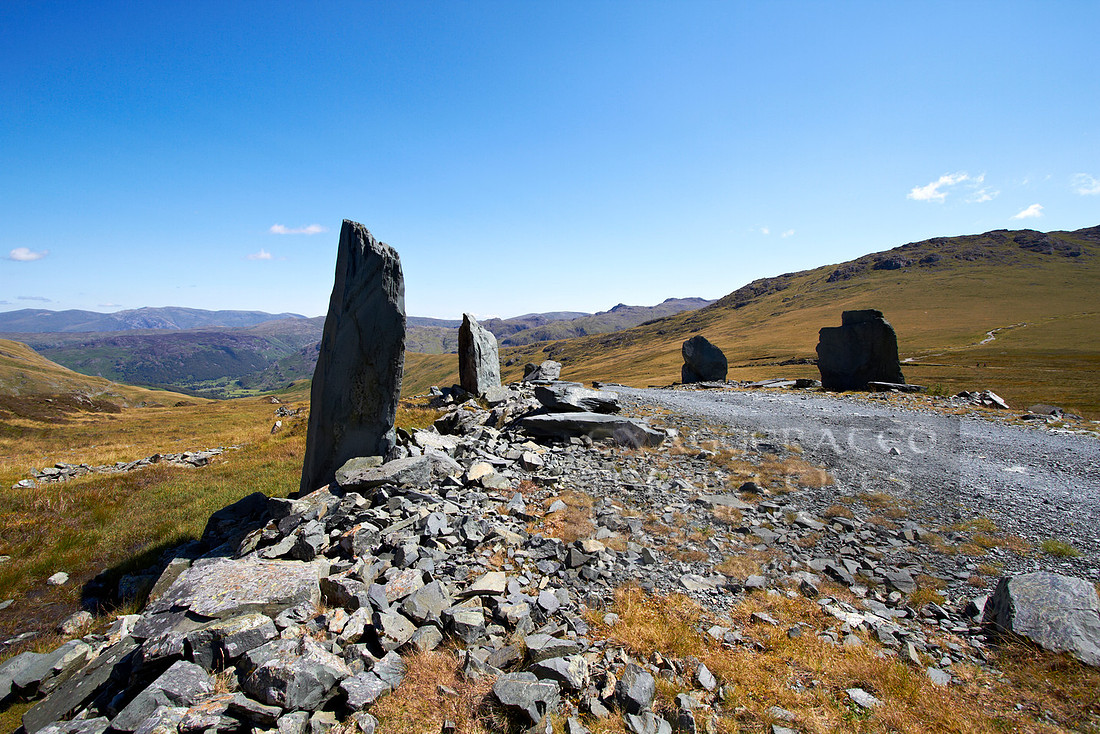
]]>
Post-Processing in Digital Photography: Striking the Balance
Adding and Subtracting: When Is It Too Much? When Is It Not Enough?
In the digital age, post-processing has become an integral part of photography. Whether it’s adjusting exposure, enhancing colours, or removing unwanted elements, photographers now wield unprecedented power to shape their images. But with such power comes the question: when does post-processing become excessive, and when does it fall short?
At its best, post-processing serves to bring out the photographer’s vision, correcting technical flaws or subtly enhancing the mood of an image. Under-processing, on the other hand, can leave photographs feeling flat, failing to convey the richness or emotion witnessed in person. If colours appear dull, details are lost in shadows, or distractions remain unaddressed, the image may not do justice to the scene or subject.
Conversely, over-processing can push a photograph beyond the realm of authenticity. Excessive use of filters, unrealistic colours, or heavy-handed retouching may result in images that feel artificial or misleading. The line is often crossed when the photograph no longer reflects the reality of the moment, or when it begins to deceive the viewer about what was genuinely present.
But does it matter? The answer depends on the intent behind the image. In artistic photography, creative freedom is paramount, and heavy post-processing may be an intentional choice. In documentary or journalistic contexts, however, integrity is everything. The viewer trusts that the photograph represents reality, and any manipulation that alters the truth can undermine that trust.
Ultimately, “the integrity of the photograph is only as good as the integrity of the photographer” (Galen Rowell). Each photographer must decide where to draw the line, guided by their own values, the expectations of their audience, and the purpose of their work. Transparency about editing choices and a commitment to honesty help ensure that post-processing enhances rather than undermines the power of the photograph.
Summary
Here I’m trying to explore the role of post-processing in digital photography, highlighting the fine balance between enhancing an image and maintaining authenticity. How under-processing can fail to capture the true essence of a scene, while excessive editing may compromise the integrity of the photograph. The appropriate level of post-processing is shaped by the photographer’s intent and the expectations of the audience, with honesty and transparency serving as guiding principles for responsible image creation.
Look, all this is open to artistic interpretation, but where should one responsibly and ethically draw the line—while keeping one’s integrity intact? The answer lies in being honest about your intentions and transparent with your audience. In artistic photography, creative manipulation can be part of the vision, and pushing boundaries is often celebrated. However, if your image is presented as documentary or journalistic, it’s crucial to ensure that any edits do not mislead viewers or distort reality. Integrity means respecting the trust your audience places in the image’s truthfulness. The digital nature of photography doesn’t absolve us from responsibility; rather, it demands a clear understanding of purpose and a commitment to authenticity. It’s not overthinking to question these boundaries—such reflection is what separates responsible creators from those who might mislead, even unintentionally. Ultimately, if you’re upfront about your process and your edits serve to clarify rather than deceive, you’re more likely to strike the right balance between artistic expression and ethical responsibility.
HDR Photography in Modern Post-Processing Workflows
High Dynamic Range (HDR) photography once revolutionised post-processing by allowing photographers to capture and combine multiple exposures, producing images with a greater range of tonal detail than a single shot could offer. In a contemporary workflow, HDR techniques still have a place, especially when tackling scenes with extreme contrast that cannot be handled by a camera sensor alone. However, advancements in camera sensors and editing software have somewhat diminished HDR's dominance, as modern raw files and tools like local adjustments, exposure blending, and AI-driven enhancements can often achieve similar results with more control and subtlety.
There is a common criticism that HDR images can appear too unrealistic or artificial, particularly when processed with heavy-handed tone mapping or saturation. This 'false' look is usually the result of stylistic choices rather than an inherent flaw in the technique itself. When employed with restraint, HDR can deliver natural-looking photos that accurately represent the dynamic range of a scene. Ultimately, whether HDR is considered 'old hat' or relevant depends on the photographer's intent, style, and the demands of the scene. It remains a useful tool, but its use should be guided by the desired outcome, and a thoughtful approach will avoid the pitfalls of unnatural aesthetics.
Answers on a Postcard…
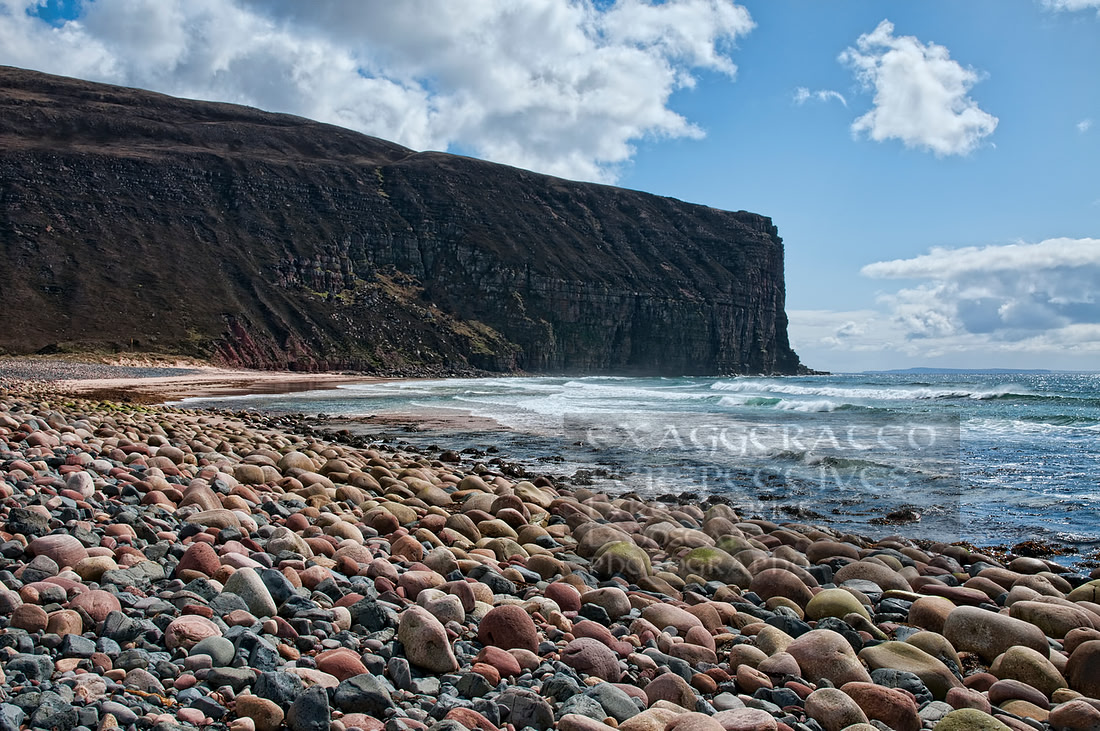
Photography is more than just a hobby; it’s an art form that allows us to capture the beauty of the world, express ourselves, and share our perspective with others. Yet, when the body begins to falter—whether it’s due to arthritis, mental health struggles such as dysthymia, sleep apnoea, cough syncope, scoliosis, or asthma—it can become increasingly difficult to maintain both the interest and the physical ability needed for photography.
Adapting Your Approach
The key is to adapt your practice to suit your body’s current needs. Lightweight cameras, tripods with easy adjustments, and remote shutter releases can help reduce the strain on sore joints and muscles. Consider focusing on genres that require less physical movement, such as still life, portraiture, or macro photography at home. Even mobile phone photography can be a fulfilling alternative when larger equipment feels unwieldy.
Supporting Your Mental Health
Chronic conditions often affect more than just the body—they can impact motivation and mental wellbeing. Photography itself can be a therapeutic outlet, helping to boost mood and provide a sense of accomplishment. Setting small, achievable goals, joining online photography communities, or starting a photo diary can help rekindle inspiration and offer a sense of connection.
Managing Fatigue and Health Conditions
With conditions such as sleep apnoea or asthma, energy levels may fluctuate. Plan photography sessions during times when you feel most alert and comfortable. Don't be afraid to take frequent breaks or pace yourself. Listen to your body, and prioritise rest and self-care.
Embracing Your Unique Perspective
Living with health challenges brings its own perspective to your art. Your experiences can inform your photography, helping you to capture images that are deeply personal and resonate with others. Remember, your journey is valid, and your creativity can flourish in spite of—and sometimes because of—the obstacles you face.
Final Thoughts
While physical limitations may change how you approach photography, they do not have to diminish your passion or creativity. By adapting your methods, seeking support, and honouring your own pace, you can continue to find joy and fulfilment in the world of photography, regardless of the challenges you encounter.
Ok Ok, so this one is a bit specific, but we all have our problems, right? So now you know about mine, how about you?
Photography is, above all, driven by passion—whether it’s a hobby, a profession, or even an obsession for some. Recently, I’ve had to adjust how I approach my craft: no more hiking up mountains, taking long walks, or relying on public transport, as these activities have become physically and mentally exhausting; crowded places are off-limits too. These days, I can’t photograph as much, nor carry as much equipment (although my wife ends up carrying more—sorry!). Still, I find joy in photography, and always manage to make it work, no matter the circumstances.


]]>
The benefits and Drawbacks of Using More Than One Photography System
Effects of Using Multiple Systems on Muscle Memory, Upkeep Expenses, and Decision Fatigue
Introduction
In the world of photography, many professionals and enthusiasts opt to use more than one camera system, combining equipment from different brands or formats. This approach can present a variety of advantages and disadvantages, which are important to consider when making decisions about gear and workflow.
Benefits of Multiple Photography Systems
Using more than one photography system offers several notable advantages. One of the key benefits is the ability to select the most suitable tool for each specific situation. For example, a full-frame DSLR may be ideal for capturing expansive landscape shots, while a lightweight mirrorless camera could be better suited for travel or street photography. This adaptability ensures that photographers can respond appropriately to different shooting environments and requirements.
Furthermore, having access to unique lenses or features that are exclusive to each system can greatly broaden creative options. The flexibility provided by multiple systems enhances a photographer’s versatility, enabling them to tackle a wider range of photographic challenges. It also improves their problem-solving ability, as they are equipped to address the demands of various assignments and scenarios.
Drawbacks of Multiple Photography Systems
Despite the clear benefits, there are also drawbacks to using more than one photography system. Managing multiple systems can quickly become expensive, as it often necessitates the purchase of additional lenses, batteries, and accessories. These items may not be compatible across different brands, increasing overall costs.
In addition, carrying and maintaining different types of gear introduces complexity and additional weight, which can make logistics more cumbersome—especially when travelling. The need to switch between systems may slow down workflow, as differing menu layouts, controls, and user interfaces can cause confusion or result in missed photographic opportunities during shoots.


]]>
The debate around zoom lenses in photography often centres on whether they encourage laziness or provide versatility. On one hand, some argue that relying too heavily on zoom lenses can make photographers less inclined to move around and consider their composition, potentially leading to less thoughtful photographs. The temptation to simply zoom in or out rather than physically adjusting one's position can, at times, limit creative exploration.
On the other hand, zoom lenses are frequently praised as the 'Swiss army knife' of a photographer's kit. Their flexibility allows for quick adaptation to a variety of scenes—be it candid street photography, wildlife, or events—where changing lenses is either impractical or impossible. Rather than making us lazy, zooms can open up creative opportunities, allowing us to react instantly to fleeting moments and experiment with different perspectives without missing the shot. Ultimately, the impact of a zoom lens on a photographer's approach depends on how it is used: as a tool for convenience or as a means to broaden one's creative options.
It's also worth noting that the evolution of zoom lens technology has greatly improved image quality, making them a viable choice even for professional work. Modern zooms often rival prime lenses in sharpness and optical performance, which further blurs the distinction between the two in terms of results. This advancement means that choosing a zoom lens no longer entails as many compromises as it once did, reinforcing their appeal for photographers seeking both convenience and quality.
Additionally, the convenience of a zoom lens can be a lifesaver in fast-paced environments where there's little time to swap equipment. For photographers working in unpredictable conditions, having a single lens that covers a range of focal lengths reduces the risk of missing critical moments and keeps their workflow efficient. This adaptability can be particularly valuable for travel and documentary photography, where versatility is often paramount.
Weight versus convenience
When considering the trade-off between weight and convenience, zoom lenses do tend to be heavier and bulkier than their prime counterparts. Carrying a versatile zoom might mean a single lens replaces the need for several primes, but it can also add significant heft to a camera bag, which is a critical factor for those who shoot for extended periods or travel frequently.
For some photographers, this added weight is justified by the convenience and adaptability a zoom provides. However, others may prefer the lighter load and simplicity of a prime lens, especially when prioritising portability and discretion. Ultimately, the decision often boils down to personal shooting style and the specific demands of each photographic assignment.
In addition to these points, it's important to recognise that zoom lenses can help photographers develop a more intuitive understanding of focal length and perspective. By experimenting with different settings on the fly, users can learn how each focal length affects the mood and composition of their images. This hands-on experience often leads to a deeper appreciation for the technical and artistic aspects of photography.
How fast is fast? Speed of use not aperture!
At the same time, it's essential to strike a balance between convenience and intentionality in one's photographic practice. While zoom lenses can enhance flexibility and speed, consciously considering how and why you use each focal length can make a significant difference to the final image. Cultivating this awareness helps ensure that the technology serves your creative vision, rather than dictating it.
Moreover, the psychological aspect of using zoom lenses shouldn't be overlooked. The ability to adjust framing swiftly can instil confidence, especially for those new to photography, by reducing the anxiety of missing a shot due to time spent changing lenses. This empowers photographers to focus more on storytelling and capturing spontaneous moments, rather than worrying about technical limitations.
It's also worth mentioning that, for some, the process of using a zoom lens can encourage experimentation with framing and storytelling. Rather than being limited to a single perspective, photographers are able to quickly test different compositions and focal lengths, which can spark creativity and help in developing a more dynamic body of work.
Another factor worth considering is the impact of zoom lenses on creative spontaneity. The ability to shift seamlessly between wide-angle and telephoto perspectives enables photographers to react quickly to evolving scenes, making it easier to capture unique, fleeting moments that might be missed with fixed focal length lenses. This flexibility often leads to more diverse and engaging photographic outcomes, especially in dynamic environments.
In weighing the pros and cons, it's clear that choosing between a zoom and a prime lens involves more than just technical specifications; it requires careful consideration of one's individual workflow and creative ambitions. The right lens choice can streamline the photographic process, allowing for greater focus on composition and storytelling, rather than being hampered by logistical concerns.
Which is best???
Fiiiight!!!
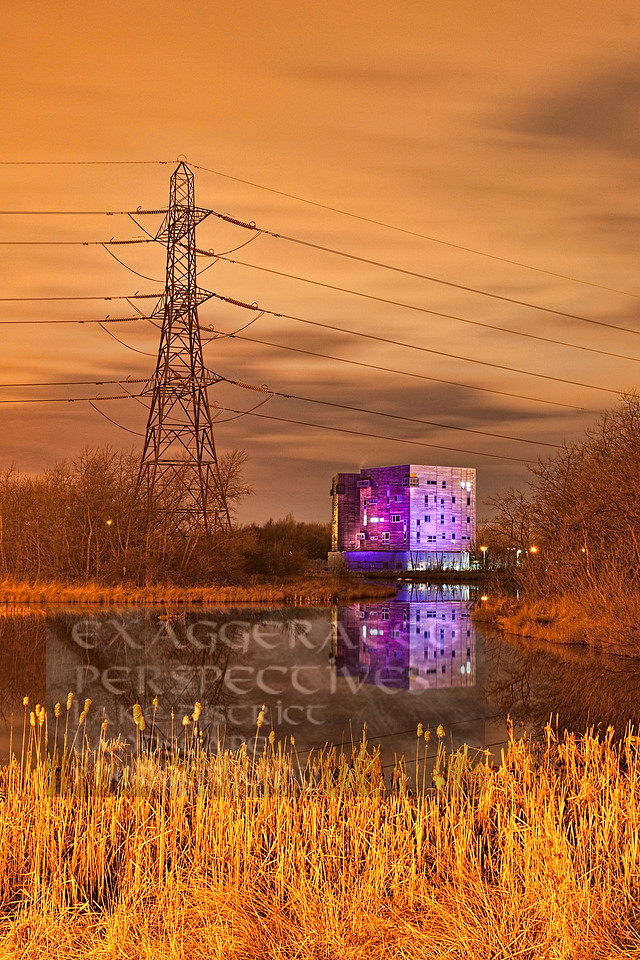
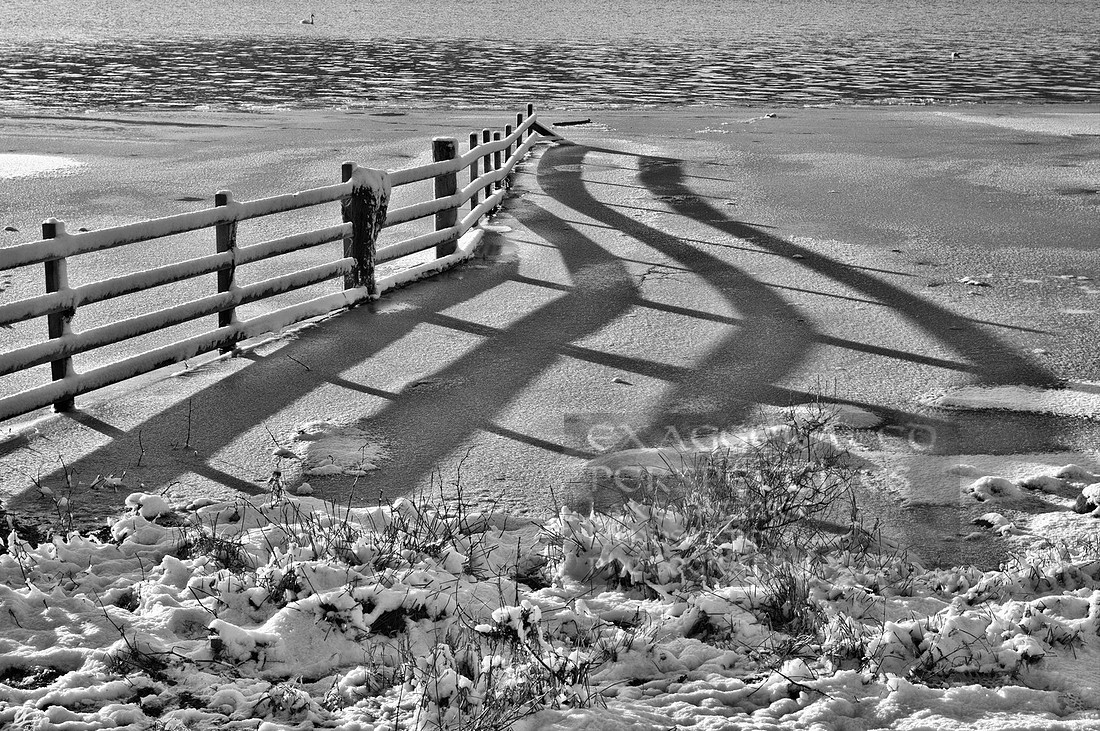
]]>
A proper photographer is someone who possesses both technical skill and artistic vision in capturing images. They understand lighting, composition, and camera settings, and are able to convey a story or emotion through their photographs. Whether professionally trained or self-taught, a proper photographer consistently demonstrates dedication to their craft and a commitment to producing high-quality work.
Personally, I take a run-and-gun approach to photography; I prefer not to wait for hours for the perfect lighting conditions. Instead, I compose and capture what’s in front of me, embracing the spontaneity and energy of the moment.
Despite not using techniques like masking, double exposures, time blends, merging multiple files, creating star trails, or focus stacking, am I absolutely still a photographer?
The essence of photography lies in your ability to see and capture compelling moments, not in the specific tools or post-processing methods you use. Many celebrated photographers prefer a straightforward, documentary approach, relying on their intuition and eye for detail rather than extensive digital manipulation.
Ultimately, photography is a broad and inclusive art form. Whether you use advanced editing techniques or keep things simple, your unique perspective and the stories you tell through your images are what define you as a photographer. Embracing your own style and approach is what makes your work authentic and meaningful.
As you continue to refine your craft, remember that photography is a journey shaped by personal growth and exploration; each image you create is a testament to your evolving vision, and as you experiment with different techniques, subjects, and environments, you’ll naturally develop a style that is uniquely yours, further enriching your experience and connection with the world through your lens.
Still on the Fence?
I think I am...
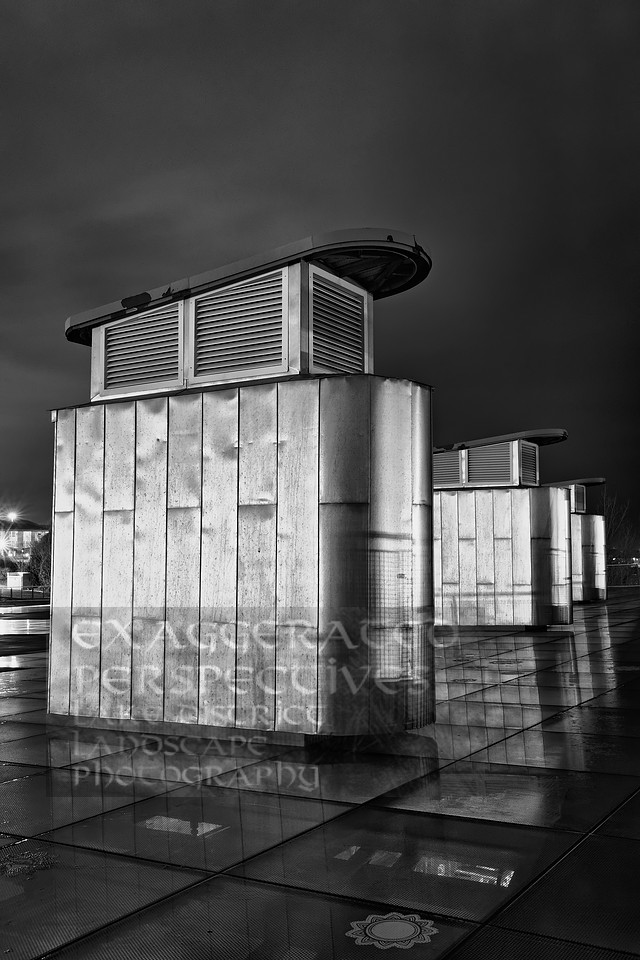
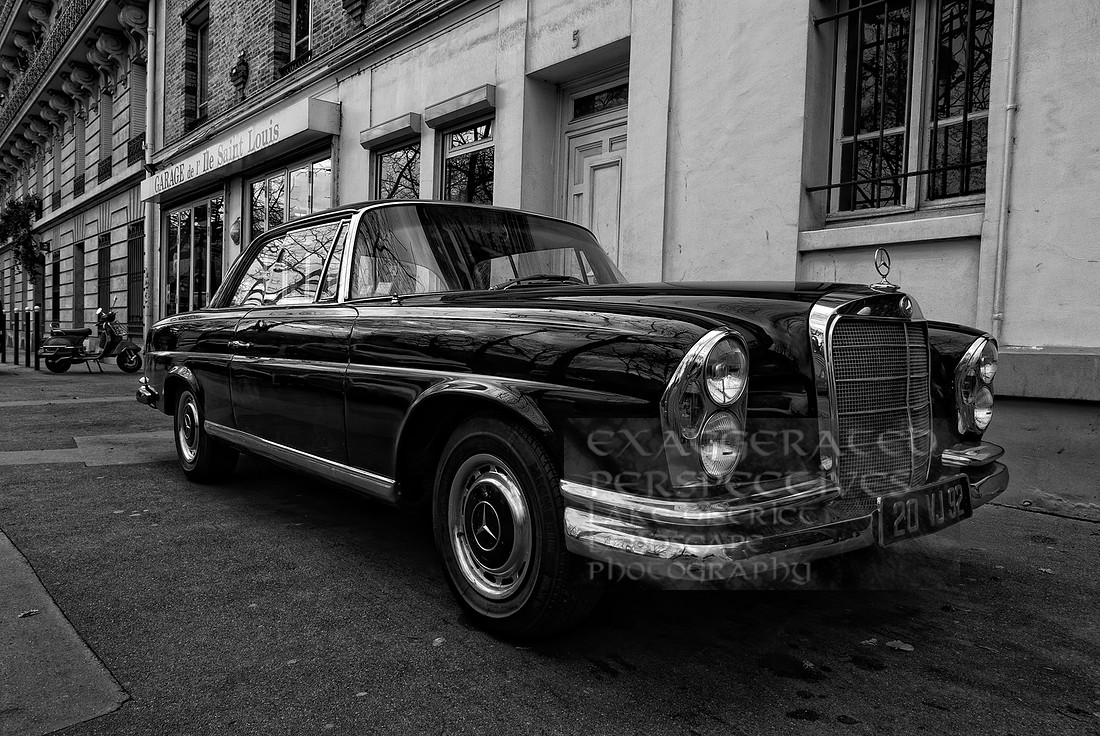

]]>
Exploring post-processing, digital definitions, the film vs digital debate, AI’s role, and creativity’s future
The world of photography is in a constant state of evolution, shaped by shifting technologies, creative philosophies, and heated debates. Today, questions swirl around how much editing is acceptable, what “digital” truly means, whether film remains the gold standard for authenticity, and if artificial intelligence is changing the very nature of image-making. Let’s take a thoughtful look at these issues, aiming to find a balance between modern tools and timeless artistry.
How Much Post-Processing Is Too Much?
Ask ten photographers about post-processing and you’ll likely get ten different answers. For some, editing is simply a means to correct a photo—tweaking brightness, contrast, or removing a stray hair. For others, post-processing is an art form in itself, transforming images into something far beyond what the camera captured. The “right” amount of editing is ultimately subjective, often depending on the photographer’s intent and the expectations of their audience. What matters most is transparency and honesty about how an image was created, allowing viewers to appreciate both the technical skill and creative vision behind it.
What Is Digital Imaging?
Digital imaging refers to the process of capturing, processing, and displaying images using electronic devices, such as digital cameras and computers. Unlike film, which relies on chemical reactions to record light, digital cameras convert light into data, storing it as pixels that can be easily manipulated. This flexibility is a double-edged sword: while it opens up endless creative possibilities, it also raises questions about where to draw the line between capturing reality and creating something entirely new.
Is Film More “Real” Than Digital?
There’s a romantic notion that film photography is inherently more authentic or “real” than digital. Film has a tangible quality, with its grain, imperfections, and unique colours that many find appealing. However, film images are not immune to manipulation—darkroom techniques have been used for decades to enhance or alter photos. The perception of authenticity often comes down to nostalgia and the tactile experience of film, rather than any absolute truth about the medium itself. Both film and digital have their merits and offer different paths to creative expression.
Is All Digital Imaging Just AI?
While artificial intelligence is making waves in the world of photography, not all digital imaging is powered by AI. Traditional digital editing tools, like Photoshop or Lightroom, rely on manual adjustments made by the photographer. AI, on the other hand, can automate tasks—such as removing objects or enhancing details—sometimes with astonishing results. However, AI is just one tool among many, and its use depends on the artist’s goals. It can assist, but it doesn’t replace the eye or intent of the creator.
Will There Be a Backlash Against AI?
As AI-driven tools become more common, some photographers and viewers are pushing back, worried that technology is overshadowing skill and authenticity. There’s a genuine concern that AI could make images feel generic or less personal. On the other hand, many embrace AI as a way to streamline workflows and unlock new creative avenues. Whether a significant backlash will occur remains to be seen, but it’s clear that the conversation around AI’s role in art is far from settled.
Will AI Stifle or Degrade Creativity?
The idea that AI could stifle creativity is a valid worry, but it’s not the whole story. While AI can automate repetitive tasks and suggest edits, true creativity still comes from human imagination and vision. In fact, AI might free photographers from technical drudgery, giving them more time and energy to focus on storytelling and experimentation. Like any tool, AI’s impact depends on how it’s used—whether as a crutch, or as a springboard for new ideas.
Conclusion: Balancing Technology and Artistry
Modern photography sits at the crossroads of tradition and innovation. Whether you prefer film’s nostalgia, digital’s flexibility, or the cutting edge of AI-enhanced imaging, the most important thing is to stay true to your creative purpose. By embracing new tools thoughtfully and remaining honest about your process, you can continue to create images that both resonate with viewers and reflect your unique artistic voice.
As technology continues to evolve, the boundaries between different photographic mediums are becoming increasingly blurred. Photographers today have the freedom to blend techniques from both film and digital worlds, creating hybrid workflows that draw on the strengths of each approach. This fusion often leads to innovative results, challenging old assumptions about authenticity and originality in the photographic arts.
Addendum: Does Any of It Matter in the End Anyway?
Ultimately, the debates around film versus digital, the influence of AI, and the pursuit of authenticity often circle back to a single question: does it really matter which tools or processes are used, as long as the resulting images connect with people? Art has always evolved alongside technology, and each new advancement brings both opportunities and challenges. What endures is the emotional impact and meaning behind an image, not necessarily the method by which it was created. Whether crafted in a darkroom, edited on a screen, or enhanced by algorithms, the power of photography lies in its ability to move, provoke, and inspire. Perhaps, then, the ongoing discussions matter less than the creativity and intent we bring to our work—and the moments we capture and share with others.
]]>
Photography in 2025 is defined by the integration of cutting-edge technology, a strong emphasis on authenticity, and a growing appreciation for both vibrant and minimalist visual styles. As the industry continues to evolve, photographers are adapting to new tools and shifting audience preferences, ensuring their work remains relevant and engaging.
Key Trends in Photography
Several major trends are shaping the photographic landscape this year, each offering unique opportunities for creative expression and technical innovation.
- AI in Photography: Artificial intelligence is revolutionising how photographers approach their craft. From advanced autofocus systems built into cameras to AI-powered editing software, technology is streamlining once-complex tasks. As a result, photographers can focus more on creativity, using AI to enhance their work and achieve high-quality edits with greater ease.
- Authenticity and Mental Health: There is a notable shift towards authenticity, with photographers capturing genuine moments and real-life experiences. This movement is closely linked to increased mental health awareness, as it encourages the documentation of sincere emotions and personal stories.
- Vibrant Colours and Minimalism: The use of bold, vibrant colours is gaining popularity, creating striking and memorable images. At the same time, minimalism remains influential, allowing photographers to communicate powerful messages through simplicity and restraint. This combination provides a diverse palette for visual storytelling.
- Self-Portraiture: Self-portraiture is experiencing a resurgence, enabling photographers to explore themes of identity and personal narrative. This trend fosters creativity and encourages individuals to express themselves through their work.
- Vertical Framing: The dominance of mobile photography and the widespread use of social media platforms have made vertical framing increasingly common. This format not only caters to mobile viewing preferences but also aligns with the design of many popular platforms.
- Nostalgia and Retro Aesthetics: Contemporary photography is drawing inspiration from past decades, particularly the visual styles of the 1960s, 70s, and 80s. By blending modern techniques with retro aesthetics, photographers are creating images that feel both fresh and familiar.
- Still Life and Product Photography: There is a renewed focus on still life, where photographers craft mood and narrative using inanimate objects. Product photography continues to be vital for brands, with a strong emphasis on creating visually compelling images that capture the viewer's attention.
- Mobile Photography Dominance: As smartphone cameras become more advanced, mobile photography is taking centre stage. Photographers are increasingly adapting their approaches to harness the capabilities of these devices, making high-quality photography more accessible than ever.
Staying informed about these trends enables photographers to refine their skills, respond to changing audience demands, and produce visual narratives that resonate within a rapidly evolving landscape.
Key Trends in Landscape Photography
Landscape photography is also experiencing significant shifts in approach and subject matter, reflecting broader changes in technology, ethics, and creative priorities.
- Sustainable and Ethical Practices: Environmental consciousness is at the forefront for many landscape photographers. Adopting leave-no-trace principles and promoting conservation, they strive to minimise their impact on natural settings while respecting local communities and ecosystems.
- Dramatic Lighting and Weather Conditions: Pursuing unique lighting scenarios such as golden hour, blue hour, and stormy weather, photographers are able to inject mood and drama into their landscapes. Capturing fleeting moments of atmospheric change lends depth and emotion to their images.
- Minimalism and Negative Space: Minimalist compositions that make use of negative space are increasingly popular. This approach highlights the beauty of simplicity, focusing on subtle details, textures, and tranquil environments.
- Aerial and Drone Photography: Drone technology has opened up new possibilities, granting photographers the ability to capture landscapes from above. These aerial perspectives reveal patterns, shapes, and scales that would otherwise remain unseen, broadening creative horizons.
- Post-Processing and Colour Grading: Sophisticated editing techniques, including colour grading and exposure blending, are being used to enhance the visual impact of images. Many photographers seek a balance between maintaining natural aesthetics and achieving artistic expression.
- Inclusion of Human Elements: Introducing people or subtle traces of human activity into expansive landscapes adds scale and narrative depth. This trend helps create a sense of adventure and invites viewers to connect more personally with the scene.
- Focus on Local Landscapes: With travel restrictions and a renewed appreciation for the familiar, photographers are increasingly turning their attention to local scenery. This has led to the discovery and celebration of less-visited, yet equally beautiful, locations.
By embracing these developments, landscape photographers can produce images that are both visually impressive and meaningful, resonating with audiences who value responsibility, innovation, and authenticity in contemporary photography.
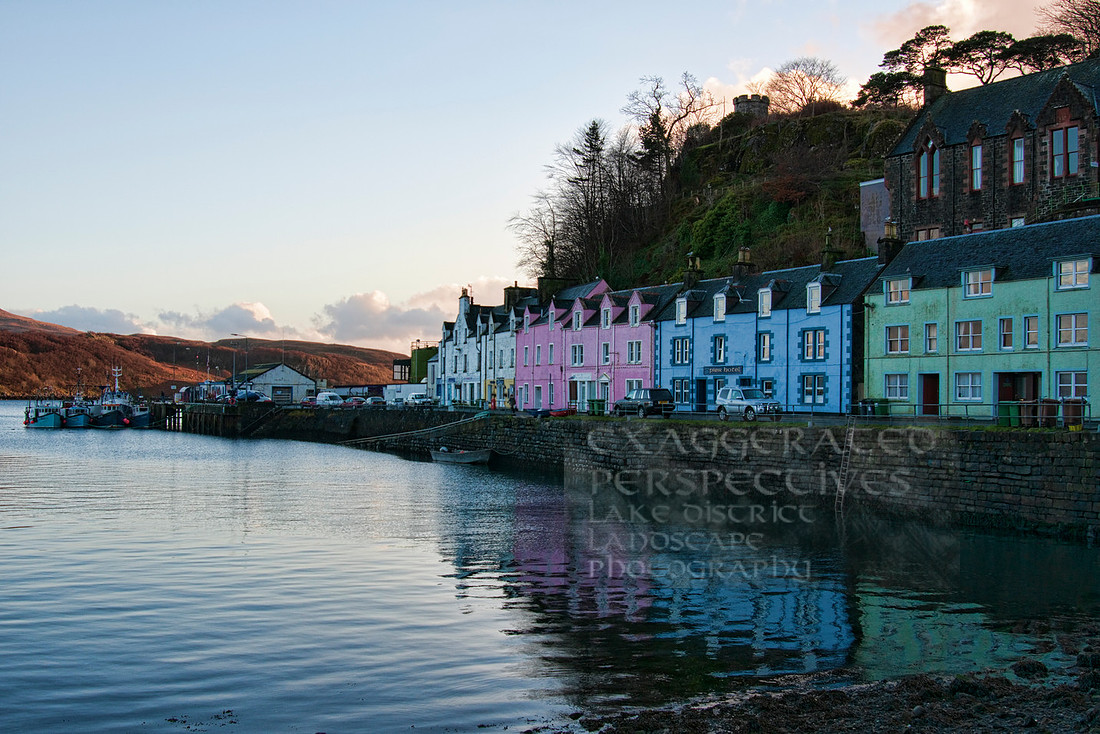
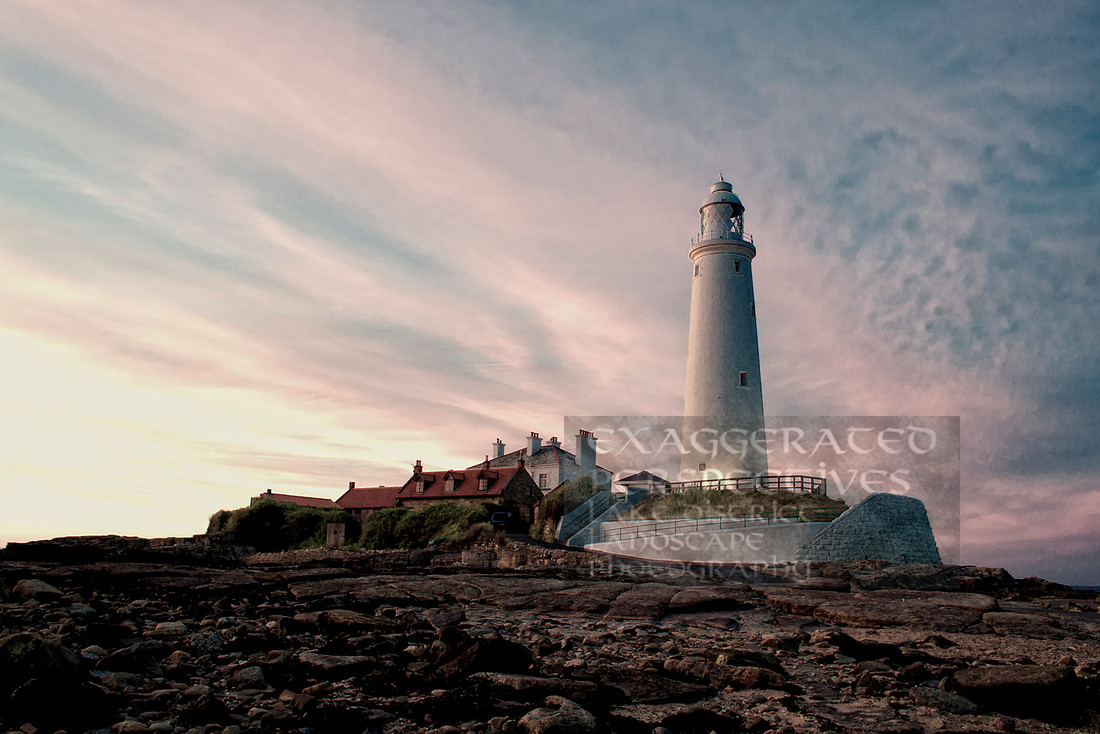
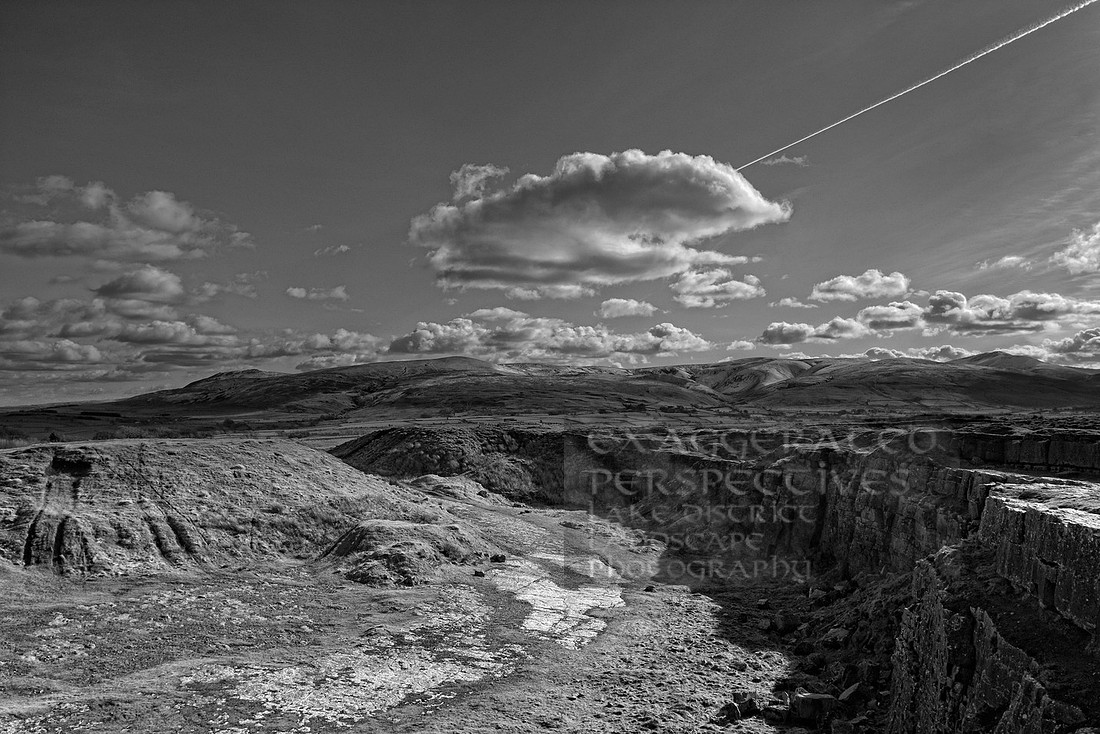
]]>
Panasonic could potentially improve its position by focusing on technological advancements, targeting niche markets, and strengthening its marketing efforts. Enhancing features like image quality, connectivity, or durability could help differentiate their products. However, whether Panasonic needs to increase its market share depends on its broader business strategy. If digital cameras are a core part of its portfolio, growth may be essential; but if they are a minor segment, maintaining profitability might be more important than chasing volume.
Chasing the number one spot can bring increased brand recognition and economies of scale, but it may also require significant investment and risk. For some companies, being a profitable and innovative challenger is preferable to engaging in costly battles for market leadership. Ultimately, Panasonic must weigh the benefits of expansion against the resources required to compete with industry giants.
In addition, collaborating with influencers and professional photographers could boost credibility and visibility among target audiences. By leveraging social media platforms and user-generated content, Panasonic may also foster a stronger connection with photography enthusiasts, further enhancing its brand appeal.
Furthermore, Panasonic could explore strategic partnerships with retailers to enhance product placement and in-store experiences, making its cameras more accessible and appealing to consumers. Investing in customer service and after-sales support may also encourage brand loyalty and positive word-of-mouth recommendations, contributing to long-term growth.
While being perceived as video-centric by the imaging press can help Panasonic attract filmmakers and content creators, it may inadvertently stifle their appeal among traditional stills photographers. Some consumers might assume that Panasonic cameras are optimised mainly for video, potentially overlooking their capabilities for high-quality still photography.
This perception could limit Panasonic's reach in the broader digital camera market, especially where buyers prioritise stills performance. To counter this, Panasonic could highlight the versatility of its cameras and promote features that cater to both photographers and videographers, thereby broadening its appeal and addressing potential misconceptions.
Moreover, Panasonic may benefit from conducting comprehensive market research to better understand shifting consumer preferences and emerging trends in digital imaging. By staying attuned to customer feedback and technological developments, the company can proactively adapt its product offerings and marketing strategies to stay competitive.
Does it worry me? Well yes, a bit! I’d hate to see another manufacturer bite the dust, not saying anything may happen here especially as they have gotten so good lately.
Does it make sense for Panasonic to pursue aggressive growth in the digital camera segment, or should it instead focus on sustaining its current position while investing in innovation and profitability? Evaluating the company's long-term objectives and its role within the wider imaging industry will help determine the most prudent course of action. Balancing ambition with strategic realism is key to ensuring lasting success amid fierce competition.
In evaluating its future direction, Panasonic should also consider the growing impact of smartphone photography on the digital camera market. With mobile devices continuously improving in imaging capabilities, consumers are becoming more selective about investing in dedicated cameras. Addressing this trend by emphasising unique features not found in smartphones, such as advanced lens systems or manual controls, could help Panasonic carve out a distinctive niche.
I feel that currently nobody else offers the quality of Cameras that Panasonic does for the prices charged, the stabilisation is second to none, the ergonomics and build quality are great, the autofocus has come along in leaps and bounds on the new “S” models, the lenses are great but they get little to no love, few recommendations and even fewer industry awards, to me it just doesn’t make any sense?
Despite this, I can't help but worry about the future; it would be a real loss to see another respected manufacturer fall by the wayside, especially given Panasonic's recent strides in quality and innovation. While the current market may seem unforgiving, it's heartening to see how far they've come, and I'd hope their progress continues rather than faltering.
No piccie this week as I have nothing on the subject!
Sorry!
Jules
]]>
The Panasonic 28-200mm F4-7.1 Lens
The Joys and Pitfalls of an All-in-One Lens Solution
Introduction
The Panasonic 28-200mm F4-7.1 lens represents a versatile approach to photography, offering a broad focal range that caters to a variety of shooting scenarios. This type of lens, often referred to as a 'superzoom' or 'travel zoom', is intended to provide photographers with a single, convenient solution for everything from wide-angle landscapes to distant telephoto shots.
The Joys of an All-in-One Lens
- Versatility and Convenience
- With a focal range spanning from 28mm to 200mm, this lens allows users to capture wide vistas, portraits, and distant subjects without ever changing lenses. For travel, street photography, or casual outings, this can be a significant advantage, reducing the need to carry and swap multiple lenses in the field.
- Compact and Lightweight Design
- Superzoom lenses like the Panasonic 28-200mm are typically designed to strike a balance between reach and portability. This makes them appealing for photographers who wish to travel light and avoid the bulk of a full kit bag.
- Cost Efficiency
- Purchasing a single lens that covers such a wide range can be more economical than buying several separate lenses to achieve the same coverage. This is particularly beneficial for beginners or those on a budget.
- Reduced Lens Changes
- Frequent lens changes can expose a camera’s sensor to dust and debris, especially outdoors. With an all-in-one lens, there is less need to switch lenses, which helps keep your camera cleaner and shooting uninterrupted.
- Size and Handling, it’s as small as the F1.8 Prime lenses from Panasonic!
The Pitfalls of an All-in-One Lens
Image Quality Compromises
- To achieve such a broad zoom range in a compact package, optical compromises are often necessary. Superzoom lenses can suffer from issues like distortion, chromatic aberration, and softness, particularly at the extreme ends of the focal range. While modern lens design has mitigated some of these issues, image quality may not match that of prime lenses or professional-grade zooms.
- Limited Aperture
- The variable aperture of F4-7.1 means the lens allows less light to reach the sensor as you zoom in. This can make shooting in low-light conditions challenging and may necessitate higher ISO settings, which can introduce noise. It also limits the ability to achieve a shallow depth of field for subject separation.
- Autofocus Performance
- Superzoom lenses can sometimes focus more slowly or less accurately compared to their more specialised counterparts, especially in low-light conditions or when tracking fast-moving subjects.
- While more compact than carrying multiple lenses, superzooms are often larger and heavier than a standard kit lens. Extended to 200mm, the lens may also become front-heavy, affecting handling balance on smaller camera bodies.
- This one starts at 28mm, pretty wide but some start at 24mm or even now 20mm.
Who Is This Lens For?
The Panasonic 28-200mm F4-7.1 lens is ideal for photographers seeking flexibility and simplicity. It is especially suitable for travel, family events, and outdoor adventures where changing lenses is impractical. However, those with a keen eye for image quality or who regularly shoot in challenging lighting conditions may find its limitations more apparent.
Conclusion
An all-in-one lens such as the Panasonic 28-200mm F4-7.1 provides a compelling option for those prioritising convenience and versatility. While it cannot rival specialist lenses in terms of optical performance or speed, it excels in situations where carrying a single lens is key. Ultimately, the decision comes down to weighing the joy of simplicity against the potential pitfalls in image quality and performance.
Stands up well on the S1R MkII and makes my “Full Frame” (Hate that term!) system about as light and convenient as my APSC Fuji system was.
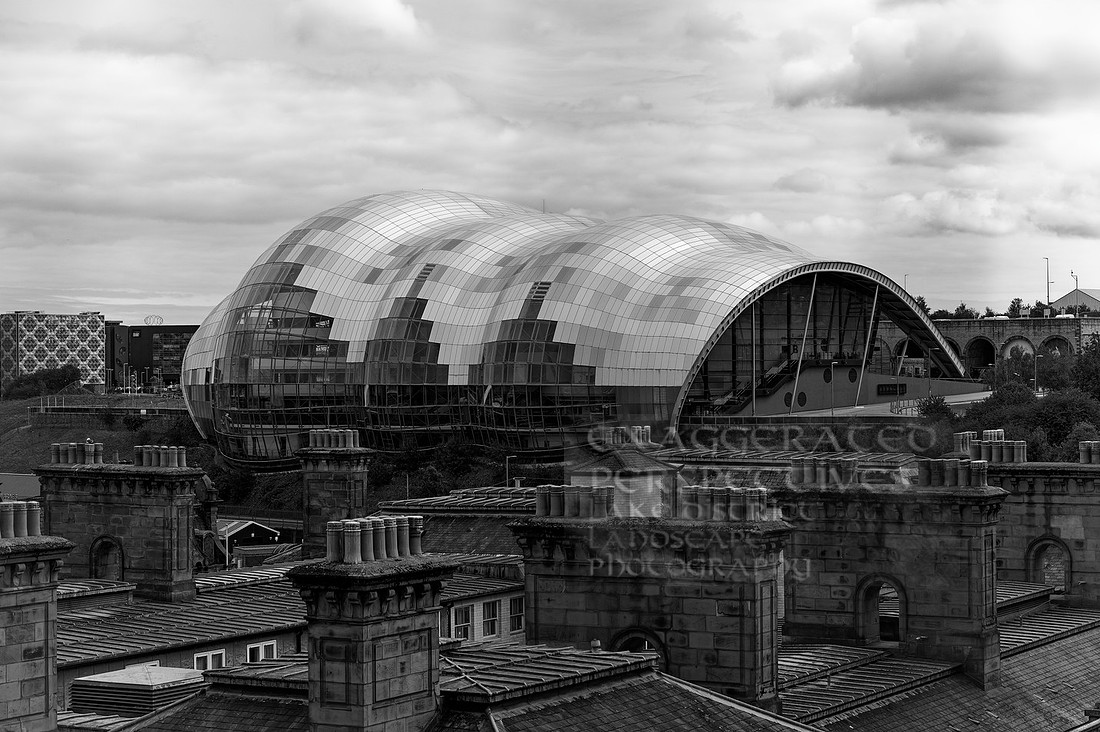
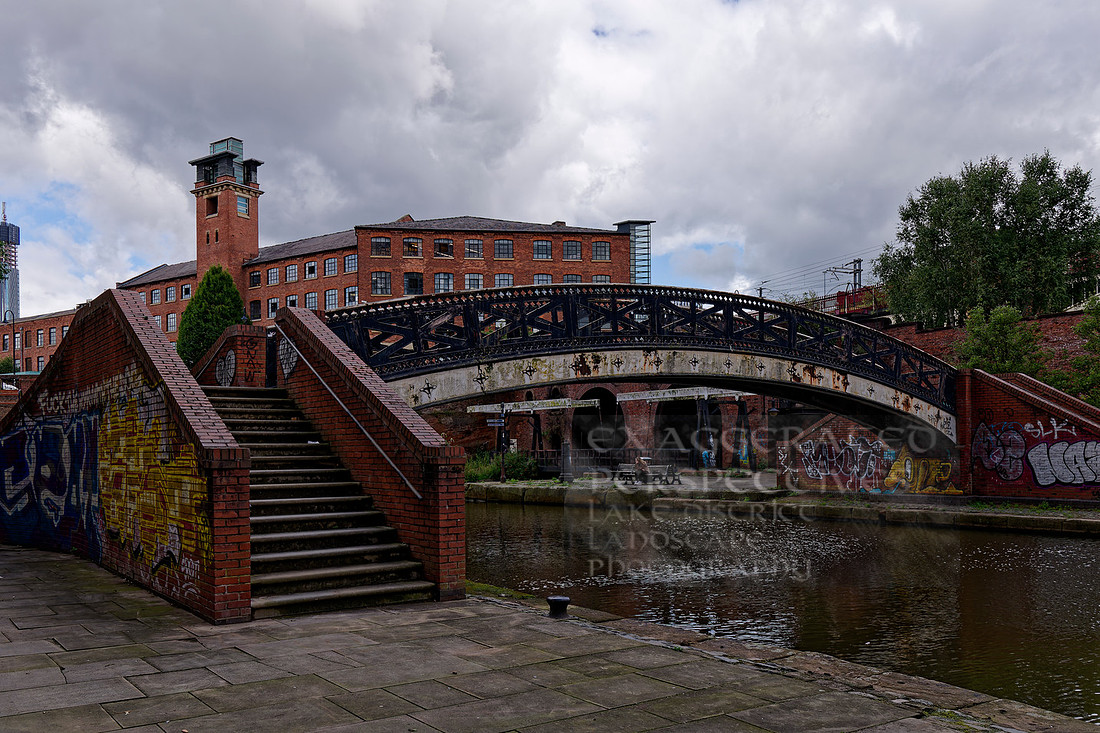
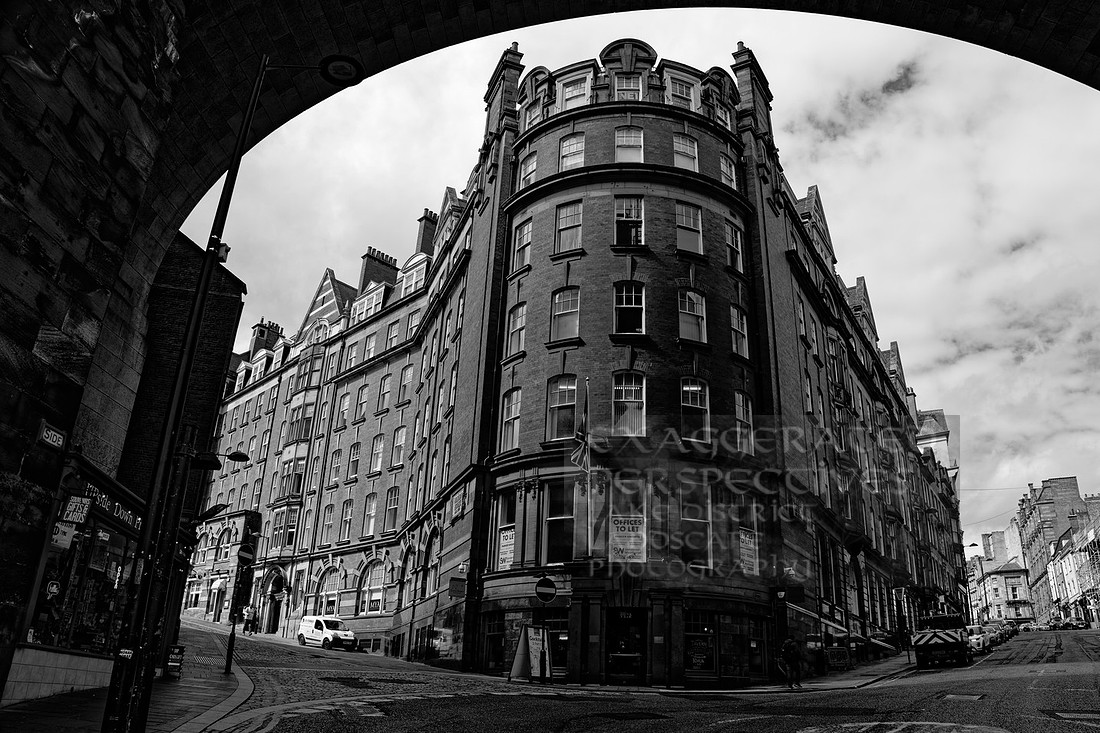
Part of MPB's rapid rise in popularity can likely be attributed to the extensive coverage and recommendations it receives on social media platforms, YouTube, and the like. With so many influencers seemingly eager to recommend MPB for the King's shilling, one wonders if the company's impressive growth has perhaps outpaced its ability to recruit and train sufficient staff to maintain quality standards. It's a classic case of expansion potentially stretching resources thin, and customers are right to question whether standards can keep pace with such growth.
As MPB has expanded its operations in the UK, concerns regarding quality control have become increasingly prominent among customers. Many users report that, with the company’s growth, there appears to be less consistency in how items are assessed and described, resulting in some products not meeting the advertised standards. This has led to frustrations, particularly when condition ratings do not accurately reflect the actual state of the gear received.
User comments and forum discussions indicate a growing concern among some customers that MPB's standards are slipping, particularly regarding the consistency and accuracy of their used equipment condition ratings. However, other customers report positive experiences, and MPB maintains a high overall rating on platforms like Trustpilot.
Common Customer Feedback
- Inaccurate Condition Ratings: A frequent complaint is that items listed as "Excellent" or "Like New" exhibit more wear and tear, scratches, or missing parts/coatings than expected, leading some users to feel their condition ratings are a "joke". MPB states their ratings are purely cosmetic and all gear is professionally inspected.
- Issues with Selling/Trade-ins: Some users selling their gear to MPB report that the company downgrades their items to a lower condition rating (and thus a lower price) than the seller anticipated, even for well-maintained equipment.
- Customer Service & Communication: There are scattered reports of slow or non-existent responses to customer emails and issues with courier collections, which has led some potential customers to take their business elsewhere.
Positive Experiences & MPB Policies
Despite the negative feedback, many customers still report positive experiences, finding items to be as described and good value.
- Strong Return Policy and Warranty: MPB offers a 14-day return period and a standard twelve-month warranty on all used gear (excluding "Faulty" condition items), which provides a safety net for buyers who receive an item that does not meet their expectations. Customers with issues are generally advised to use this return policy.
- Individual Product Photos: MPB photographs every item individually, allowing potential buyers to inspect the actual item for sale before purchase.
- Official Condition Grading: MPB publishes detailed condition grading guides on their Help Centre to clarify what to expect from each category, from "Like New" to "Heavily Used".
In summary, while many customers continue to have good experiences, recent discussions across forums suggest that a minority of users are encountering inconsistencies, leading to the perception that standards are declining.
Conclusions
MPB have grown in size, almost at an exponential rate, there are many reasons for this, most of them positive, I really must iterate that most strongly. However the growing (Or groaning?) influence of You-tube sponsorship seems to skew things a little. There seems to be an endless stream of Youtubers recommending MPB but without qualification? Anyone, me included can say they have experience of MPB but have they really or are they just live advertising hoardings?
Business growth never comes without some pains, I guess what I'm saying is nobody is perfect?
Jules
Caveat Emptor
- the principle that the buyer alone is responsible for checking the quality and suitability of goods before a purchase is made:
"caveat emptor still applies when you are buying your house"
Or that Lens you really wanted!
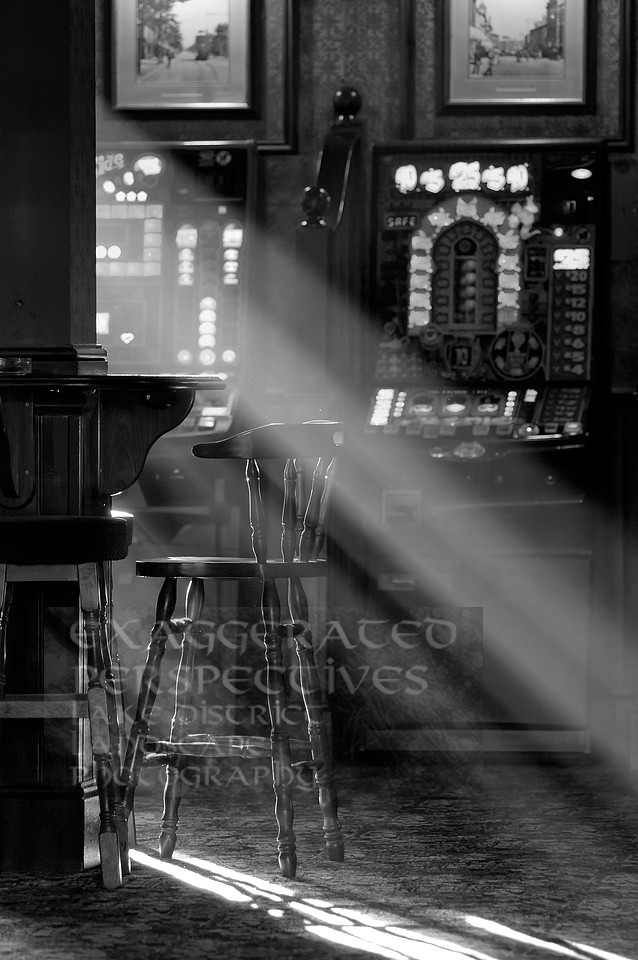
]]>
The Evolving Definition of “Real” in Photography and Film
The Transformation of “Real” Imagery
The concept of “real” photography or film has undergone significant transformation over the years. In its traditional sense, “real” photography referred to images captured on film, relying on chemical processes and allowing for only minimal manipulation, typically confined to what was achievable in the darkroom. With the arrival of digital technology, this definition was called into question. Many purists doubted whether digital images, which could be altered with ease, retained the authenticity of their analogue predecessors. Despite these concerns, digital photography has now gained widespread acceptance as a legitimate medium, as it continues to involve capturing moments through a lens, though with sensors replacing film.
AI and the Shift in Authenticity
The introduction of AI-generated images and films has further muddied the waters regarding what constitutes “real” imagery. Artificial intelligence has the capability to create visual content entirely from scratch or to enhance photographs in ways that may not accurately depict the original scene. Consequently, the definition of “real” photography or film often hinges on the intent and authenticity behind the image—whether it genuinely represents a moment or subject, regardless of the chosen medium. Thus, the boundaries of “real” are in a constant state of flux, shaped by technological innovation, artistic vision, and evolving cultural attitudes.
Social Media and the Challenge of Authenticity
The debate over “real” imagery is further intensified by the rise of social media and digital platforms, where the use of filters and editing tools has become commonplace. The accessibility of these tools means that almost anyone can manipulate photographs or films, further blurring the distinction between reality and artistic interpretation. This phenomenon poses a challenge for viewers, who must increasingly scrutinise visual content to determine its authenticity in the digital era.
Creative Democracy and Ethical Concerns
In this ever-changing landscape, ongoing discussions persist within artistic and journalistic circles about the merits and drawbacks of various mediums. On one hand, technological advances have democratised creativity, enabling more individuals to express themselves. On the other hand, there is growing concern that the line dividing reality and fabrication is becoming irrevocably blurred. These developments prompt us to reflect not only on the practical aspects of image-making but also on our expectations and trust in the images presented to us.
Implications for Visual Storytelling
The continual evolution of what is deemed “real” motivates photographers and filmmakers to reconsider their approaches and the messages they aim to communicate. As audiences become increasingly visually literate, there is a heightened appreciation for transparency regarding the processes and technologies involved in image creation. Ultimately, the ongoing dialogue about authenticity shapes both the art itself and the way society perceives and values visual storytelling.
Real or AI? Or something in-between?
I know???
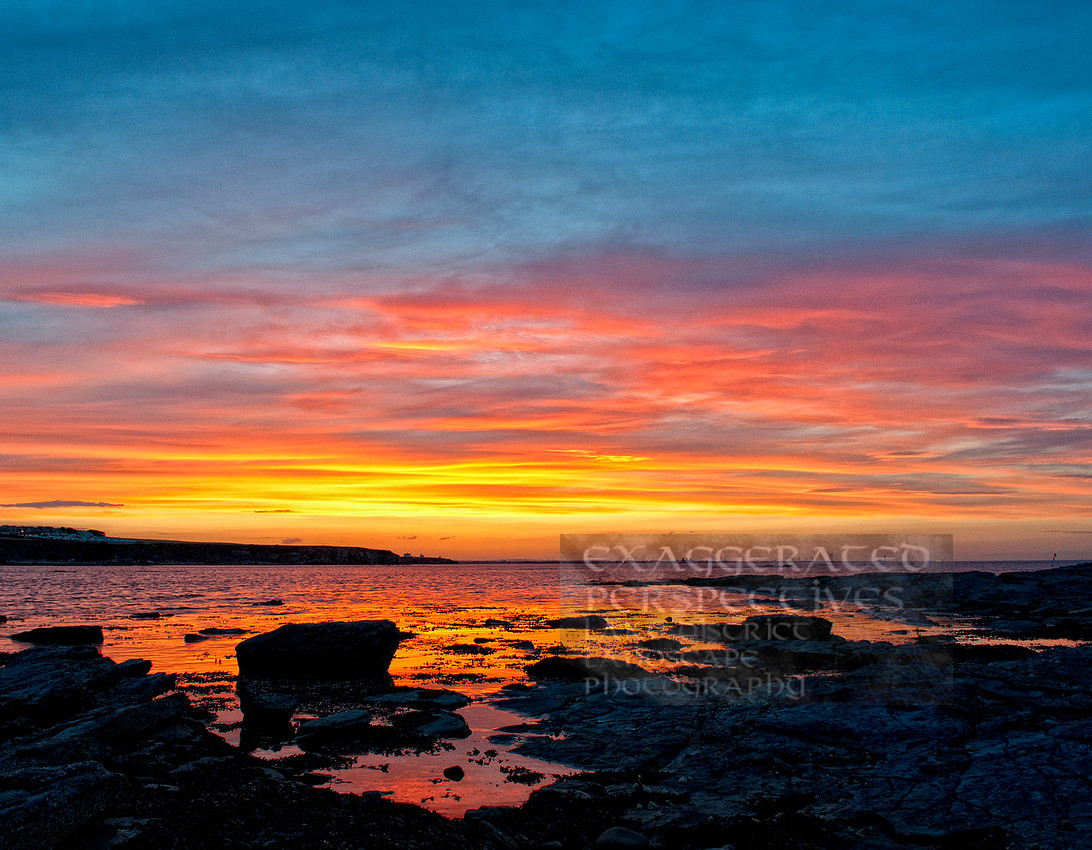
]]>
How to Approach It, Leverage Multi-shot Cameras, and Move Beyond the Big Names
The X-pan crop—a panoramic aspect ratio made famous by the Hasselblad X-pan film camera—has become a cult favourite among photographers seeking to add cinematic flair and drama to their images. The elongated frame, typically around 65:24 or 2.7:1, evokes a sense of storytelling and atmosphere reminiscent of the silver screen. But while some enthusiasts chase after rare and expensive gear to achieve this look, it’s important to recognise that the X-pan crop is more about creative vision than specific equipment.
To approach the X-pan crop in your own work, start by visualising scenes in a panoramic format. This means thinking in layers—foreground, middle ground, and background—and composing with horizontal flow and balance in mind. You don’t need to own an actual X-pan; most modern digital cameras allow you to crop images to this ratio in post-production. In fact, many mirrorless models let you set custom crop guides in-camera, making it easier to pre-visualise your composition on the spot.
Cameras equipped with multi-shot or high-resolution modes can be particularly useful. By capturing multiple exposures and combining them, you can create ultra-high-resolution files that withstand aggressive cropping without sacrificing detail. This makes it possible to shoot with a standard sensor and still achieve that signature panoramic effect, opening up more flexibility in framing and editing.
As tempting as it might be to invest in premium cameras like the Fujifilm GFX or Hasselblad X2D, the reality is you simply don’t need them to create compelling X-pan-style images. These systems offer superb image quality and dynamic range, but for most photographers, the cost and bulk aren’t justified for the sake of a crop that can be achieved with far more accessible gear. The essence of the X-pan aesthetic lies in your approach to composition, not the badge on your camera.
Ultimately, the cult of the X-pan crop is about embracing a panoramic mindset and exploring new creative possibilities. With a thoughtful approach and the right use of cropping and multi-shot techniques, you can channel the spirit of the X-pan in your photography—no matter what camera you use.
It’s worth mentioning that the X-pan crop can also challenge your photographic discipline, encouraging you to slow down and consider each element in the frame. With the wider format, there’s less room for error—distracting details at the edges become more apparent, and subject placement demands greater care. This makes it an excellent exercise for honing compositional skills and developing a more deliberate shooting style.
Here's a Link to some of my more recent efforts...
]]>
Picture Taking, Processing, and Transparency in Artistic Practice
Surmon
This post explores the impact of AI on photography, highlighting both its advantages—such as enhanced creativity, greater efficiency, and increased accessibility—and its drawbacks, including potential loss of artistic control, ethical concerns, and data privacy issues. It also emphasises the importance of transparency in using AI tools, encouraging photographers to openly share their processes to foster trust, ethical practice, and constructive dialogue within the creative community.
Pros of AI in Photography
- Enhanced Creativity: AI tools can offer photographers new ways to edit and manipulate images, unlocking creative possibilities that may be difficult or time-consuming to achieve manually.
- Efficiency and Speed: Automated processing such as noise reduction, colour correction, and subject recognition can significantly reduce editing time and improve workflow.
- Accessibility: AI-powered cameras and editing apps make it easier for beginners and enthusiasts to achieve professional-looking results without extensive technical knowledge.
Cons of AI in Photography
- Loss of Artistic Control: Over-reliance on AI tools may lead to a homogenisation of style, as algorithms tend to favour popular or conventional aesthetics.
- Ethical Concerns: The use of AI in image manipulation can raise issues around authenticity, especially if edits are not disclosed, potentially misleading viewers about the original scene.
- Data Privacy: AI platforms may collect and store personal images, raising questions about privacy and the ownership of creative content.
Being Open About Your Process
Transparency regarding your use of AI in photography is increasingly important. By openly sharing your process—including which tools or algorithms you use—you foster trust with your audience and contribute to meaningful dialogue about the evolving nature of photographic art. This openness not only upholds ethical standards but also helps others understand the creative possibilities and limitations associated with AI-powered image making.
Embracing transparency also sets a positive example within the photography community. It encourages constructive discussion about the integration of technology and upholds the integrity of both the artist and the medium. By demystifying the role of AI, photographers can inspire innovation while maintaining credibility with their audience.
When discussing AI in photography, it's also crucial to consider the learning curve associated with new technologies. While AI tools can simplify many aspects of image creation, mastering their features and understanding potential pitfalls can take time. This encourages ongoing education and adaptability among photographers, ensuring they remain at the forefront of both artistry and technical innovation.
Additionally, transparency can demystify the technology for those unfamiliar with AI, making it less intimidating and more approachable. Sharing both successes and challenges when using AI fosters a culture of learning and mutual support in the creative community.
Amen…
AI free???

Exploring Glasgow’s Murals: Beyond the Official Trail
Discovering Hidden Gems in the City’s Urban Art Scene
Introduction
Glasgow’s reputation as a hub for street art is well-deserved, and while the official Mural Trail offers a guided journey through many of the city’s celebrated masterpieces, there is an entire world of murals waiting just off the beaten path. Walking around the city, you’ll find that some of the most captivating works can be stumbled upon in unexpected corners, alleyways, or on the facades of otherwise ordinary buildings. These hidden pieces enrich the city’s creative pulse and are very much worth seeking out.
The Glasgow Mural Trail—And What Lies Beyond
The Glasgow Mural Trail is a fantastic starting point, leading you past over two dozen striking murals by local and international artists. Yet, the city’s street art scene is ever-evolving, with new, unofficial works appearing regularly. Some artists choose to work outside the trail, leaving behind vibrant murals that aren’t listed in any guide. Exploring beyond the mapped route can reveal stunning surprises that even locals may not have seen.
Notable Hidden Murals and Secret Spots
- Side Street Surprises: Wander down the side streets and quiet lanes around Merchant City, and you may spot colourful wildlife, surreal portraits, or clever visual jokes painted onto neglected walls.
- Southside Adventures: Venture across the River Clyde to the Southside, where creative communities have added their own mark with expressive, large-scale art on tenement gables and in community spaces.
- Pop-up Works: Keep your eyes peeled for temporary murals—sometimes part of festivals or community projects—that may vanish or transform after just a few months.
- Warehouse Walls: In places like Finnieston or the East End, old warehouses often become canvases for experimental artists, showcasing bold designs and political messages.
The Experience: Curiosity as Your Guide
Often, the joy of mural hunting in Glasgow comes from the unexpected discovery. Let curiosity lead you through unexplored neighbourhoods or beneath railway arches, where art flourishes away from the crowds. These off-the-list murals often reflect local voices, social issues, or simply the artist’s unique sense of humour. Take your time, snap photos, and follow your instincts—you might just find your new favourite piece in the least likely spot.
Tips for the Adventurous Explorer
- Don’t be afraid to stray from the official trail—some of the best art isn’t on the map.
- Talk to locals; they often know where new or lesser-known murals have popped up.
- Check out social media for recent street art sightings and tips from fellow mural enthusiasts.
- Remember, the scene is always changing—a mural you see today could be gone tomorrow, replaced by something entirely new.
- Enjoy the journey itself, as much as the art you find.
Conclusion
Glasgow’s murals are more than just a collection of public artworks; they’re an ever-changing story told across the city’s streets. While the official trail is impressive, some of the most remarkable and evocative pieces lie just out of sight, waiting for a curious eye to find them. By exploring beyond the list, you’ll gain a deeper appreciation for Glasgow’s vibrant, creative spirit and maybe even uncover a hidden masterpiece of your own.
As you set out to discover Glasgow’s vibrant murals, remember that curiosity can lead you into many corners of the city—some bustling and friendly, others a bit quieter or less familiar. While the spirit of adventure is at the heart of mural hunting, it’s wise to be mindful of your surroundings, especially in neighbourhoods you don’t know well. Consider exploring with a friend or during daylight hours, and listen to local advice on which areas are best to visit.
Whether you’re a seasoned art lover or simply seeking a fresh perspective on Glasgow, mural hunting offers a dynamic blend of creativity and exploration. Each mural adds to the city’s ever-evolving urban tapestry, inviting discovery and delight. By staying aware and open, you can enjoy the journey and let every new find enrich your experience of this remarkable cityscape.
Don’t forget to keep your eyes peeled for some lovely buildings enroute, as Glasgow’s architectural charm is just as captivating as its vibrant street art. The city’s mix of grand Victorian facades, quirky modern structures and hidden historical gems offers an extra layer of visual interest to your mural-hunting adventure. By appreciating both the art and the urban landscape, you’ll find that every walk reveals new surprises—whether it’s an ornate doorway, a colourful tenement, or a striking contemporary design nestled amongst the classics. Let your curiosity guide you not only towards the murals, but also to the distinctive character of Glasgow’s built environment, ensuring that every step uncovers something unique and memorable.
Zenfolio | Glasgow Murals 2025
]]>
Captivating River Views and the Heart of the City
Introduction
Prague, the enchanting capital of the Czech Republic, is a city that effortlessly blends centuries of history with a vibrant modern spirit. For those seeking a memorable weekend away, the city’s picturesque river views offer a perfect backdrop for adventure, relaxation, and discovery.
The Vltava River: A Central Feature
The Vltava River winds through the heart of Prague, providing sweeping vistas that have inspired artists and travellers for generations. Strolling along the riverbank, you’ll encounter charming bridges, historic buildings, and lively cafés, each contributing to the city’s unique charm.
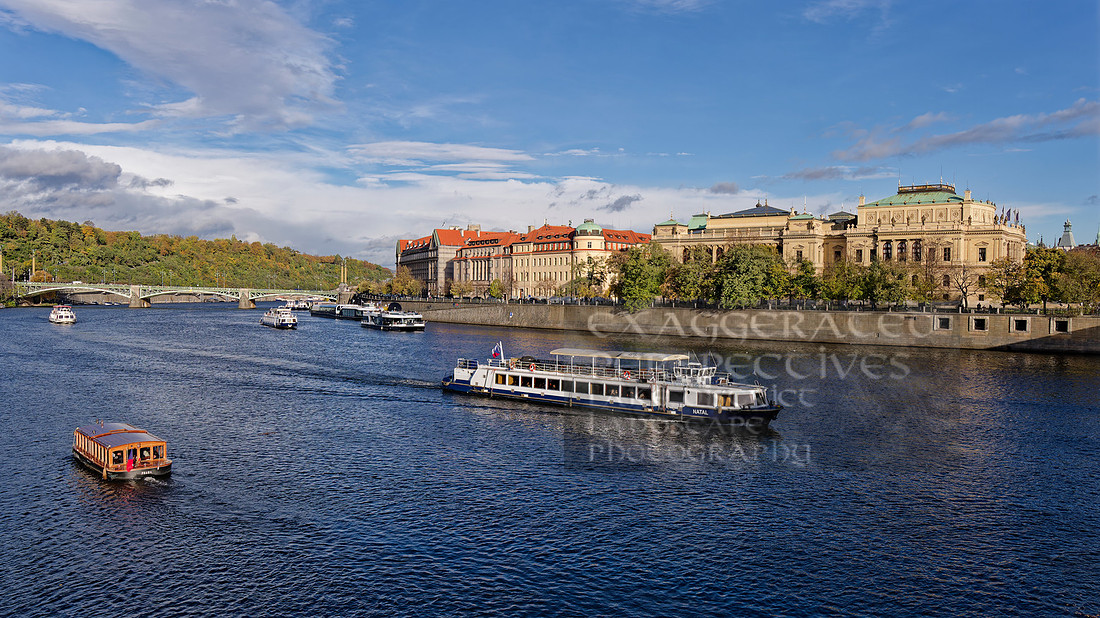
Charles Bridge: Iconic Beauty
No visit to Prague is complete without crossing the Charles Bridge. By day, the bridge bustles with street musicians and local artists. At dawn or dusk, the soft light casts magical reflections on the water, offering breathtaking views of the city’s spires and the distant Prague Castle.
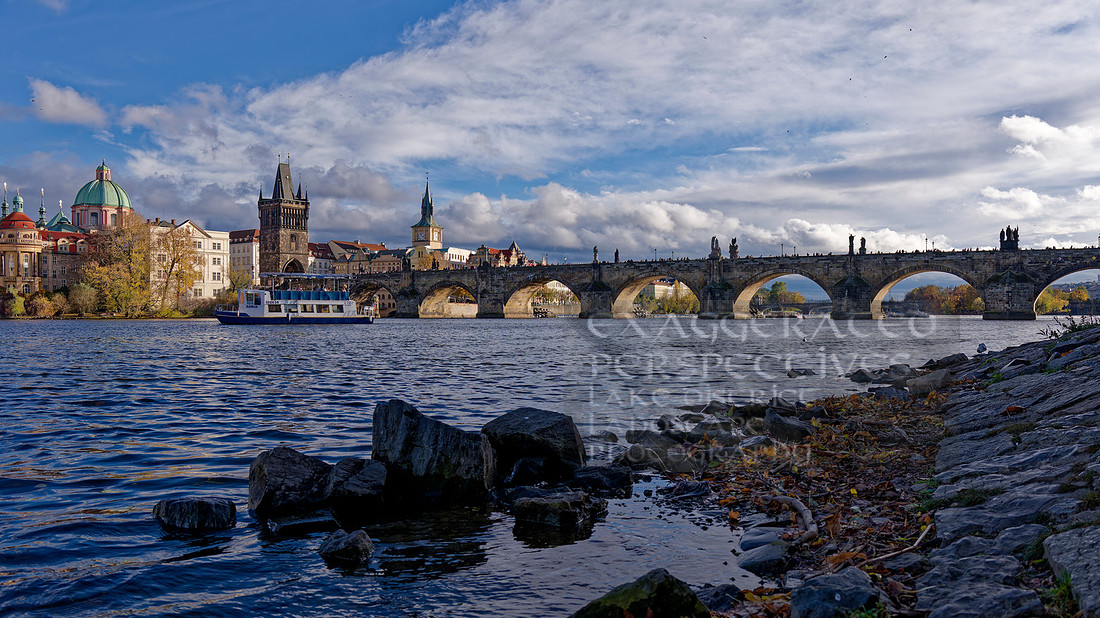
Riverside Walks and Parks
Begin your day with a gentle stroll starting near the National Theatre towards Kampa Island. This leafy riverside park invites visitors to relax with a coffee as swans glide by on the river. The pedestrian paths are perfect for soaking up the local atmosphere and watching boats pass beneath the bridges.
Views from Letná Park
For panoramic scenes of both the river and the city skyline, head to Letná Park. From here, you can admire the meandering Vltava and the many bridges connecting Prague’s districts. The park is a favourite spot for locals to picnic and for photographers to capture stunning cityscapes.
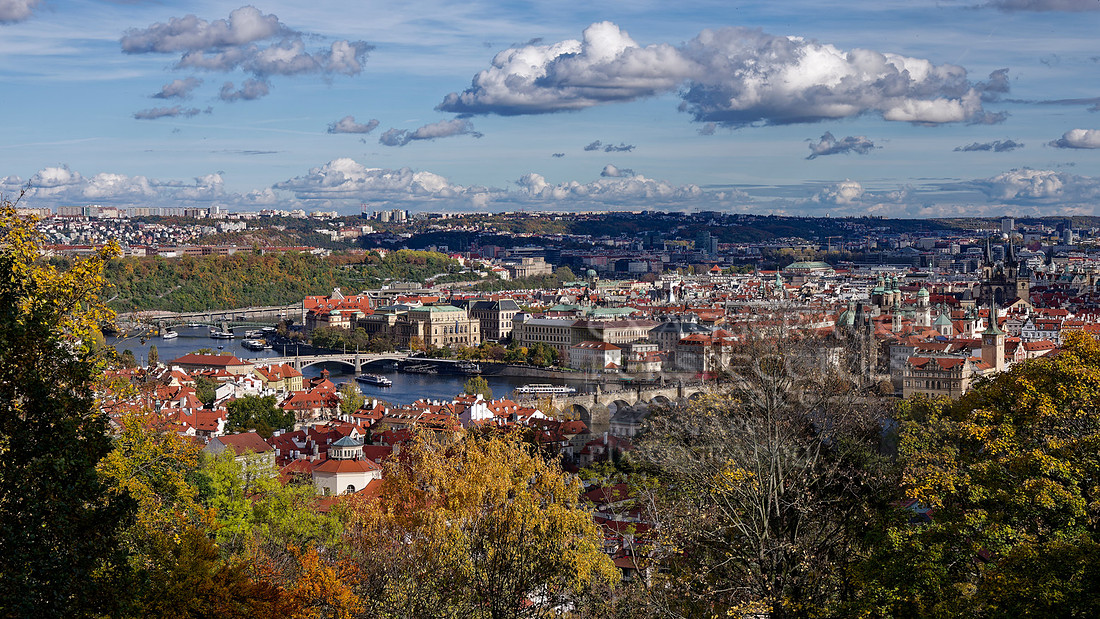
Evening Along the Embankment
As dusk falls, the riverbanks come alive with lights reflecting off the water. The Rašínovo Embankment is known for its lively atmosphere, with pop-up bars and food stalls. Take a seat and enjoy the view of illuminated bridges against the night sky—a perfect way to end your day.
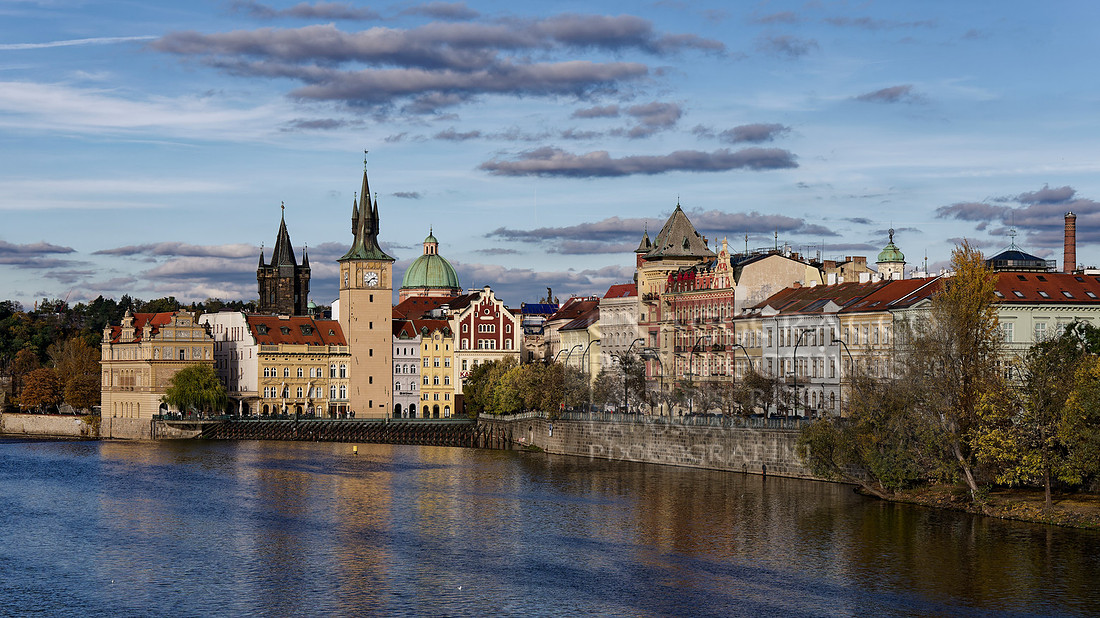
Conclusion
A weekend in Prague, with its captivating river views and vibrant riverside life, is sure to leave you with unforgettable memories. Whether you’re seeking peaceful morning walks, lively evening gatherings, or simply a spot to gaze at the city’s timeless beauty, Prague’s riverside has it all.
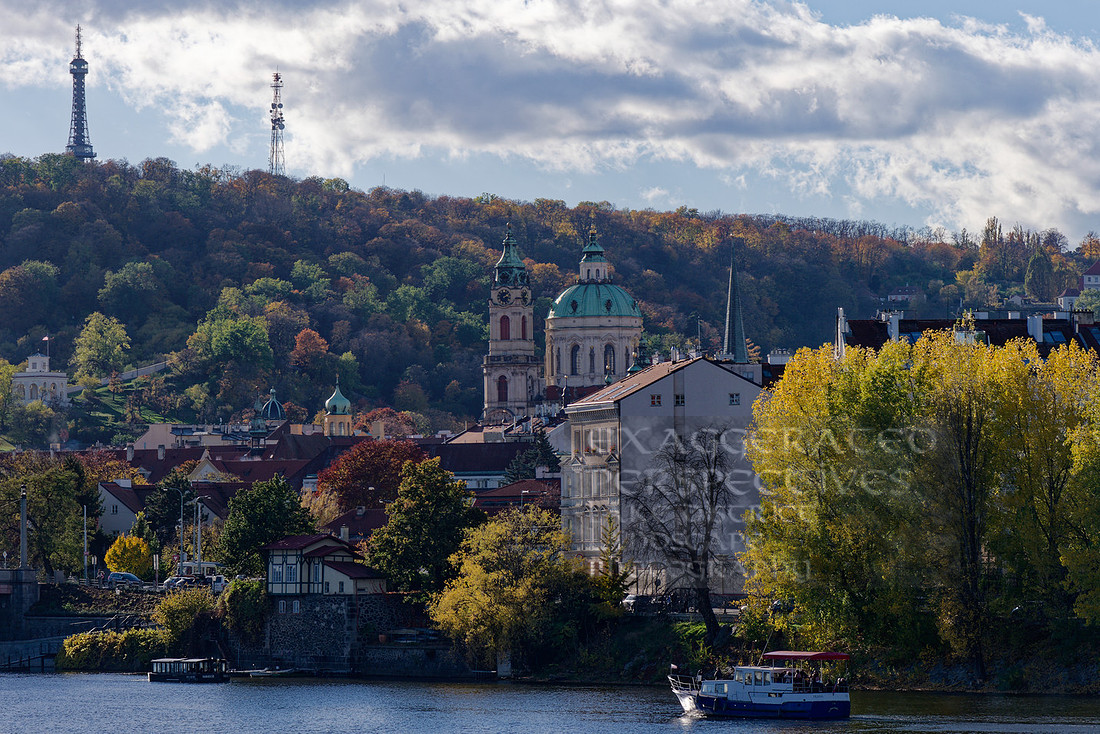
]]>
An Essential Guide to Exploring the Jewel of Northern Italy
Introduction
Lake Como, nestled in the foothills of the Italian Alps, is renowned for its breathtaking scenery, elegant villas, charming towns, and rich cultural heritage. Whether you are seeking natural beauty, historical intrigue, or simply a relaxing escape, Lake Como offers a wealth of sightseeing opportunities for every traveller.
1. Bellagio – The Pearl of the Lake
Bellagio is perhaps the most famous town on Lake Como, often referred to as the "Pearl of the Lake." Its cobbled streets, vibrant waterfront, and panoramic views make it a must-visit. Wander through the narrow lanes, explore artisan shops, and enjoy an espresso overlooking the lake. Villa Melzi and its enchanting gardens are a highlight for visitors interested in both nature and history.
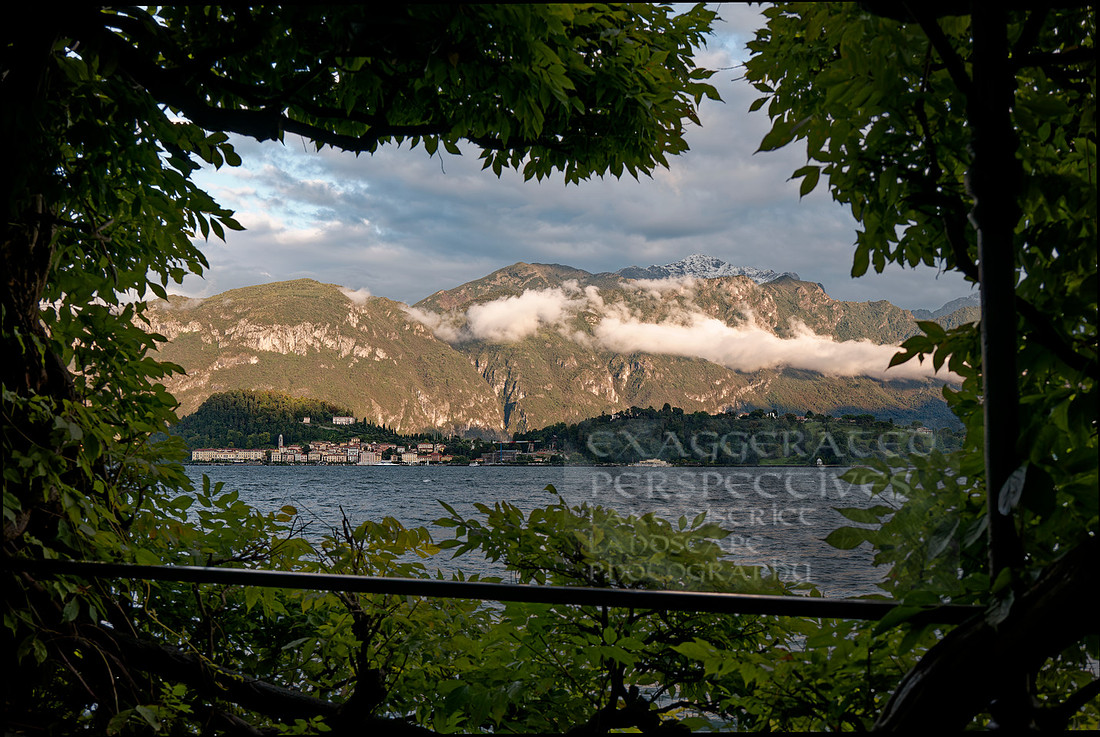
2. Varenna – A Romantic Escape
Located on the eastern shore, Varenna exudes romantic charm with its pastel-coloured houses and lakeside promenade. Visit the iconic Villa Monastero, whose botanical gardens stretch along the shoreline, and climb up to Castello di Vezio for spectacular views of the surrounding mountains and water.
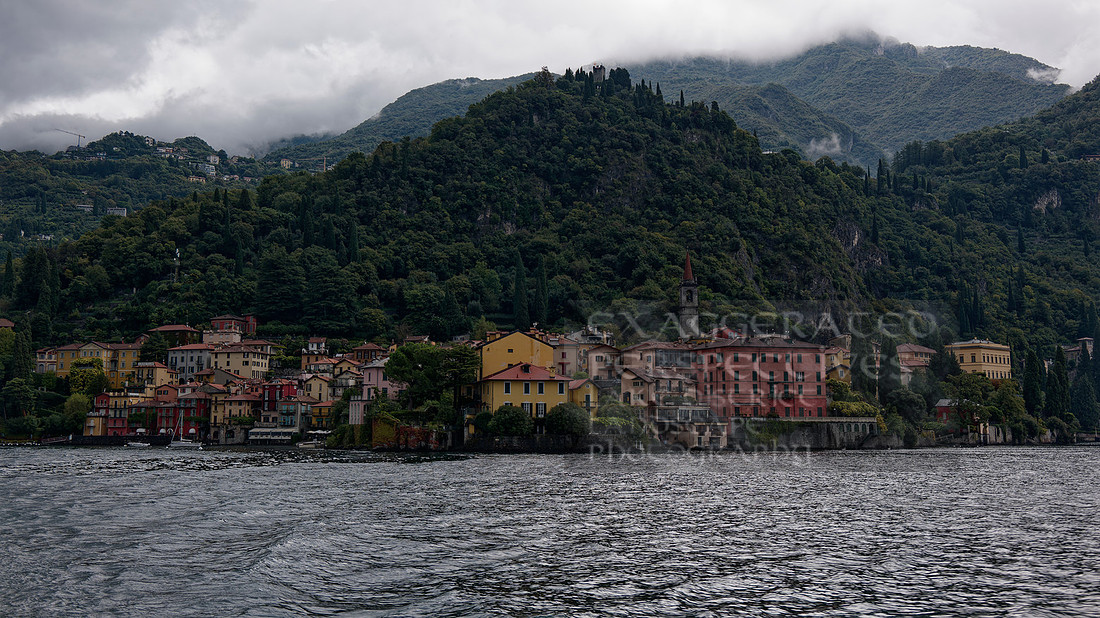
3. Menaggio – A Family Favourite
Menaggio, on the western shore, boasts a lively piazza, inviting cafés, and a picturesque lakeside walkway. It’s an excellent base for hiking, cycling, and ferry trips to other towns. Families will appreciate the relaxed atmosphere and ample green spaces.

4. Villa del Balbianello
One of the lake’s most famous landmarks, Villa del Balbianello is situated on a wooded promontory near Lenno. Its terraced gardens and stunning architecture have featured in films such as "Casino Royale" and "Star Wars: Episode II." Guided tours reveal its fascinating history and the adventurous lives of its former owners.
5. Tremezzo and Villa Carlotta
Tremezzo is home to the elegant Villa Carlotta, renowned for its magnificent gardens and art collections. In spring, the garden’s azaleas and rhododendrons are in full bloom, creating a riot of colour against the lake backdrop. The villa’s museum houses sculptures and paintings from the 18th and 19th centuries.

6. Como Town – The Gateway to the Lake
The city of Como, at the southern tip of the lake, is rich in history and culture. Explore the Gothic-style Como Cathedral, stroll through the old town’s boutiques and markets, and take the funicular up to Brunate for panoramic views. The town is also a great starting point for boat cruises around the lake.
7. Boat Tours and Ferries
A quintessential Lake Como experience is travelling by boat. Regular ferry services connect the main towns, offering a unique perspective of the lakeside villas and alpine scenery. Private boat tours are also available for a more personalised adventure.
8. Hiking and Nature Trails
The hills and mountains surrounding Lake Como are criss-crossed with well-marked trails, suitable for all levels. Popular routes include the Greenway del Lago di Como—a scenic path from Colonno to Griante—and various walks around the villages and forests.
9. Local Cuisine and Markets
No trip is complete without sampling local delicacies. Enjoy lake fish, risotto, and polenta at traditional trattorias, and browse the open-air markets for cheeses, cured meats, and fresh produce. Many towns host weekly markets, perfect for picking up souvenirs and experiencing local life.
10. Seasonal Events and Festivals
Lake Como hosts various events throughout the year, from food festivals celebrating regional specialities to open-air concerts and historical reenactments. Check local listings to make the most of your visit.
Conclusion
Sightseeing around Lake Como promises a blend of natural splendour, cultural riches, and unforgettable Italian charm. Whether you are drawn to its picturesque towns, lush gardens, or crystalline waters, the lake offers something for every visitor. Plan your itinerary to include boat journeys, leisurely strolls, and plenty of time to simply soak up the views!
]]>
The journey of any creative endeavor, especially photography, often begins with inspiration but can quickly become bogged down by the relentless pursuit of perfection. In the age of instant sharing and immaculate, post-processed images, it’s easy to fall into the trap of measuring our own work against an impossible, idealized standard. Shifting our focus from the final, perfect result to simply enjoying the process is not merely a coping mechanism—it is a powerful act of creative liberation.
The Tyranny of the Final Image
Perfectionism in photography is often a recipe for creative paralysis and burnout. It manifests in endless pixel-peeping, fear of failure, and the constant, draining comparison of your shots to the curated feeds of others. This focus on the "perfect image" turns a dynamic, sensory experience into a rigid, results-driven task. When we prioritize the output above all else, every missed focus point, every slightly awkward composition, and every less-than-ideal lighting condition becomes a source of frustration, stealing the very joy that drew us to the camera in the first place.
Embracing the Flow and Experimentation
The greatest benefit of releasing the need for perfection is the space it creates for experimentation and presence. When you allow yourself to just be with your camera, the experience transforms:
Slow Down: Instead of racing to capture a pre-visualized shot, focus on the immediate sensory experience. Notice how the light falls, the subtle movements of your subject, or the texture of the environment. The process is not the mechanical act of clicking the shutter, but the mindful act of seeing.
Embrace "Happy Accidents": Some of the most compelling and unique images come from moments where the photographer deviates from the plan. By giving up rigid control, you open yourself up to serendipity—a flare, a blur, or an unconventional angle that might have been rejected by the "perfectionist" mind.
Focus on the Craft: Enjoy the technical aspects purely as craft, not as hurdles. Find pleasure in testing a new lens, learning a new lighting technique, or editing a photo not to "fix" it, but to explore its potential, like a painter adding layers to a canvas.
Redefining Success
When you focus on the process, success is redefined. It is no longer measured by likes, sales, or technical specifications, but by the personal satisfaction derived from the experience.
Success becomes:
Spending an hour observing a sunset, regardless of the photos taken.
The feeling of mastering a difficult exposure setting.
The moment of connection with a subject.
This holistic definition ensures that every time you pick up your camera, you have already succeeded, because you have engaged in an activity that brings you personal fulfillment and connection to the world around you. Ultimately, this relaxed, process-driven approach paradoxically leads to more authentic, emotionally resonant, and genuinely creative work.
I enjoyed the process of taking this picture, My wife enjoyed the process of consuming the Aperol Spritz!
www.exaggeratedperspectives.com
]]>
The belief that "everything has been done before" is a natural concern for photographers in a saturated media environment. However, the path to developing a unique style in contemporary photography lies not in seeking pure, untouched originality, but in personal synthesis—the distinct way you combine established elements based on your unique vision and experiences.
I. Why Total Originality is a Myth (and Why That’s Liberating)
No work of art exists in a vacuum. Every photograph is inspired by, or in dialogue with, the images that came before it. Trying to force a style that is entirely new is creatively exhausting.
The most successful contemporary photographers establish their "uniqueness" by making consistent, personal choices across these three domains:
1. The Subject (The "What" and "Where")
What stories are you telling? Instead of seeking the most beautiful or famous locations, focus on meaningful repetition.
- The Specific Niche: Documenting the unique rituals of a small subculture, photographing a single neighborhood over decades, or focusing exclusively on portraits of people who share a niche profession.
- The Recurring Theme: Isolate a feeling—loneliness, excitement, decay—and consistently photograph subjects that evoke it.
2. The Technique (The "How" in the Camera)
This is about consistent mechanical choices that build a visual rhythm across your portfolio.
- Focal Length: Committing to one focal length (e.g., always shooting with a wide 24mm or a compressed 135mm) forces you to solve compositional problems the same way every time.
- Light & Shadow: Always shooting in the high-contrast light of midday, or exclusively using the soft, flat light of an overcast day.
- Movement: Consistently using long exposures to blur water or clouds, or using a fast shutter speed to freeze moments dramatically (the "decisive moment").
3. The Edit (The "Look" in Post-Production)
Post-processing is often the most visible element of a photographer's style. Consistency here is key to creating a unified body of work.
- Color Palette: Using a consistent color grade (e.g., deep greens and muted oranges, or a stylized cool/warm split).
- Contrast and Texture: Applying a specific film-like grain structure, consistently lowering the black point for a "crushed blacks" look, or keeping everything high-key and airy.
- Cropping/Aspect Ratio: Committing to a square crop (1:1), cinematic widescreen (16:9), or a vertical orientation for all your images.
II. Style as Emergence, Not Prescription
The danger is not in having a style, but in forcing one prematurely. If you start your journey by defining a strict style, it can become an overburden that stifles creativity by making you reject amazing images simply because they don't fit your pre-set aesthetic.
A good style is the visual language that emerges from your most satisfying work.
How to Let Your Style Emerge Naturally:
- Prioritize Volume and Personal Enjoyment: Shoot constantly and focus only on creating images that you find beautiful, compelling, or interesting.
- Curate Ruthlessly: After shooting for a few months, print your 15 favorite images (or organize them into a single folder). Look at them side-by-side.
- What do they share? (Is the horizon always low? Is the light always soft?)
- What are the common colors? (Teal and orange? Muted pastels?)
- What feelings do they evoke? (Solitude? Energy? Tension?)
- Define the Pattern: Once you see the pattern, give it a name and begin to consciously lean into those choices. This is where your style moves from a subconscious habit to a deliberate artistic voice.
By focusing on your intent—the unique way you observe and interpret the world—your unique style will naturally coalesce without the pressure of having to invent a technique that no one has ever thought of before.
Unique?
No
Stylish, Yeah I think she looked the part!
www.exaggeratedperspectives.com
]]>
Impressive Performance Hampered by Design Choices
The Panasonic Lumix S9 is a camera that immediately impresses with its compact size and light weight, making it an ideal companion for photographers who value portability without compromising on core performance. The autofocus system is notably quick and accurate, consistently locking onto subjects with minimal hunting, while the image quality produced by the S9 is sharp, vibrant, and true to life.
However, despite these strengths, the S9 is let down by a couple of significant shortcomings that are difficult to overlook. Most notably, the absence of a viewfinder is a real drawback, especially for those accustomed to composing shots in bright conditions or seeking precise framing. This omission means users are entirely reliant on the rear LCD screen, which, unfortunately, presents its own set of challenges.
Reading the screen outdoors, particularly in direct sunlight, proves troublesome. The display struggles with glare and reflections, making it hard to judge exposure and focus accurately. For many, including myself, these two factors—the lack of a viewfinder and the usability issues with the screen—are dealbreakers. While the camera’s performance in other areas is admirable, these design decisions hinder its practicality in real-world shooting scenarios.
When it comes to image quality, the Panasonic Lumix S9 punches well above its weight. Photographs captured with the S9 are notably sharp, with excellent detail and vibrant colour reproduction that remains faithful to the scene. The sensor delivers impressive dynamic range, allowing for balanced exposures even in tricky lighting conditions. Skin tones appear natural, and the camera handles noise admirably at higher ISO settings, ensuring images retain clarity without excessive grain. Whether capturing landscapes or portraits, the S9 produces files that stand up to professional scrutiny, making it a solid choice for those who prioritise image quality in a small package.
Handling is a mixed bag on the Panasonic S9. On the one hand, its compact form factor and light weight make it comfortable to carry around all day, and the simplified button layout will appeal to those who prefer a minimalist design. On the other hand, the lack of a substantial grip can make the camera feel less secure in the hand, especially when using larger lenses. Additionally, some users may find the positioning of key controls a bit awkward, leading to occasional fumbling when making quick adjustments. Overall, while the portability is commendable, the handling experience may not satisfy everyone, particularly those with larger hands or a preference for more tactile feedback.
One of the most commonly cited criticisms of the Panasonic S9 is its lack of a built-in viewfinder. This omission stands out particularly for photographers who often shoot outdoors or in bright lighting, where composing shots on the rear LCD can become difficult due to glare and reflections. Without a viewfinder, users are forced to rely solely on the screen, which doesn't always provide the precision or comfort needed for steady composition, especially during extended shooting sessions. As a result, the absence of this feature may be a significant drawback for enthusiasts who are used to more traditional shooting experiences and value reliable framing tools.
Another standout feature of the Panasonic Lumix S9 is its Real Time LUT (Look-Up Table) functionality, which allows users to apply creative colour profiles directly in-camera while shooting. This makes it possible to preview and capture images with custom looks, enabling photographers to experiment with different moods and styles without the need for extensive post-processing. The Real Time LUT option is particularly useful for content creators who want a distinctive aesthetic straight out of the camera, streamlining the workflow and offering immediate visual feedback.
Additionally, the S9 is capable of producing high resolution images that showcase impressive detail and clarity. Thanks to its advanced sensor technology, the camera can capture intricate textures and subtle tonal variations, making it suitable for large prints and professional use. This combination of real-time creative control and high image quality further enhances the S9’s appeal, especially for those seeking both versatility and performance in a compact form factor.
In conclusion, the Panasonic Lumix S9 stands out for its excellent image quality, swift autofocus, and highly portable design, making it a compelling option for photographers prioritising these attributes. However, its usability is significantly hampered by the lack of a viewfinder and the challenges presented by the rear LCD in bright conditions. While the creative Real Time LUT feature and high-resolution capabilities add value, these strengths may not be enough to outweigh the ergonomic compromises for all users. Ultimately, the S9 is best suited to those who shoot primarily in controlled environments or value compactness above all else, but it may fall short for those seeking a more versatile, all-purpose camera for outdoor or fast-paced photography.
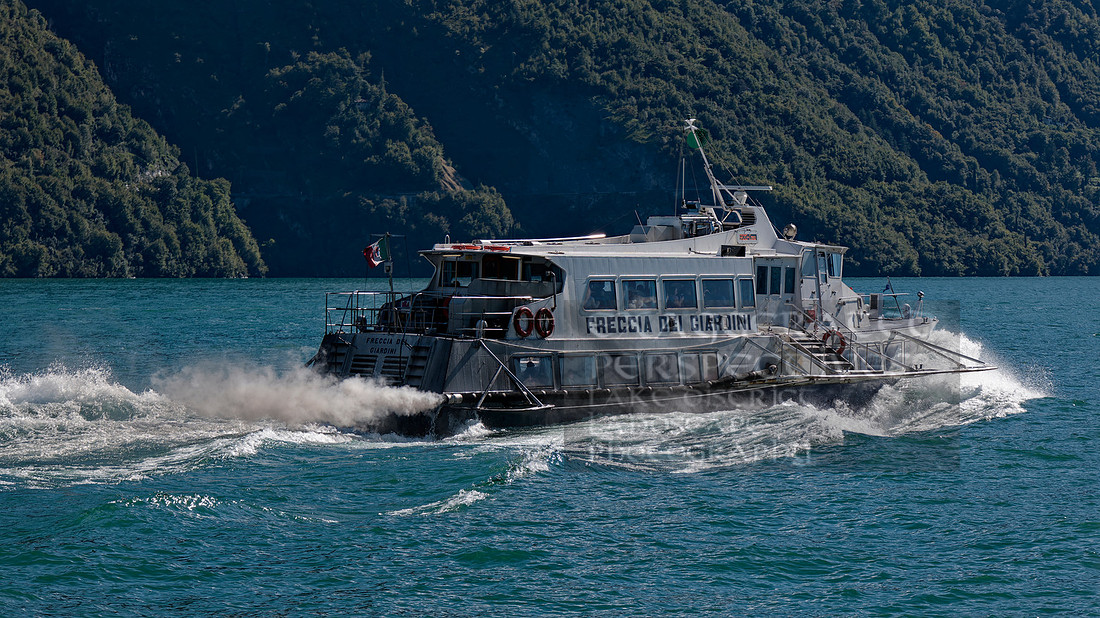
]]>
Some answers maybe?
The question of how many cameras is too many really comes down to personal preference and the type of photography you plan to do on your trips. For many, two cameras—perhaps with different lenses or purposes—strike a good balance between flexibility and practicality. Adding a third, such as a lightweight travel camera or compact, could be worthwhile if you want something truly pocketable for casual shots or situations where you wouldn't want to risk your more expensive kit.
However, as noted, compact cameras often come with compromises in image quality unless you're prepared to invest heavily. If you don't think you'll be satisfied with the results, it may be more sensible to stick with your current setup. Alternatively, consider using your phone's camera for those quick, riskier snaps—modern smartphones often perform surprisingly well and are less tempting for opportunistic thieves. Ultimately, it's about striking a balance between convenience, image quality, and peace of mind while travelling.
My answer?
Now I'm at three!
]]>
Understanding the Challenges of Effective Use
Introduction
Wide-angle lenses are celebrated for their ability to capture expansive scenes, dramatic perspectives, and creative compositions. However, many photographers—both amateur and experienced—find them surprisingly difficult to use effectively. This document explores the reasons behind this conundrum and provides insights into mastering wide-angle lens photography.
Understanding Wide-Angle Lenses
A wide-angle lens is typically defined as any lens with a focal length shorter than about 35mm (on full-frame cameras). These lenses offer a broader field of view, allowing more of the scene to be included in the frame. While this seems advantageous, it introduces several complexities that can hinder effective use.
Distortion and Perspective
One of the most significant challenges is distortion. Wide-angle lenses exaggerate the distance between objects in the foreground and background, making near objects appear much larger and distant objects much smaller than they actually are. This distortion can be used creatively, but if not controlled, it can result in unnatural or distracting images.
Additionally, straight lines near the edges of the frame may bend, especially with ultra-wide or fisheye lenses. Architectural photography, for example, often suffers from converging verticals and warped horizons when using wide-angle lenses without correction.
Composition Difficulties
Because wide-angle lenses capture so much of the scene, composing a balanced and engaging image becomes more challenging. The increased field of view often leads to cluttered frames, with too many elements competing for attention. Effective use requires careful selection of a strong foreground subject and thoughtful arrangement of background elements to avoid visual chaos.
Foreground interest is crucial; without it, images can feel empty or lacking in depth. Getting close to subjects and using leading lines can help guide the viewer’s eye, but this demands a deliberate compositional approach.
Managing Depth of Field
Wide-angle lenses inherently have a greater depth of field, meaning more of the scene will be in focus. While this can be beneficial, it makes isolating subjects with background blur (bokeh) more difficult. Photographers must rely more on compositional techniques rather than selective focus to draw attention to the subject.
Light and Exposure Challenges
With a larger portion of the scene captured, wide-angle lenses may include areas of both bright and dark exposure, complicating metering and post-processing. Highlights and shadows can be more pronounced, requiring skillful adjustments to retain detail across the frame.
Tips for Effective Use
- Get Close: Move closer to your main subject to make it stand out, and use the lens’s perspective distortion to your advantage.
- Mind the Edges: Check the frame edges for distracting elements or distortion, and adjust your composition accordingly.
- Use Leading Lines: Incorporate strong lines or shapes to guide the viewer’s eye through the image.
- Balance the Scene: Simplify the composition by removing unnecessary elements and focusing on a clear subject.
- Correct Distortion: Use lens correction tools in post-processing to fix bent lines and converging verticals, especially in architectural shots.
Conclusion
Wide-angle lenses offer immense creative potential but present unique challenges that can make effective use elusive. Mastering them requires a keen eye for composition, an understanding of perspective and distortion, and a willingness to experiment. With practice and attention to detail, the wide-angle lens conundrum can be overcome, resulting in dynamic and compelling images that make the most of this versatile photographic tool. They must however be used wisely and only when the scene demands it, which is of course up to the individual…
Jules
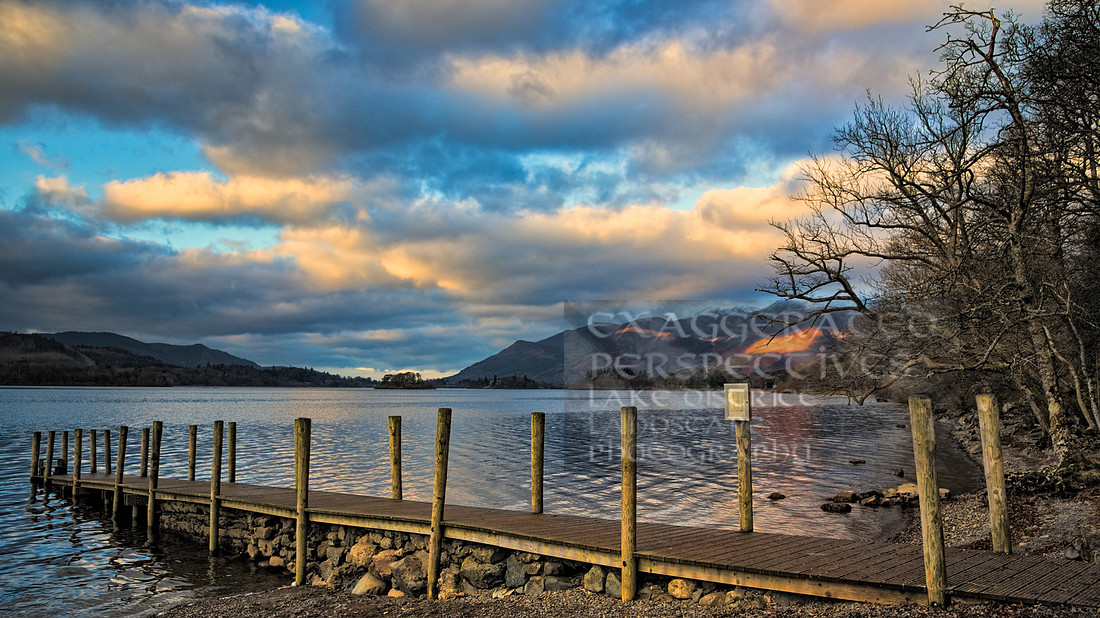
Prioritising Feel, Handling, and Your Unique Vision in Photography
Introduction
When choosing a camera, many photographers—both beginners and enthusiasts—often fixate on technical specifications such as sensor size. While sensor size can have an impact on aspects like image quality and depth of field, it is not necessarily the most important factor. Far more crucial are how the camera feels in your hand, how intuitively it operates, and, above all, how it enables you to express your creative vision. In this discussion, we will explore why these elements outweigh the allure of having the largest sensor, and how your own style and subject matter should guide your choice of camera.
The Myth of Sensor Size Supremacy
There is a common misconception that bigger sensors always mean better photos. While larger sensors can capture more light and provide certain advantages, such as improved low-light performance and more control over depth of field, these benefits often make little practical difference for most photographers. Modern sensor technology has advanced to the point where even smaller sensors can produce stunning images suitable for prints, online sharing, or professional use.
Ergonomics and Handling: The Heart of the Camera
The way a camera feels in your hands plays a pivotal role in your photography experience. If a camera is cumbersome, awkward, or unintuitive, it may discourage you from taking it out and capturing moments. A camera that fits comfortably, offers easy access to controls, and responds quickly to your inputs will empower you to focus on your subject and composition, rather than fiddling with settings. Ultimately, a camera you enjoy using is one you will use more often, and that leads to better photographs, regardless of sensor size.
Creative Expression: The Most Important Factor
The camera is merely a tool for expressing your perspective and creativity. Features that facilitate this—such as a responsive viewfinder, tactile controls, customisable settings, and reliable autofocus—are arguably much more important than sensor size. A camera that allows you to work quickly and intuitively will help you capture fleeting moments and experiment with different techniques, making it easier for your unique style to shine through.
Use Case and Subject Matter: Guiding Your Choice
Choosing the right camera should be driven by your intended use and the subjects you wish to photograph. For example, someone interested in street photography may prioritise a compact, discreet camera that is easy to carry, while a landscape photographer may value weather-sealing and a robust build. Wildlife and sports photographers might care more about fast autofocus and burst rates than sensor size. By considering your own needs and creative ambitions, you can select a camera that truly serves your purpose.
Conclusion
While sensor size is a technical detail worth understanding, it should not be the sole—or even primary—factor in selecting a camera. The feel, handling, and the extent to which a camera supports your creative process are far more significant. By focusing on your use case and the type of photography you wish to pursue, you will find a camera that inspires you, helps you grow, and brings your creative vision to life.
Sermon over!
Amen…


]]>
Letting Go of the Need for the Perfect Photograph
Practical Advice for Enjoying Photography Without Pressure
Introduction
This all kind of came to me just the other day, when I became ill on a walk, made it to the end and never got the Camera out of the bag! At the time it felt like an utter defeat but is it?
It’s easy to fall into the mindset that every outing with your camera must result in a great photograph. However, this pressure can sap the joy from the creative process and lead to frustration or disappointment. Here are some strategies to help shake off the constant desire to capture the “perfect shot” and rediscover the enjoyment of photography.
1. Shift Your Focus to the Experience
Remind yourself that photography is as much about the experience as it is about the outcome. Embrace the sights, sounds, and atmosphere of your surroundings. Allow yourself to enjoy the moment, regardless of whether you come away with a standout image.
2. Set Different Goals
Instead of aiming for a portfolio-worthy photograph every time, set alternative goals such as experimenting with new techniques, composing images in a novel way, or simply observing how light changes throughout the day. This can make your outings more enjoyable and less stressful.
3. Accept That Not Every Outing Will Be Fruitful
Even the most experienced photographers have days when nothing quite comes together. Accepting that not every session will result in a great photograph can be liberating. It’s all part of the creative journey.
4. Practice Mindfulness
Engage in photography mindfully. Focus on the act of seeing, not just capturing. Take time to notice details, textures, and colours, and photograph with intention rather than pressure.
5. Limit Your Gear
Sometimes, having too much equipment can add to the pressure of capturing the perfect shot. Consider heading out with just one camera and one lens. This can help you concentrate on creativity and composition rather than technical perfection.
6. Allow Yourself to Experiment and Fail
Give yourself permission to take “bad” photos. Experimentation is essential for growth, and some of the most valuable lessons come from images that didn’t turn out as expected. Treat these as learning opportunities rather than failures.
7. Share Without Expectation
If you like sharing your work, do so without the expectation of praise or validation. Share because you enjoy the process and want to connect with others, not because you need external approval.
Conclusion
Photography should be an enjoyable and fulfilling pursuit. By letting go of the need to always produce a great image, you open yourself up to new experiences, creative growth, and a deeper appreciation for the world around you. Remember, sometimes the best moments are those that remain uncaptured, living on in your memory instead.
Summary
I find that the best way to enjoy photography is by embracing mindfulness, creativity, and self-acceptance. I focus on the experience instead of striving for perfection, often choosing to carry minimal equipment so I can pay more attention to creativity and composition. I allow myself to experiment and take “bad” photos, recognising these moments as valuable opportunities for learning and growth. When I share my work, I do so without expecting praise, simply enjoying the act of connection. Ultimately, I believe the true joy in photography lies in personal discovery and appreciating moments—whether or not they are captured through my lens.
?
No picture this week, as above!
]]>
Breaking Burnout and Rediscovering Joy in Photography
Photography, at its best, is a harmonious blend of technical mastery and creative expression. But even the most passionate photographers can experience moments of stagnation, disinterest, or even burnout. Whether you’re a seasoned professional or an enthusiastic hobbyist, finding ways to reignite your love for photography is essential for personal growth and continued creative fulfilment. One of the most effective strategies for overcoming creative fatigue and rediscovering your zeal is to start a dedicated photography project.
Why It Is Good to Start a Photography Project
Embarking on a themed photography project can be transformative. Not only does it help sharpen your skills, but it also grants your work renewed purpose and direction. Here are several reasons why starting a photography project is beneficial:
1. Structure and Purpose
A photography project provides structure, giving you something concrete to work towards. Without a defined goal, it’s easy to drift aimlessly, snapping pictures without much thought or intent. A project, however, gives each photo meaning within a larger narrative, be it documenting the changing seasons in your neighbourhood or capturing the vibrancy of urban life.
2. Opportunity for Growth
Consistent work on a focused project encourages growth in both technical and creative arenas. You will naturally experiment with new techniques, compositions, and perspectives. This experimentation, over time, results in tangible improvement and a more nuanced eye for detail.
3. Creative Challenge
Projects push you out of your comfort zone. Tackling a subject or theme over time—such as portraits of strangers, landscapes at twilight, or the geometry of everyday objects—demands creativity, adaptability, and perseverance. These challenges keep your mind engaged and prevent monotony from creeping in.
4. Building a Cohesive Portfolio
A body of work centred around a theme or concept is far more compelling than a random assortment of images. A photography project can help you develop a cohesive portfolio, which is invaluable if you wish to showcase your work, apply for exhibitions, or simply track your progress.
5. Storytelling and Connection
Projects often revolve around stories—whether personal, local, or global. Through a long-term project, you can explore narratives more deeply, forge connections with your subjects, and convey messages that resonate with viewers on an emotional level. This sense of connection is often a powerful antidote to creative fatigue.
6. Motivation and Accountability
Having a project in mind provides motivation to pick up your camera regularly. It also creates a sense of accountability, especially if you share your goals or progress with others, such as through social media, a blog, or a local photography group.
Stopping Photography Burnout
Burnout is a common but often overlooked issue among creatives. It can manifest as a lack of motivation, frustration, or even resentment towards the craft you once loved. Here are some practical strategies for overcoming photography burnout:
1. Take a Break—Without Guilt
It’s important to recognise when you need to step away. Taking a short hiatus can help you return with fresh eyes and renewed energy. Use the time to engage in other hobbies, enjoy nature, or simply relax—without feeling guilty for putting the camera down.
2. Change Your Routine
If you always photograph the same things or shoot at the same times, monotony can set in. Shake things up by experimenting with different genres, locations, or equipment. Try macro photography if you’ve always done landscapes, or switch from digital to film for a different feel.
3. Collaborate with Others
Collaboration is a wonderful way to gain new perspectives and ideas. Personally I've never "collabbed" with anyone but it seems to work well for other people. Join a photography club, participate in group challenges, or team up with other creatives like writers or musicians. Social interaction can break the isolation that sometimes leads to burnout.
4. Set Manageable Goals
Burnout often stems from overwhelming expectations. Break your project or ambitions into smaller, achievable steps. Celebrate each milestone—no matter how minor—to maintain a sense of progress and accomplishment.
5. Practice Mindfulness
Photography can be a meditative practice. Focus on being present in the moment, observing light, colour, and texture without pressure to achieve a specific result. Mindful photography shifts your attention from outcome to process, alleviating stress and fostering enjoyment. This I find tough but people have been banging on at me about this for years, If being mindful works for you, then great!
6. Revisit Old Work
Sometimes inspiration can be found in your own archives. Look back at your previous projects and favourite images. Analysing your past work may remind you why you started photography in the first place, and inspire new directions or series to pursue.
7. Learn Something New
Taking an online course, attending a workshop, or simply exploring photography books and exhibitions can stimulate your curiosity. New knowledge often leads to experimentation, which is a potent remedy for creative exhaustion.
Getting Back Your Interest in Photography
Rekindling your passion for photography is about rekindling your sense of wonder and curiosity. Here are some actionable ways to fall in love with photography all over again:
1. Start Small
Don’t feel pressured to produce masterpieces immediately. Take your camera with you on a walk and capture whatever catches your eye. Focus on details—shadows on a wall, dew on a leaf, reflections on water. Sometimes, beauty is found in the mundane when you look closely.
2. Find Inspiration
Inspiration can come from many sources: books, films, art, music, nature, or even the daily lives of those around you. Attend exhibitions, browse photo books, and follow photographers you admire. Exposing yourself to different styles and stories can spark new ideas.
3. Set Personal Challenges
Challenge yourself with daily or weekly themes, such as “blue,” “movement,” or “faces.” Constraints like these can fuel creativity and provide a playful, low-pressure way to engage with your craft. I wrote this, and straight away I think it sounds a little crass but I'll leave it in.
4. Share Your Work
Sometimes, sharing your images with others—be it friends, family, or the online community—can reignite your enthusiasm. Feedback, encouragement, and even constructive criticism can motivate you to keep shooting and improving. I'm strictly online!
5. Reflect
Take time to reflect on your photographic journey. What motivated you to start in the first place? What images or experiences are you most proud of? Remembering your original passion can help you reconnect with your creative self.
6. Embrace the Learning Process
Photography is a lifelong journey of learning. Celebrate mistakes and failures as opportunities to grow. The more you experiment, the more you’ll discover about yourself and your unique perspective.
7. Explore New Environments
A change of scenery—whether as dramatic as a new city or as simple as a different park—can refresh your imagination. Travel, even if only locally, exposes you to new subjects and stories.
8. Join a Community
Being part of a community can spark motivation and accountability. Engage with local clubs, online forums, or social media groups. Sharing experiences and seeing the work of others can be both inspiring and encouraging. This one is strictly not for me but I thought I'd include it for you "People People" out there!
Conclusion
Photography, like any creative pursuit, has its ebbs and flows. Periods of burnout or disinterest are natural, but they don’t have to be permanent. By starting a photography project, you give yourself permission to explore, create, and grow. Through intentional strategies—taking breaks, seeking inspiration, collaborating, and setting small goals—you can overcome burnout and rekindle your love for the art. Ultimately, photography is not just about the images you create, but about the joy, curiosity, and connection you experience along the way.
So pick up your camera, set yourself a challenge, and embark on a new project. You may be surprised at where it leads—and how it transforms both your photographs and your passion.
I have decided on a couple of new projects to keep me going for the next few years, mostly involving Architectural (industrial) Landscape/seascape photography as opposed to slogging up hills which is now a No No!
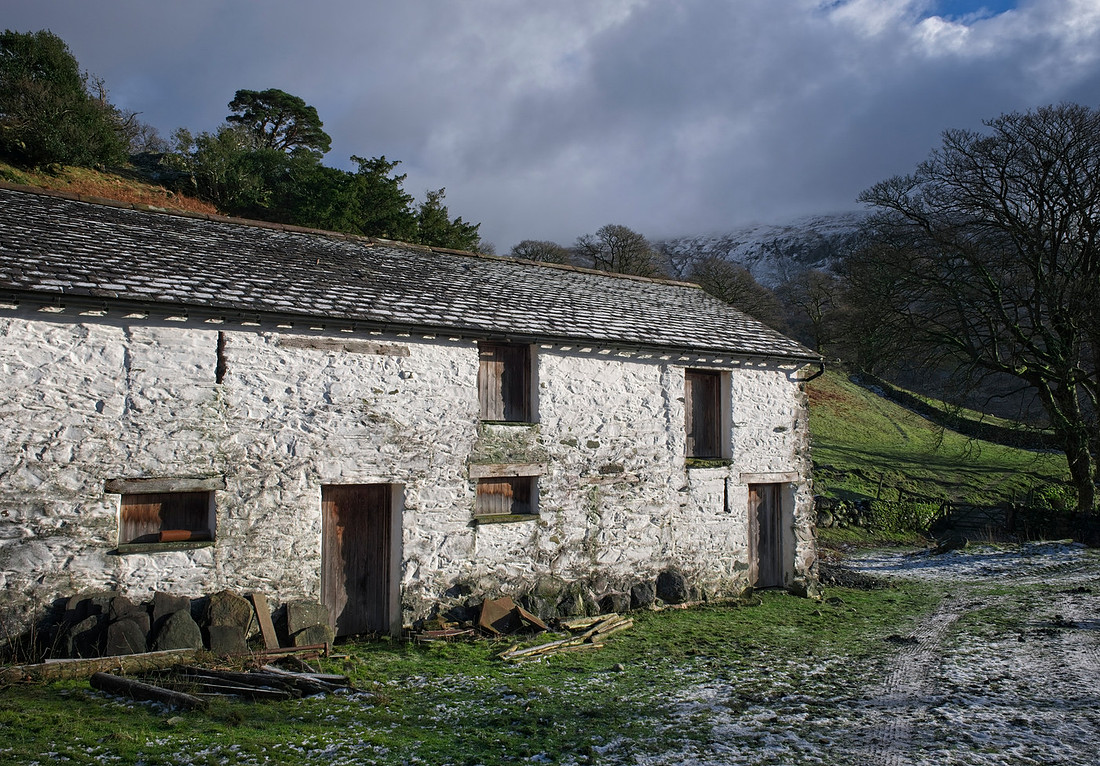
Why Do “Pro” YouTube Photographers Say Gear Doesn’t Matter When They Use the Latest Cameras?
Disclaimer: My thoughts are my own, I use two Panasonic S1R MkII’s which are not one of the most popular brands, but I prefer the output of these cameras to anything I have ever shot with. However, they just happen to be that brands latest camera!
Go figure!!!
Unpacking the Contradictions and Realities of Modern Creative Advice
It is a familiar refrain for anyone who spends time consuming photography content online: “Gear doesn’t matter.” The line is delivered with an air of wisdom, sometimes as a gentle nudge to beginners, other times as a stern admonition against chasing the newest camera releases. Yet, as viewers take in carefully produced videos—often filmed in stunning 4K, with crisp audio and flawless colour grading—they can’t help but notice the irony. The YouTuber, whose content revolves around making images, is wielding the latest flagship camera, sometimes with a lens that costs more than a month’s rent. So, why do “pro” YouTube photographers consistently insist that gear isn’t important, even as they showcase the most advanced technology the industry has to offer?
The Origins of the Mantra: “Gear Doesn’t Matter”
To understand this paradox, we must first recognise the roots and intentions behind the statement. “Gear doesn’t matter” is not a declaration that equipment is irrelevant, but rather a counterweight to a persistent myth in photography: that better gear automatically equates to better images. The phrase is meant to shift the focus away from technology and towards the skills, vision, and creativity of the photographer—the elements that, in theory, transcend hardware.
In a field historically plagued by “gear acquisition syndrome” (GAS), it is easy for beginners to fall into the trap of believing that the barrier between their current work and the images they admire is a new camera body or lens. The mantra is designed to break this cycle, to reassure would-be photographers that compelling photos are within reach, regardless of budget.
The Contradiction: Professional Practice versus Public Advice
So why, then, do those who preach the gospel of gear-indifference often have the most enviable setups? There are several reasons, both practical and philosophical.
Professional Needs and Expectations
Professional photographers—whether YouTubers, commercial shooters, or educators—often require the latest technology to meet the demands of their work. High-resolution sensors, fast autofocus systems, robust weather sealing, and reliable file management are not mere luxuries, but necessities for certain assignments. For example, a sports photographer may need blistering burst rates to capture high-speed action; a wedding photographer may rely on dual card slots for instant backup; a landscape artist might crave dynamic range for post-processing flexibility.
The tools these creators use are not simply status symbols, but instruments tailored to specific needs. Their livelihoods depend on producing consistent, high-quality work for clients and audiences who expect nothing less. The gear they choose reflects the realities of their profession.
The Nature of YouTube Content Creation
For YouTubers, there is an additional layer: the very act of making videos about photography creates a kind of “arms race” for image quality. The audience expects to be able to see examples with pristine sharpness and vibrant colour. Moreover, the optics of the channel itself—what viewers see in the background, the gear being handled, the quality of production—are part of the brand. In a crowded field, the latest gear can convey expertise or authority, and it boosts search relevance for viewers keen on new releases.
In some cases, manufacturers sponsor content and provide early access to new equipment, making it both feasible and advantageous for creators to use the newest gear. Sometimes the content is a review, which by its nature requires the latest technology.
The Philosophy Behind the Advice
Despite their own investment in top-tier equipment, seasoned creators know that the heart of an image lies in timing, composition, light, and intent. Great photographs were made throughout the last century with tools far less capable than those in today’s entry-level kits. The advice, when sincerely delivered, highlights the difference between technical potential and creative outcome.
These photographers have often moved through every stage themselves—beginning with a modest setup, learning the craft, and gradually upgrading only when their skills demanded it. They know from experience that the technical leap from one camera to the next rarely brings the quantum improvement that new users anticipate.
Skill Development and Accessibility
By telling their audience that gear doesn’t matter, professionals are trying to foster a culture of inclusivity and experimentation. They want viewers to break out of the mindset that “real” photography starts at a certain price point, because that belief can be discouraging or even exclusionary. The goal is to cultivate an environment where creativity thrives, where beginners pursue projects and ideas instead of chasing specs.
A Nuanced Truth
The statement is best understood as a nuanced truth: gear matters less than vision, less than persistence, less than storytelling. But of course, gear does matter—particularly when an artist’s vision is constrained by their tools. The trick is to understand when equipment is the limiting factor, and when it is simply a distraction.
The Cycle of Aspiration and Commercial Reality
It is also worth noting the economic forces at play. YouTube content creation is itself a business. Creators depend on engagement—clicks, likes, comments, and subscriptions—to grow their channels and support themselves. Videos about new gear consistently perform better than those about abstract concepts. There is a built-in incentive to own, discuss, and display the latest products.
For those who have achieved a certain level of success, the cost of upgrading is often justified by increased viewership and, therefore, increased revenue. In many cases, the gear is loaned or sponsored, making the financial equation less taxing than it might appear to the casual viewer.
Reconciling the Contradiction: Advice for the Modern Photographer
How, then, should one interpret the advice that “gear doesn’t matter” from someone whose camera bag contains several thousands of dollars’ worth of equipment? The most productive approach is to view the statement within context. For the beginner, or for those working within budget constraints, gear truly is secondary. The first thousand images will teach more than any new lens ever could. As skill and ambition grow, the role of equipment shifts, and upgrades may become meaningful—but only in service to the artist’s goals.
In fact, many professionals advocate for gradual progression: start with what you have, learn why you need more, and upgrade only when you have outgrown your current tools. This avoids the trap of “waiting” for better gear before making better images.
Conclusion: The Heart of the Image
The tension between advice and practice among “pro” YouTube photographers is less hypocrisy than nuance. Their message is meant to empower and inspire, not to deceive. While they use the latest cameras to meet the demands of their careers and audiences, they emphasise that these advantages are not prerequisites for creative success.
In the end, all camera gear is merely a means to an end. The best images are forged from vision, heart, and dedication—qualities that no sensor or lens can manufacture. The advice to focus on creativity rather than acquisition is sound, even if the messenger wields the most advanced tools available. Embrace the paradox, learn the craft, and only pursue new equipment when your own growth demands it.
All I can say is, "It matters to me"!

On Collecting, Compartmentalising, and the Perils of Storage
There’s a particular moment of dread, subtle yet persistent, that creeps in every time I open the closet. It’s not the looming threat of a moth-eaten jumper or the misplaced lens cap, but the veritable avalanche—nay, the architectural wonder—of camera backpacks that threatens to spill forth and engulf the room. Why, I ask myself with equal parts awe and mild embarrassment, do I own so many camera backpacks? How has this simple quest for the perfect gear carrier become a logistical, spatial, and existential storage problem?
The Allure of the Camera Backpack
It began, as many obsessions do, innocuously. My first camera backpack was an act of practicality—a sturdy vessel, dedicated to safely transporting camera, lens, and a handful of memory cards. But with each new photographic pursuit came the realisation that one backpack could never rule them all.
- The Everyday Carry: Compact, comfortable, and just big enough for a mirrorless camera and a prime lens, this bag is perfect for spontaneous jaunts and casual strolls.
- The Adventure Behemoth: Weatherproof and cavernous, equipped with enough compartments for drones, tripods, snacks, and a change of socks. Essential for the long hike or the unpredictable trek.
- The Urban Sleek: Minimalist, stylish, and indistinguishable from a regular rucksack—ideal for shooting in the city without drawing attention.
- The Retro Classic: Leather straps, waxed canvas, and a healthy dose of nostalgia. Less practical, eternally photogenic, mostly reserved for coffee shop outings and Instagram photoshoots.
- The Travel Transformer: Modular and expandable, this one morphs to fit overhead bins or squeeze under train seats, with secret pockets for passports and power banks.
How Did It Come to This?
The logic was always sound, at first: every scenario, every shoot, every meteorological possibility warranted a unique solution. What if it rains? What if I need to pack a telephoto lens and three flashes? What if I want to blend in, look professional, or simply try something new? Each question justified another purchase. Soon, the collection grew, quietly multiplying until it became a hydra of zippers, straps, and padded inserts.
When Practicality Meets Storage Reality
Now, the storage crisis. Camera backpacks, unlike camera bodies or lenses, are not stackable. They don’t nest neatly like Russian dolls. No, they sprawl, each claiming its own awkward footprint. The top shelf sags under their weight. The wardrobe groans. Under-bed storage is no longer reserved for shoes or winter coats, but for that rarely-used, but “absolutely necessary” 55L bag meant for that one time I considered a week-long trek through Patagonia.
The Unspoken Comfort of Having Choices
Yet, there’s a peculiar comfort in this abundance. Each bag is a vessel of potential, a promise of future journeys and creative projects. Picking the right backpack for the day’s mission feels a little like assembling a team of superheroes—each with their own powers, strengths, and, yes, storage solutions.
Facing the Inevitable
Still, there comes a time to confront the consequences of acquisition. Do I let go of the battered old faithful, or the never-used impulse buy? Will sentimentality win over practicality? Perhaps the answer isn’t to own fewer bags, but to own them with intention—rotating, sharing, perhaps even passing on a few to fellow photographers who are just at the start of their own backpack odyssey.
In the meantime, I’ll keep wrestling with zippers and shelves, marvelling at the paradox: in the search for the perfect way to carry less, I’ve ended up carrying more. And maybe, just maybe, that’s part of the journey too.
Left to Right Compagnon Element 30L, Wandrd Stratus Photo 18L, EVOC stage capture 16L, Tenba Fulton 16L, Wandrd Prvke 30L V4.
On the floor is the K+F concept 30L Pro backpack and not quite visible is a B+W waterproof hardcase, oh and in the garage, I have a Thule Covert 32L backpack too!
Madness!
]]>
Why Photographers Still Reach for Full Frame?
In the dynamic world of photography, technology is in constant flux. Sensors shrink, algorithms become smarter, and the smartphone in your pocket produces images once unimaginable from such a small device. Yet, amid all this change, there remains a particular allure to the “full frame” camera—a magnetic draw that persists for both professionals and passionate hobbyists alike. But what exactly is it about full frame cameras that continues to captivate the hearts and minds of photographers around the globe?
Understanding “Full Frame”
To appreciate the draw of the full frame camera, it helps to start with a definition. In digital photography, “full frame” refers to a camera sensor that is approximately the same size as a frame of 35mm film: about 36mm x 24mm. This is larger than the sensors found in APS-C, Four Thirds, or most compact cameras. The term itself elicits a sense of completeness, harking back to the golden age of film photography, when 35mm ruled as the standard.
The Magic of Image Quality
One of the most compelling reasons photographers pursue full frame cameras is the unmistakable leap in image quality. The larger sensor gathers more light—not just more photons, but a richer, cleaner signal that translates into finer detail and less noise, especially in low light situations. Shadows are rendered with subtlety, highlights with grace. The dynamic range—the ability to capture details in both the brightest and darkest parts of a scene—is often superior.
With a full frame sensor, images have a certain depth and dimensionality, a quality that is difficult to quantify but easy to feel. Portraits appear more lifelike, landscapes carry a grander sense of scale, and textures become tactile. Even for those who shoot primarily in JPEG, the files from a full frame sensor exhibit a smoothness and latitude that post-processing enthusiasts adore.
The Enchantment of Shallow Depth of Field
A full frame sensor’s physical size allows for a shallower depth of field at equivalent focal lengths and apertures compared to smaller sensors. Simply put, this means creamy, dreamlike backgrounds—bokeh—that isolate subjects and make them pop. While APS-C and Micro Four Thirds systems can achieve some background blur, the effect is most pronounced with full frame. Wedding and portrait photographers, in particular, find this quality irresistible; the ability to throw a background into a soft haze while keeping the subject razor sharp is an aesthetic signature made easier with full frame.
Lens Choices and Legacy Glass
Full frame cameras often unlock the full potential of lenses, especially those designed for the 35mm film format. Vintage glass, with its characterful imperfections, can be adapted to modern bodies with stunning results. For professionals, the full range of premium lenses—fast primes, versatile zooms, tilt-shift marvels—are engineered with the full frame sensor in mind.
Moreover, a 50mm lens on full frame behaves just as it did in the film era, with no crop factor to consider. This makes composition more intuitive for those accustomed to traditional focal lengths and simplifies the translation of vision to final image.
Low Light Prowess
Low light is where full frame cameras truly shine. With larger photosites (the individual light-sensitive elements on the sensor), these cameras excel at gathering light efficiently. The result is less digital noise, greater detail, and smoother gradations even at high ISO settings. Event and concert photographers, who often work in challenging lighting, are especially drawn to this capability. Nightscape and astrophotographers acclaim the ability of full frame sensors to render stars as pinpoints, revealing celestial wonders with clarity.
Dynamic Range and Color Depth
Dynamic range—the spectrum of tones a camera can capture from darkest shadow to brightest highlight—is a hallmark of full frame sensors. This is not just a technical metric; it gives photographers confidence to shoot in high-contrast scenes, knowing they can recover details in post-processing. Coupled with superior color depth, full frame images are often richer and more nuanced, which is essential for fine art and commercial work.
Robust Build and Professional Features
Full frame cameras are frequently the flagship models for their manufacturers. As such, they come equipped with the latest autofocus systems, robust weather sealing, dual card slots, and higher frame rates. The camera bodies themselves are often constructed with magnesium alloy or other durable materials, offering a reassuring heft and reliability that professionals demand.
The Intangible Factor: The Photographer’s Experience
Beyond specifications and test charts, there is a less tangible, emotional draw to full frame cameras. Holding a well-built full frame camera is an experience unto itself; the weight, the ergonomics, the satisfying click of a mechanical shutter—it all contributes to a sense of purpose. For many photographers, the camera is an extension of self, and full frame bodies often feel “just right” in the hands.
Furthermore, shooting with a full frame camera can be an act of intention. The investment—both financial and emotional—encourages one to slow down, compose more thoughtfully, and strive for excellence. The results often reflect that dedication.
Who Should Consider Full Frame?
The draw of full frame is undeniable, but is it for everyone? Not necessarily. The advantages come with certain trade-offs: larger and heavier bodies and lenses, higher cost, and sometimes a steeper learning curve. For travel, street, or casual shooters, a smaller sensor may provide more than enough quality in a more portable package.
However, for those who demand the utmost in image quality, low light capability, and creative control over depth of field, the full frame camera is often the logical choice. Professionals in fields such as portraiture, landscape, fashion, architecture, and commercial photography routinely turn to full frame as their tool of choice.
The Future of Full Frame
Mirrorless technology is transforming what “full frame” means. Today’s full frame mirrorless cameras are lighter, faster, and more connected than ever, narrowing the gap in portability and usability. Sensor innovations continue to push boundaries, and new lens designs take full advantage of the larger format.
Yet, the core appeal remains: exceptional image quality, creative flexibility, and a tactile, immersive shooting experience. Even as computational photography makes astonishing strides, there is a purity to crafting an image with a full frame camera that keeps artists coming back.
Conclusion: More Than Just a Sensor Size
The draw of full frame cameras is more than numbers or specifications. It is a blend of tradition and innovation, of tactile satisfaction and artistic possibility. For many photographers, full frame represents the highest expression of their craft—a tool that inspires confidence, creativity, and the relentless pursuit of the perfect image. In a world of endless options, the full frame camera stands as both an anchor to the past and a gateway to photographic greatness.
Can you tell???
Jules.

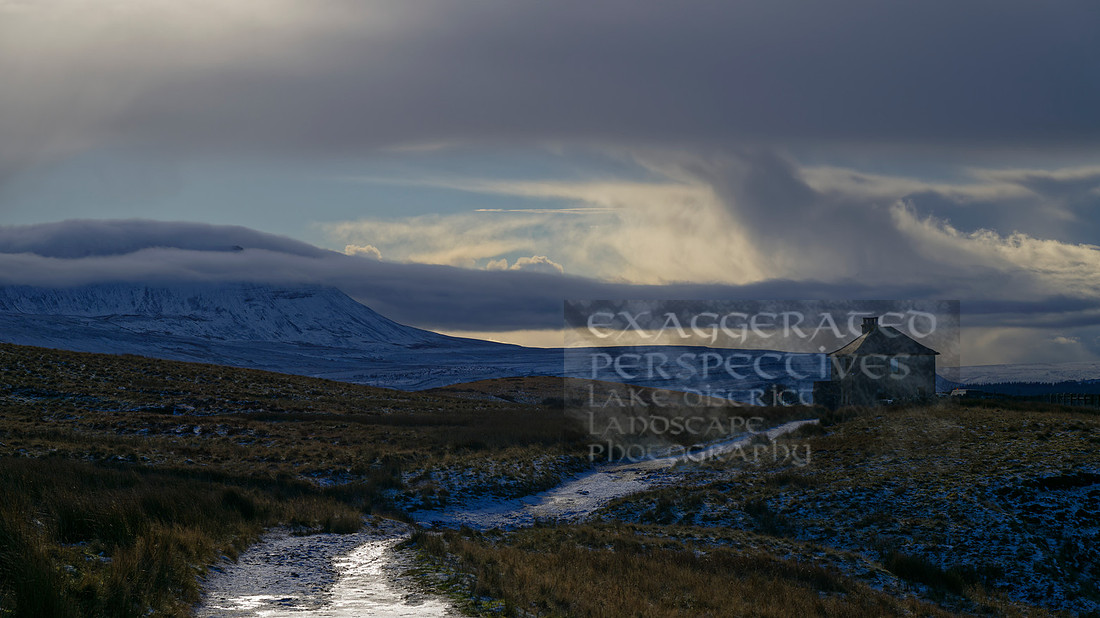
A Light-Hearted Survival Guide for Gear Acquisition Syndrome
Let’s face it: if you’re a photographer, you’ve almost certainly come down with a bout of G.A.S.—that infamous Gear Acquisition Syndrome. It strikes suddenly, often late at night, when you’re scrolling through endless reviews of the latest camera body or justifying, yet again, how that new lens is the missing piece in your creative puzzle. If you’re reading this, you’ve probably uttered the phrase “just one more” while your bank account lets out a quiet, exasperated sigh.
But don’t worry. You’re in excellent company, and there’s hope—perhaps not for your wallet, but certainly for your photographic soul. Here’s your gentle, somewhat tongue-in-cheek roadmap to navigating your latest G.A.S. flare-up.
Step One: Diagnose With Honesty
Are you truly in need of that 85mm f/1.2, or is it just the thrill of a cardboard box arriving at your door? Before you click “buy now,” ask yourself:
- What can I create with what I already have?
- Will this new gadget genuinely change my work—or just add to the clutter?
- Is there a rent/borrow option so I can try before I buy?
Remember: Sometimes, the best camera is the one that’s already in your hand.
Step Two: Embrace the Gear You Have
Dust off that kit lens. Rediscover your camera’s lesser-used modes. Challenge yourself to a “one camera, one lens” project for a week. More often than not, constraints can be the mother of true creativity. You might be surprised by what you can produce without that shimmering new gadget.
Step Three: Channel Your G.A.S. into Art
If you simply must scratch the itch, why not make it a creative exercise? Photograph your gear in artistic still life. Document the story of your collection. Or, if you’re feeling brave, shoot an entire project with the oldest, quirkiest piece in your bag.
Step Four: Remember Why You Started
At the heart of all the gear lust and spec-sheet comparisons is your passion for making images, capturing memories, telling stories with light and shadow. When in doubt, go out and shoot. The joy of creating something beautiful will always outweigh the thrill of unboxing something new.
Final Thoughts (and a Friendly Warning)
G.A.S. is a journey, not a destination. There will always be newer, shinier, more megapixel-laden gear on the horizon. But your vision, your eye, and your creativity are the most important tools in your kit. So, take a breath, maybe step away from the “add to cart” button, and give your camera a gentle pat.
And if you do cave in and buy that new lens—well, who are we to judge? Just promise to take a few extra photos for us.
Happy shooting!
I’m bloody sure I don’t need all of this lot!
It’s getting a bit crowded around here!
Not a very artistic Still Life!
Jules.
]]>
The Point of Street Photography: Seeing Beyond the Pavement
Understanding the Allure and Purpose of Capturing Life on the Streets
Street photography: for some, the very phrase conjures images of bustling avenues, candid expressions, or the play of light and shadow across the faces of strangers. For others, it raises honest questions—“I don’t get it. What’s the point? Am I missing something, or am I simply not that interested in other people?” Such curiosity, skepticism, or even indifference is more common than one might think when encountering a genre so rooted in the chaos and ordinariness of everyday life.
What Is Street Photography, Really?
At its core, street photography is the art of observation. Unlike portraiture, which asks for a subject’s cooperation, or landscape, which seeks the grandeur of nature, street photography dwells in the spontaneous, the unscripted, and the fleeting. It is a dance between the photographer and the world as it is—a record of humanity’s theatre playing out in public spaces.
But the definition is slippery. Is it merely candid photos of people in the streets? Not quite. Street photography is less about the street itself and more about the human condition as revealed in everyday settings: markets, metro stations, back alleys, or the hush of a rain-soaked square. It is as much about gesture, atmosphere, and serendipity as it is about people.
Searching for Meaning: Why Photograph Strangers?
The question, “What’s the point?” is both profound and practical. What do these images, often devoid of context and narrative, offer to those who make and view them?
Preserving the Ordinary
Street photography elevates the everyday. Its practitioners seek moments that would otherwise vanish—an elderly couple sharing a quiet laugh, a child peering through a bus window, the chiaroscuro of sunlight falling on a passerby’s face. These fragments, captured and frozen, become relics of a time and place, testaments to the beauty woven into the fabric of ordinary life.
Social Commentary
Some photographers use the medium to comment on society—the disparities, the joys, the struggles that define city living. From the playful anarchy of children at play to the solitary figures lost in their own worlds, street photography can be a mirror reflecting the spirit and mood of an era. Think of Vivian Maier’s quietly poetic Chicago, Henri Cartier-Bresson’s split-second Parisian dramas, or Garry Winogrand’s chaotic New York streets. Their work distills life, hinting at stories without telling them outright.
Visual Storytelling
Every photograph is an invitation: to imagine, to empathise, to wonder. Street photography asks the viewer to fill in the gaps, to invent narratives for strangers, to recognise the universal in the particular. It is an exploration—sometimes playful, sometimes poignant—of shared human experience.
Am I Missing Something?
If street photography leaves you cold, it may be reassuring to know that not every genre resonates with every person. You may wonder if you are missing a secret code or deeper truth. In reality, street photography’s magic is subtle. Its rewards are found not just in spectacle but in the act of seeing—of noticing the small dramas unfolding on sidewalks, the choreography of crowds, the poetry of happenstance.
Some people are naturally drawn to observing—and imagining—other lives; others are not. Interest in street photography often correlates with curiosity about human behaviour, the quirks and idiosyncrasies of strangers, or a fascination with the collective experience of city living. If your own curiosity leans elsewhere—towards nature, abstraction, or the comfort of familiar faces—that’s simply a reflection of personal taste.
Is It About Other People?
Street photography is, often, about others—yet not always in the obvious sense. Sometimes the “subject” is emotion itself, or the interplay of shapes, or the tension between movement and stillness. Sometimes it is about the architecture of the street, the play of colour, the weather’s mood. The best street photographers rarely objectify their subjects; instead, they honour the unknown, seeking dignity and interest in the everyday.
And yet, the genre does ask for a kind of openness. It requires a willingness to look outward, to find intrigue in strangers, to be attentive to the world’s infinite variety. If this doesn’t appeal, it might simply mean your creative compass points elsewhere.
The Challenge—and the Joy—of Street Photography
There is a challenge in street photography that makes it exhilarating for those who pursue it. The photographer must be alert, patient, and discreet. They must anticipate moments before they happen, blend into the crowd, and capture emotion without intrusion. There are no studio lights, no second takes. The unpredictability of the street is both obstacle and muse.
For many, this rawness is part of the appeal. Anyone with a camera can try, but not everyone can see. Street photography rewards those who train their eyes to notice the unnoticed, who find poetry in the prosaic. The best practitioners are less interested in technical perfection and more passionate about feeling, atmosphere, and authenticity.
What If You’re Not Interested?
Let’s return to the honest question: “Am I just not that interested in other people?” The answer, perhaps, is yes—and that is entirely valid. Photography is a vast universe, and street photography is but one star. If your heart beats faster for landscapes, for abstract patterns, for the interplay of light and form, then that is your path. If you are unmoved by snapshots of strangers, you are not missing out; you are simply attuned to a different wavelength.
Creativity flourishes in diversity. Some find meaning in the bustle of the city, others in the serenity of nature, others still in the carefully composed still life. Street photography is not superior or essential—it is simply one way of seeing, one approach to storytelling, one adventure among many.
Could You Give It a Chance?
If, however, you are curious, you might try viewing street photography with fresh eyes. Look beyond faces and crowds. Notice gesture, mood, the interplay of elements. Consider the historical value: these images, decades hence, become visual archives, revealing the fashion, architecture, and spirit of a bygone era. Perhaps, in time, you’ll begin to spot moments that surprise you—an unexpected alignment, a fleeting interaction, a hidden humour.
If you ever pick up a camera and wander the streets, you could just let curiosity be your guide. Photograph not just people, but atmosphere, texture, rhythm. Let yourself be surprised by what you see. Or, if not, savour the genres that speak to you; appreciation is not a contest.
Conclusion: The Point Is Perspective
Street photography is, in essence, about perspective. It asks us to be witnesses to the world’s unfolding stories, to find interest in the everyday, to record the ephemeral. Its point is not universal—it is personal, subjective, and sometimes elusive. For some, it becomes a lifelong pursuit; for others, it is a mystery best admired from afar.
If you remain unconvinced, know that your experience is just as valid as that of the street photographer lost in a crowd. Art is not obligation; it is invitation. The streets, with all their chaos and beauty, are there for those who wish to see—and for those who would rather look elsewhere.
In the end, perhaps the greatest gift of street photography is not in its images, but in the act of noticing—of walking through a city and realising that every moment, however mundane, contains a story waiting to be seen. Whether or not you choose to look is entirely up to you.
Enough waffle!
Is the picture of a homeless guy on a bench reading a paper and smoking a cigarette something I should care about?
Or did I just get into Landscapes because I like piccies with no people in em???
Jules.
A street from 2015, see nothing happening here!
]]>
I guess this one is a part two, to the last rant and ramble so I'll post it up as a companion piece, I promise this is the end of the moaning!
Embracing Life’s Transitions: Navigating Ill Health, Mobility Challenges, and Discovering Joy in Simplicity
Finding Comfort, Meaning, and Beauty Amid Change
Introduction
Life, in its myriad forms and rhythms, is a journey marked by both anticipated and unforeseen changes. Health ebbs and flows, mobility may falter, and routines once taken for granted can shift in ways that demand both resilience and adaptation. Yet, within these transitions, there exists a quiet invitation: to reimagine what it means to thrive, to seek joy not in the grandeur of achievement or perfect circumstances, but in the gentle unfolding of the everyday.
This passage explores the profound process of adjusting to life’s changes—especially those shaped by ill health and reduced mobility—and the transformative power of rediscovering joy in simpler things.
Facing the Reality of Change
Change is rarely comfortable, particularly when it arrives unbidden in the form of illness or increasing physical limitations. The body, once reliable, may become unpredictable. Tasks that were once effortless—walking to the shop, cooking a meal, tending to the garden—might seem daunting or even impossible. These shifts can bring feelings of frustration, loss, and uncertainty, challenging one’s sense of independence and identity.
Ill health and mobility challenges often arrive with layers of emotional complexity. There may be grief for the life once lived, anxiety about the future, and anger at circumstances beyond one’s control. Yet, acknowledging these feelings is a vital step in the adjustment process. Allowing space for sadness or fear does not mean giving in to despair; rather, it creates a foundation for meaningful acceptance and growth.
Learning to Adapt: Practical Steps
Adaptation is an act of courage. It requires looking honestly at new limitations and seeking creative solutions. This might mean rearranging the home for easier access, investing in mobility aids, or enlisting the support of loved ones and professionals. Technology, too, can be a valuable ally—voice assistants, video calls, and online shopping can help maintain connection and independence.
Adapting to ill health and mobility changes is not merely practical; it is also psychological. Setting achievable goals, celebrating small victories, and redefining success are essential. Where once a brisk walk around the park was a daily ritual, now a slow stroll to the end of the garden or even the ability to sit comfortably in a favourite chair may become a cherished accomplishment.
Finding Meaning in Simplicity
The joys of simpler things are not merely sentimental. They can be deeply nourishing, fostering a sense of presence and gratitude. A well-worn book, a family photo, or the gentle companionship of a pet can anchor one in the here and now, offering solace and contentment. Mindfulness practices, such as meditation or breathing exercises, can help cultivate awareness of these moments, making space for joy amid uncertainty.
The Art of Letting Go
Letting go is both an ending and a beginning. It means releasing the expectation of what life “should” look like and embracing what it has become. This is not resignation, but rather a shift in perspective—a chance to make peace with change and discover new forms of meaning.
Letting go can manifest in many ways. It might mean accepting help from others, forgiving oneself for what can no longer be done, or finding pride in abilities that remain. It also involves redefining relationships: speaking honestly with friends and family, expressing needs and boundaries, and seeking support without shame.
Creativity and Purpose
Human beings are innately creative, and periods of change can spark new forms of expression and purpose. Writing, painting, music, gardening (even on a windowsill), or simply storytelling are ways to channel emotion, process experience, and contribute to the world in meaningful ways.
Purpose may also arise through acts of kindness—volunteering, mentoring, or supporting others facing similar challenges. Even small gestures can ripple outward, imbued with meaning and grace.
Resilience in Practice
Resilience is not an innate trait, but a skill forged in response to difficulty. It grows when one meets adversity with patience, hope, and adaptability. Building resilience involves caring for oneself physically and emotionally: eating well, resting when needed, and cultivating practices that nurture mind and spirit.
It is also helpful to remember that resilience does not mean always being strong. Allowing vulnerability and seeking help are acts of strength. There will be days of struggle and days of peace; each is a valid part of the human experience.
Conclusion:
I hope there isn't one, well not yet anyway, if you know what I mean!
Adjusting to life’s changes, particularly those shaped by ill health and limited mobility, is a profound journey. It asks for courage, patience, and openness to new forms of happiness. By embracing simplicity, and practising resilience, it is possible to find meaning and joy even when life’s pace slows and horizons shift.
In the end, it is not just about surviving change, but about letting it transform us—making room for gratitude, creativity, and love to flourish in all seasons of life. The invitation is always there: to seek beauty, notice wonder, and cherish each moment, however small. For in the tapestry of life, it is often the simplest threads that shine the brightest.
Bit corny I know but in essence it's right, I am currently trying to embrace simpler (Easier) walking routes, nothing with hills in it, it hurts me it really does! I still gaze up into the hills whenever I get the chance but the idea of another Scafell or Helvellyn would just be a fantasy now and I need to stop teasing myself!
Jules
 Oh if only!
Finding Hope Amidst Life’s Challenges
There are times when adversity seems to gather like storm clouds, heavy and unyielding. New challenges arise, and suddenly, it feels as though every joint is staging its own rebellion—arthritis making even the simplest movement a negotiation. Breathing, once effortless, becomes a conscious task due to asthma, and restful nights are interrupted by the insistent rhythms of sleep apnoea. Yep that's me
Dysthymia quietly weaves its thread through the tapestry of days, colouring moments with a muted palette, while the echoes of a hip operation gone wrong resound through the body, leaving behind a splintered femur and the slow, determined process of mending. Each ailment, each setback, seems to compete for attention, threatening to drown out hope’s quiet song. Me too!
And yet—there is good news.
Despite the aches and the setbacks, the breathlessness and the fatigue, the mind finds a way to persist. In the midst of difficulty, there are glimmers of resilience: the body, even when battered, is astonishingly stubborn in its will. Every morning brings a new sunrise, and with it, another chance to try, to hope, to laugh. Just to have a go really!
Support comes in unexpected ways—a kind word from a friend, the steady presence of my Wife, the gentle encouragement of a healthcare provider. Progress may be slow, but each small victory is a triumph: a night of sleep untroubled, a moment of relief from pain, a sense of lightness where heaviness once reigned.
The good news is that challenges, for all their weight, also reveal the unbreakable core within. They remind us to celebrate small joys, to savour the warmth of a cup of good coffee, the humour in an unexpected mishap, the beauty of sunlight streaming through the window. They prompt us to reach out, to connect, and to realise that healing is not just physical, but emotional and spiritual as well.
So, while the list of obstacles might be long, the list of reasons for hope is longer still. There is progress, however slight; there is support, however quiet; and there is, always, the indomitable spark of hope that refuses to be extinguished.
Here’s to the good news—however it arrives, however softly. It lives in the heart’s resilience, in the body and hopefully the mind’s determination, and in the simple, unwavering belief that after every storm, the sun waits to break through.
Not giving up, haven't made much money at this mullarkey, since covid really but it's the only thing I can do, so I'm just going to keep on doing it, well trying at least!
Jules.
Prayer flags, in Cumbria of all places!
]]>Rethinking Stability in the Creative Process
Tripods are the reliable, three-legged workhorses of the photography world, beloved by landscape artists, nighttime shooters, and anyone who appreciates the magic of a razor-sharp long exposure. Their unwavering presence at the side of professionals is almost mythical. Yet, despite their revered status, I’ve never truly warmed to photography tripods. If anything, I find myself instinctively resisting them, preferring instead the freedom and unpredictability of shooting handheld. My distaste isn’t born of mere contrariness—it’s rooted in a set of frustrations and philosophical qualms that have only grown clearer with each encounter.
The Burden of Bulk and Weight
The first and most immediate grievance: tripods are cumbersome. Even so-called “travel tripods,” designed with portability in mind, seem to bloat in size and weight after an hour of walking. I recall hiking up a forested hillside before dawn, the world silent except for the crunch of leaves underfoot and the clank of aluminum against my backpack. The tripod, meant to be an asset, felt like a yoke. By the time I reached my destination, every creative impulse had been dulled by the ache in my shoulders. Photography, at its best, is a dance—fluid, spontaneous, and reactive. Lugging around a tripod turns that dance into a slow, plodding march.
Interruptions to Creative Flow
Photography, for me, is about responding to the world as it unfolds. There’s an aliveness to seeing a fleeting ray of light or a sudden shift in the mood of a scene—and acting on it instantly. Tripods, with their screws, locks, and telescoping legs, interrupt that flow. By the time I’ve wrestled the thing into position, levelled its head, and framed my shot, the moment has often whisked itself away. I sometimes think tripods are the enemies of serendipity, insisting on deliberation when what I crave is immediacy.
Constraints on Perspective and Movement
A tripod fixes your camera in space, anchoring it with gravity’s permission. For some, this is a virtue; for me, it’s a shackle. I find that my best photographs come when I’m able to move freely, crouch low, stand on tiptoe, angle the lens from odd positions. With a tripod, my explorations are dictated by the limitations of the gear: the maximum extension of the legs, the unevenness of the ground, the awkwardness of shooting in tight spaces. It transforms the camera from an extension of my eye into a machine bolted to the floor.
The Myth of Absolute Sharpness
Tripods are often justified by the promise of sharpness, of clinical detail preserved across every pixel. But sharpness, beyond a certain point, becomes an obsession that can distract from the emotional weight of a photograph. Some of my favourite images are the ones with a slight blur, a sense of motion, a whisper of imperfection. Life doesn’t stand still for us, nor should our photographs always pretend that it does. In a quest for technical perfection, the tripod can rob an image of its soul.
Modern Technology Makes Handheld Shooting Practical?
The rise of image stabilization in both cameras and lenses, as well as improvements in high-ISO performance, has made tripod use less of a necessity than ever before. I can shoot at dusk or even under the city’s sodium-orange lights and still achieve usable images. The convenience of leaving the tripod at home means I can move quickly, react to opportunities, and work in environments where setting up a tripod would be impractical or even prohibited.
Social and Practical Limitations
Tripods are not subtle. In crowded places or sensitive environments—think museums, busy streets, or events—they’re an impediment and a potential hazard. Setting up a tripod in a busy location draws unwanted attention, and I’ve been asked to move along more times than I care to count. Worse, some venues ban tripods outright due to safety concerns or the risk of blocking pathways. Being able to shoot discreetly and respectfully is important to me, and tripods are often incompatible with that ethos.
The Intangible: Creative Restlessness
Perhaps my strongest objection is intangible. There’s a restlessness that drives my photography—a desire to chase the unexpected, to be nimble and responsive, to let intuition guide my framing and focus. Tripods, for all their merits, seem to flatten that energy. They force me to slow down in ways I don’t find productive. My work becomes more calculated, less visceral. I long for the freedom to “see” and respond, unmediated by a piece of gear standing between me and the world.
Exceptions and Counterpoints
Of course, I’d be remiss not to acknowledge that tripods have their place. When shooting at night, capturing the movement of stars, or dabbling in long exposures by the ocean, nothing can substitute for the stability a good tripod provides. There are genres—architecture, macro, studio work—where precision is paramount, and a tripod is indispensable. But for the majority of my work, those moments are the exception, not the rule.
Personal Preference, Not Universal Truth
It’s important to note that my aversion to tripods is deeply personal. Some photographers thrive on the contemplative pace that tripods enforce. For them, the act of setting up is part of the ritual, a way of slowing down and engaging more deeply with the scene. I respect that—and on rare occasions, I even envy it. But for me, the cost is too high, the trade-off not worth it. The world is too full of wonder to spend my time fussing with leg locks and spirit levels.
Conclusion: Embracing Fluidity
Ultimately, my dislike of photography tripods is as much about philosophy as it is about practicality. I crave mobility, spontaneity, and a direct connection with my subject. Tripods can be tools of precision and patience, but they come at the expense of flexibility and flow. Photography, for me, is less about achieving geometrical perfection and more about capturing the fleeting pulse of life. As technology continues to improve, I find fewer and fewer reasons to burden myself with a tripod, preferring instead the unpredictability and immediacy that handheld shooting allows.
So, while I will always keep a tripod tucked away for those rare, demanding situations, I’ll continue to leave it behind for most adventures—free to roam, to react, and to see the world without three legs slowing me down.
And just for good measure a shot taken "Without" a tripod!
Jules
Okay, this has never been a debate I've wanted to enter in to, as one belief (Yes just the one!) I have is that people should use whatever camera gear they like, whether it be for size, weight, image quality or you just like it!
So with that little caveat out of the way, I'll quickly add another, I'm not a scientist, not a tech guy (Well not any longer, my Dysthymia
has taken care of that!) So bearing all this in mind I'll finally get to the horns of my current dilemma, a very first world dilemma and therefore probably not very important in the grand scheme of things...
Full Frame Vs APSC, there I said it! (Dons a hard hat and jumps into a trench!) I've been playing with the Panasonic Lumix S5 II over the past few weeks and quite honestly I'm finding it a bit of a joy to be honest. It's quite nice to look at without being downright sexy like a Fujifilm X-T5, very logically laid out and the Menu's are not that bewildering unlike some manufacturers I can think of! It may not be as robust nor as stylish a Leica SL but then again I could buy five of them for the same money! Only 24 megapixels compared to my Fuji's 40 and yet I think I prefer it?
Image noise just doesn't come into the equation at all but then it doesn't that much on the Fuji's to be fair, the exception is when I foul up the exposure and have to pull at the shadows with a tug of war rope to get something usable but that's just good old fashioned human error.
As they so often say it's all in the details and that's kinda my point, I really just can't see a lot of difference between 24mp on full frame and 40 on APSC? In fact I might stick my neck out and say there actually might just be a little more detail from my 24mp "Full Frame" (Hate that term! My Fuji's show all of the frame too!)
I've just gone out and bought a couple of Sigma's F2 Contemporary Prime lenses as well as the Panasonic 28-200mm F4-7.1 travel zoom lens, so now not even the weight of a "Full Frame" is a problem anymore.
So my personal belief that "Full frame" was really heavy and that 24mp would not be as good as a 40mp APSC sensor
for image detail in landscape photography, have taken a considerable knock. Only time will tell what if any will win out or if I'll just have to try to struggle on (Sigh) with my first world problem of having two wonderful camera systems? Hell ain't a bad place to be! (ACDC for those wondering?)
Anyway this Full framer that I hardly knew was back in the fold but I use Fuji right? So I put it on the camera shelf in the office and forgot about it again until last week when I spied it there. Just before we went out for a train ride to Dent and Ribblehead, I thought to myself, go on give it another go. Upshot, I absolutely love it, so much so I've decided to keep it and now can't stop looking at the Panasonic S1R MkII as well! I can't put my finger on it but the Panasonic just seems to have that secret sauce, no Fuji Colours but somehow everything looks just about right, very real. Well now I have many more cameras that I know what to do with. It's been a trying year or two as my health worsens and I try to slim down what I actually use in the field so to speak, because I just cannot carry two bodies and a heap of lenses anymore. Just one body that I like and a few choice lenses be they zooms or primes, you know this S5II just may be the ticket.

]]>
Anyway I'm digressing here!
I've dropped about 6 megapixels going from the full frame Nikons to the APSC Fuji's, no big deal. The X-H2 I now have seems to equal or even better the Nikon in dynamic range, which has surprised me. I'm primarily a Landscape photographer and so the stop of extra noise at high ISO does not bother me one bit. Ask any Landscaper and they'll tell you the won't shoot anything at I.S.O. 200 because there is an I.S.O. 100. Viewfinder on the X-H2 is better than the Nikons were, the X-T5 about the same as the Nikon, so that's fine by me. Where I have most definitely gained is in the weight of the Lens set up, they are about half the weight and have reduced the pack weigh by about two kilo's. Camera packs have a tendency to put the gear right on the small of Your back and losing that extra four and a half pounds of pressure has made a big difference!
I've linked to the Fujifilm Gallery on the website for a comparison to the Nikon gear I alluded to in my last post, compare if you like for kicks and giggles but So far, Hell ain't a bad place to be!

]]>
These photos capture inspiring and beautiful moments, showcasing the power of Nikon storytelling through the imagery obtainable from that system. Sadly, due to my ongoing health issues, I can no longer carry my Nikon camera system. It had to go…
Recently, I purchased a similar Fujifilm system to the one I was using until 2024. It is lighter, more portable, and still high quality. There is a slight difference in the end results between the Nikon and Fuji systems, with the former outperforming the latter, but not by much.
Onwards and upwards as they say! (Insert Smiley Face here!)
Jules.

He told me to at least try blogging to tell people what I'm up to how I go about getting the shots I do and, indeed where I go to get em!
So here it goes, I'll start the ball rolling with a few walks and the odd review on kit I've done and update as we go, I'm sure I'll get better at it as I continue, and the content will improve so bear with me guys and girls...
So end of August I managed to actually get out and do some shooting, which due to our finances this year is a minor miracle! Unfortunately the weather did not co-operate and the sun only showed it's face for two days out of seven! That's the Lakes for you!
First three shots including the colour one which is a six shot stitched panorama are from the Langdale valley on one of the sunnier days, the final two are from a very dark and dreary windswept Roman wall near Housteads Fort, just to show the disparity in the weather we get up here, beaten back off the wall in the middle of August and the wind was freezing! Came as a bit of a shock to the system that, hope you enjoy the shots and I'll be back as soon as I have more to share, be patient, I'm not very good at this sharing malarkey but I'm trying...
Cheers Jules...


]]>
Brilliant low level walk that I thoroughly recommend to anyone, all the paths are good but the wind doth howl thru the valley, so wrap up out there! On the day of our visit, you basically couldn't see Blencathra as it was swathed in low hanging cloud all afternoon but this did not detract at all in fact it made it quite atmospheric, I make no apology for showing three similar views from the walk because I happen to like all three!
Route Map
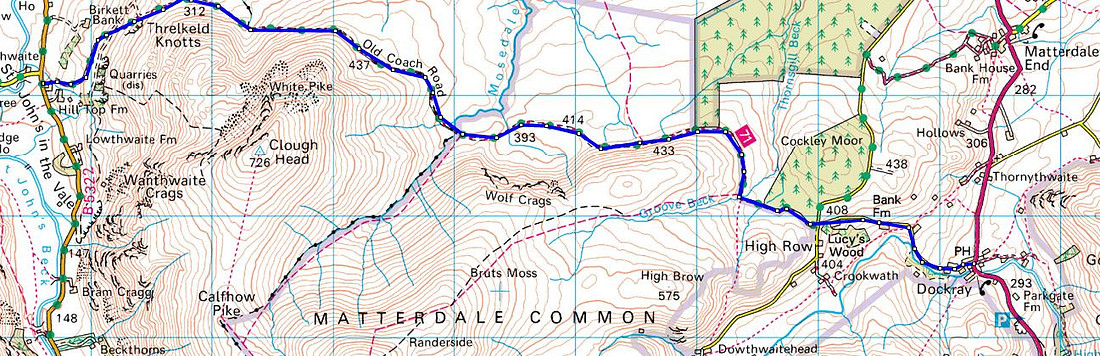


Hats off to the Herdwicke...


To kick off the year here's a quartet of shots taken over the Christmas and new year period, a little brightness between the rainstorms!
Cheers Jules...


Ashness Bridge, this morning...

Cheers Jules...
]]>
Nothing at all wrong with going over images again in post processing and trying to come up with something a little different, as someone who pedals his wares over the interweb, I know that sometimes you have to inject something a little different into the melting pot just to see what comes out the other side. Much as the giant Sony Corporation have done with their DSLR's and CSC cameras over the last few years, sometimes you have to throw a lot of mud at something to see what sticks! I'm not a giant corporation but I do realise that some times I have to experiment a little...
Anyway to cut to the chase, I've been working on an image of the washed out landing stage at Ashness on Derwentwater, Don't know why but for some reason I couldn't leave it alone, I've worked on it for a few nights, scrapping it and then starting again and again and... Well you get the picture! So last niight I thought I had got the image to point where I was satisfied that it met the criteria of being both Different (For me!) and a reasonably commercial looking image. I put it up on the screen of my PC full size and went downstairs for a well earned cuppa and a veg in front of the telly, I have got into the habit of leaving my last image full screen on the PC, so that I can gauge initial reaction from my long suffering Partner and Photo Widow.
Oft I will get "Thats a nice picture" lofted down the stairs and I use her opinion as a yardstick on whether it's worth proceeding to put the image on the site for sale. However, this one did not get that far, I returned upstairs after a short while as something was bothering me about the image, something familiar something not right and as soon as I popped my head around the office door I realised what it was...
THE PITFALL?
I've damn near made, THAT IMAGE! Haven't I? You know the one?
Oh the cliché!
Back to the drawing board then...

Rant over!
Suffice to say we are flooded again and my home town is a bit of a mess really, I went for a wander around to review the damage yesterday. Bear in mind the flood waters have receeded a great deal now and the actual levels of the day before were far, far worse than they are now. The mopping up is now taking place all across Cumbria and Lancashire, with roads washed away and virtually no railways to speak of it's going to take a while to get us back on our feet again but rest assured we will, such is the reslience of the people from Cumbria and Lancashire.
I'll not say enjoy the pictures as there is little to enjoy but I'll put them up here as a reminder of what we are currently trying to overcome...


I usually like to kick off my Winter galleries with some snow but this year Mother Nature had other ideas!
I took all of these over the last week or so, culminating in a visit to Aira Force and Ullswater on Friday, unfortunately it seems this was only the "starter" and the "main course" would arrive on Saturday, bringing with it chaos, disruption and heartbreak.
The floods of 2015, are ongoing and no doubt you have been watching the news, "Terrible" or "Devastating" are too small a words to describe, it will take a good while to recover from this one I'm afraid...


Well like this! It's well worth a wander over to Braithwaite or Portinscale to have a wander along the road which, leads right under Catbells nose and around to Grange, a nice easy walk, with brilliant views, and easy on the authors peg leg (foot)!


]]>


]]>
Ashness landing is also underwater, the path around the Grange end of the lake at Manesty is impassable unless you have flippers and the link from Barrow bay to the Kettlewell car park is under about six to seven feet of water!
All pretty bad but the waters are now receeding and the rebuilding can begin in ernest very soon, if your on the way to the Derwentwater area, please take care and try to support as many of the local businesses as you can.
With that said on to a gallery of captures from Monday the 16th of November...


]]>
The falls at the rear of the hotel are the most visited attraction but there is much more to Lodore than that...
Lodore Falls

There are several walks to the top of the falls and you can then traverse along the Watendlath beck, which twists and turns above Lodore with varying degrees of white water and golden leaves at this time of year!
Next to the hotel

A selection from Watendlath beck


When you get back to the bottom your pretty much at another favourite of mine in the Derwentwater area, Barrow bay, on a good day, you get lovely views of Skiddaw and in the distance Blencathra but on this day it was persisting down and you could not see to the other side of the Lake, the rain was so heavy! Two things I took away from this day were, my waterproof jacket... isn't! However my X-T1 and 18-135mm are!
Ashness Landing

Cheers Jules...
]]>Quick walk on my recently crocked leg around the Catbells side of the lake last sunday! Leg sore, got wet but the views were totally worth it!
Enjoy!
Jules...


]]>
Been a while, so lets get some stuff out of the way as in the "life" part of the title...
Photography despite being my passion has had to take a bit of a back seat this last year or so, the reason? Well my Mum actually, she's now 94 and needs some help on a day to day basis, so I've stepped in to help out as much as I an allow which means there has not been much time for any photography but with that said, all is not lost!
I do get out sometimes! However due to my sciatica giving me some troubles I have to be oh so careful because my ankles keep turning over at will and on a high fell it's not a great idea. I'm damned if I'm going to end up being a statistic because of it, or for me much much worse, (Think embarrasssing!) to have to trouble the already overstretched rescue services to lift me off somewhere because I've fallen... again!
Like I say I do get out now and again but have to take it easy and follow easier trails nowadays, so we come to the "old familiar" part of the title, Derwentwater, I do very little photography around there and it's just that, "familiarity breeds contempt"! I get the bus into the lakes and every time I do I end up in Keswick, nothing wrong with that but it pretty much is the touristy capital of the Lake District N.P. I'm always just passing thru because of the crowds and off to somewhere less well trodden, in search of that illusive "keeper" shot. Well I had a few hours to spare the other day and it being Autumn and all, I had a bit of a sally around the Keswick side of the Lake from end to end, here in no particular order are some of the results...
And the last part of the title? Trials, well yeah it's never going to make you rich but that doesn't stop me loving it!
Jules...


]]>
Broke as usual! Didn’t even have the bus fare to the lakes, so I was sulking to tell you the truth, Stuck at home in Carlisle Waahhhh, not fair! (Spoilt Brat!)
Well yesterday was a beautiful day here in Cumbria, decided to just take a walk up town for a Deek aboot (Look Around!), and just for the sake of it, I took the Camera along.
I sat for a while watching the tourists, going about their touristy shenanigans, generally just looking around and taking pictures, so I thought I’d have a go too! I was really quite pleased with the results! I guess Hell ain’t a bad place to be… On a Sunny Day…
Enjoy!
Carlisle Castle

Carlisle Cathederal

Rickerby park

Tullie House

Red Door Tullie House

Cheers Jules…
]]>Or how to get a better shot!
The slate Mining caves above Rydal water are a favourite of mine in inclement weather, the rocks take on all sorts of great colours when they get wet, and as an added bonus you get to keep pretty dry, as long as you’re in the caves!
I frequently visit this one, and this is the kind of shot I usually come up with, today shown in moody B+W, looking through the cave to the sunlight beyond.

However I have always thought I could do better here, and on this particular day, Ann and I sat and had our lunch here and Ann (My long suffering Partner and Photography Widow!), had just got a new mobile phone was engrossed in getting it set up to her liking, so I decided to do a quick explore…
Since there was an opening at the rear of the cave, I thought I’d see if there was a way on to the roof of the structure and indeed there was! A little scramble and suddenly you get this, which I hope you’ll agree is a much more dramatic scene, the trouble is I cannot decide whether I like the colour or the black and white version!
So the moral and the lesson, is? Don’t settle for the standard shot, always try to get a better angle but please do not endanger yourself in doing so!
Here endeth the sermon…


Cheers Jules…
]]>
Leave the car park through the small gate at the far end from the road, turn right onto the footpath that runs alongside the River Cocker and follow it all the way to Crummock Water. WARNING: this path can be quite slippery, if it is, follow the forest track instead. You will end up in the same place which is: Lanthwaite Fish Ladder and the source of the River Cocker at the foot of Crummock Water. Take in the view it’s magical!

Grasmoor on the left and at its foot the little boathouse, put into some real perspective! Fleetwith Pike seemingly rising up out of Crummock water itself (In fact it is at the other end of Buttermere!)
From here, cross the bridge next to the Fish Ladder and follow the track running along the right-hand side of the Lake under Mellbreak, right up to Scale Bridge, then turn left into Buttermere. Simples!

WARNING No2: Gets boggy in wet spells and a little rocky, you are traversing the foot of a very large rock (Mellbreak) after all, there are run offs all over the place and boggy bits in abundance, the route therefore is an ever changing one but if you follow the route you can see you’ll be fine and as long as you stay by the Lake shore you cannot go in the wrong direction!


Don’t forget to have a look at the Iron Stone (Rannerdale Knott’s Mini Me) and Low Ling Crag on the way …

So anyway, last weekend I thought I'd better give my legs a bit of a stretch before having to do the Hospital thing, due to the fact that I am the personification of "Organised Chaos", we arrived late in the afternoon and it was hot, so this was probably not the best walk for an Asthmstic like myself but Hey ho!
From Grasmere: Start the walk by getting onto the Easdale Rd next to the Heaton Cooper Galleries and walk straight on past Goody Bridge Farm, then instead of crossing the little Bridge across the stream beside the Rd (Tis is the way to Easedale Tarn). Bear right and Keep going across the meadow following the narrow paved road to Lancrigg, where you enter a more sheltered, wooded area with the start to the walk thus.
Phone Pic Apology:

You soon hit the trail which is stepped and therefore quite hard up until about 250m.
However...
Great views over towards Easdale Tarn and Langdale!
After this it starts to flatten off into more of a traditional trail, which dog legs right then left and over the the top via the Lion and the lamb to the Howitzer, When you get to the Lion and the Lamb, pause and take in the view, on a clear day you can see Rydal Water, Grasmere, Coniston Water and Windemere from here!
It's a good trail, you can't miss it and it's difficult to get it wrong! Return simply by reversing the Route...
Caveat: If you have any sort of breathing difficulty don't do it on a warm muggy day like I did! The first 250m up the trail on the stepped part of the route is very hard on the lungs, it's steep, take little steps and above all, take your time!
Lake Views, Lion and The Lamb and the Howitzer
Cheers Jules...
]]>
Whitehaven to St. Bees
On the right day this is a great walk!
Start out at Whitehaven Harbour and make up the steps behind "The Beacon", from the top of "Tom Hurd" Rock you get a great view of the harbour and town.
Whitehaven Harbour

Looking back along Saltom Bay

Then it's on past Haig Pit and onto Saltom Bay, the site of AT Saltom, the World’s first deep sea mine, with Haig in the background and the harbour there is a bit of history in view here so take a moment to reflect...
Now onto the cliff path proper!
There are some parts of the path that get close to the edge along here, not for the faint hearted!
Moving away from Saltom Bay and towards North Head gives some great views looking back at Criffel, and on a clear day you can catch sight of some of the larger Solway Windfarms out at Sea!
Gorse overlook Saltom Bay

Colourful view of Criffel from North Head

Moving on from North Head brings us to the Lighthouse of the same name and in the late spring in this area you can enjoy some beautiful carpets of Bluebells on the Sea Cliffs.
Sea Belles

And finally around St Bees Head and South Head brings us down into the lovely town of St Bees
Seen here with the Spectre of Sellafield in the Background
St Bees

Cheers, Jules...
This is one of my favourites when we have a few hours to kill in Keswick, and there’s no real walk planned for the day, it gives great views and a bit of a workout at the same time!
It begins with an ascent of Walla Crag: a brilliant viewpoint over Keswick and Derwentwater. There then follows a descent to Ashness Bridge, thence Watendlath village.
From the top of Walla Crag

View from above Springs Farm

From Keswick Moot Hall, walk into St. Johns Street, and on to St. Johns Church, the road then becomes Ambleside Road. Just before the road begins to climb steeply turn right into Springs Road (0.5 mile) Walk to the end of the road to Springs Farm, after crossing a small bridge at the entrance to the farm the route bears past a stable block and then follows the course of Brockle Beck. Cross the bridge up to a gateway giving access to a roadway about a mile away.
Turn right and walk to the end of the road where another footbridge crosses Brockle Beck. On the other side is the start of a very distinct path which follows the line of a stone wall to the summit of Walla Crag. The summit cairn is a few yards behind the wall getting on for a mile away (you’ll curse me here as the walk up Walla is very steep and makes your lungs burn! Well mine anyway since I’m chronically Asthmatic! ). From the summit cairn continue South to the stile, take the left hand branch which follows the fellside (KEEP TO THE MAIN PATH!), which leads over Falcon Crag and down to Barrow Beck which you should follow downstream to Ashness Bridge.
Cliche Alert

Derwentwater

Better Half crossing Barrow Beck...

Follow the road from Ashness Bridge up and over the hill to Watendlath, (Easy). Or you can walk on the road for about ten to fifteen minutes, until you reach a gate which leads to the path thence a footbridge over the aptly named Watendlath Beck, giving access to the path which follows the course of the beck to the village about two miles away.
Watendlath Beck

Last shot before the incident below!

Reflection in Watendlath Beck

Well it would have been two miles away but not on the day in question! As we ambled along Watendlath Beck path heading towards the village we couldn’t help noticing some Highland Cattle on the beck shore, My Partner remarked “One of them looks pretty big!” I paid no heed as I was sizing up a Picture and everything goes out of the Window then of course! “Jules it’s a Bull!” she said. Then I looked up and sure enough it was a thousand or so pounds of Highland Bull, Horns and all staring at the two of us and scraping the ground with its front hooves! We beat a slow and deliberate but as hasty as we dared retreat back to Ashness placing a makeshift warning on the gatepost, and instead of Ice Cream at the Cafe in Watendlath, had a few nerve steadying Pints in the Borrowdale Gates Hotel!
Cheers Jules...
]]>This is a familiar walk with a twist, the twist being that it's actually better to take the (High) Road than the Trail for once! Here I've used Photo's from a winter and a summer walk for illustrative purposes but it's all doable in one afternoon
We Start at Honister slate mine...and take the road to the top of the Mine instead of the Trail to Haystacks/Great Gable, the reason for this will become apparent in the next Photos...

You see if you take the trail you don't get to see these magnificent standing stones at the top of the road which command a lovely view down to the Honister Mine Centre itself and the Fells beyond, got to be worth the detour! (Well for me anyway!)
As we get to the very top of the Mine we come across the odd sight of this old Wriggly Tin Shack seemingly holding back a mountain of slate!

Next it's around the bend in the last Pic to Dubb House and the point where the Trail to Haystacks and the road meet, so we’re back on track!

To the left of the House you can see the trail rising towards Innominate Tarn and Haystacks but first we go down the hill and cross the beck on the stepping stones (Rainfall permitting!)

Once across (hopefully dry!) there is a slight climb
Up towards Haystacks but nothing major, in fact it's really quite a pleasant stroll.
The view starts to open out and you can get some great shots of Buttermere and Crummock Water beyond.

Soon we reach Haystacks proper and there is a short edgy traverse around a rocky outcrop to get onto the fell itself, keep your concentration here and you'll be fine, it's easy enough in the dry but could be tricky in the wet! The summit is only a few hundred yards from here, (With its own Tarn) you can choose to head for the top or like me go back towards Innominate Tarn, for some watery shots involving some of the smaller and unnamed bodies of water that abound here, I tend not to go to the top of Haystacks these days as it's usually quite busy and not too conducive to Landscape Photography for this reason!

Then it's just back the way you came to await the Bus at the Slate Mine to whisk you off for a well earned beer in the Bank Tavern in Keswick (if you want!)

Cheers Jules...
]]>I really love this walk but it's not often that I am fit and able enough to do it! From the Youth Hostel at the top of Honister Pass about face and with the Hostel at your back head on up... And up and up! Fair old climb up to the large Cairn at the top of the Hill and you've reached Dale Head at 753 metres, Well done! Take in the view it's all worth it!

You can see right down the length of the Newlands Valley and on to Skiddaw and Blencathra in the distance, Brilliant!
Now make a right turn and follow the short ridge path (Hindscarth Edge) heading towards Robinson, this eventually becomes "Littledale Edge", there is a cruel twist here as you have to descend about 200 metres and then immediately climb back up them again to reach the Summit of Robinson. I won't kid you this makes your legs ache quite a bit and is not for the faint of heart! Eventually though the climb eases off and you can amble at an easy pace up the steady but more slight incline to the Summit of Robinson, which you can see to your left just as you crest the hill.
Smile and take in the view, that’s pretty much all the climbing done!

There used to be a fairly substantial Cairn up here but it's been made into a Windbreak which whilst isn't quite as iconic is a lot more useful! It's exposed up here and any break from the wind is welcome. You get a great view from here of Buttermere and Crummock Water and you can make out the Solway Coast on a nice clear day as was the case here.

After this it's all quite literally downhill to Buttermere Village, the path continues down and ever down across Buttermere Moss and High Snockrigg, luckily the views just keep on coming!
Eventually you round a corner on the path which reveals the Fish Inn (most welcome sight!) and the path meanders down the hill albeit steeply toward Buttermere Church. (Be careful, I've tumbled here! It really goes for the knees!)
Done!
Into Syke Farm for Ice Cream (must be tried!) or retire to the pub to regale of your Mountain Conquests.
Cheers Jules...
]]>
Angle Tarn is a very pretty little tarn on a natural shelf, near Patterdale. It’s very popular for wild campers, and its close proximity to the Coast to Coast path means it is frequently visited by walkers.
From the cottage (when you’re there you'll know what I mean!) turn left and then turn right over Goldrill Bridge. Follow the road to the end and round to the left. Turn right through the gate up onto the fell and head up the path to the right towards Boredale Hause. The path splits after 100 yards or so and you can take either path up to the Hause. We prefer the top one on the way up and the lower one on the way down! (We hate coming back the same way!) Continue up until you reach Boredale Hause.
From Boredale Hause head off to the right following the path over the small beck. Follow this all the way to Angle Tarn, take a path across a small bridge half cut into the fellside and half made of railway sleepers, looks and sounds more precarious than it is but it's well worth it as from there on you are afforded some lovely views of Helvellyn and Catseye Cam to name but two! Either way you go you end up in the same place so there is little to worry about here (No getting lost anyway!).
Major landmarks visible on the horizon are, from memory, St. Sunday Crag, Nethermost Pike, Helvellyn, and Catstye Cam.
Quite a selection!
Walking the Whitehaven to St Bees Coastal Path in reverse!
Or, St Bees to Whitehaven, Walking the Coastal Path…
My Partner and myself walk this path at least twice a year and always from the Whitehaven end but for a change we thought we’d walk it the other way around, photographically speaking for me, it was like a whole new journey!
Most of the views I recorded this time around I have previously missed, just because I was going the other way
So onward!
From the promenade join the Cumbria Coastal Way and follow it to cross the footbridge over Rottington Beck. The path climbs above the cliffs to South Head.
Cross the small stream and continue following the Cumbria Coastal Way as it climbs along the cliff top path to North Head, as a small diversion you can visit the lighthouse that tops the North Head, it’s only a couple of hundred yards added to your journey…
Continue on the path and follow it down to Fleswick Bay...
Beyond North Head the cliffs swing north east and the path follows them along an undulating course until it descends at Saltom Bay.
Continue to follow the Cumbria Coastal Path past South Beach to Whitehaven Harbour. Passing the Haig pit Museum and Saltom undersea Mine which can be viewed from the Cliff Top.
Great walk on a fine day, and the moral is? If you want something to look different view it the other way around!
Cheers Jules...
A personal review of the Fujifilm X-T1
Firstly, this is a very personal review of the above Camera that I was lucky enough to try out for a few weeks this spring, the views expressed are my own and pertain to me and me alone. Always remember that, your mileage may vary considerably from mine…
Ok then, what are we talking about here, let’s start with a couple of piccies of the beastie in question, instead of a detailed run down or spec sheet which is available pretty much everywhere on the internet, since this camera is oh so hot at the moment!
http://www.fujifilm.com/products/digital_cameras/x/fujifilm_x_t1/
So then we are looking at a CSC, (Compact System Camera) with a huge lovely viewfinder, a flappy screen an alloy Uni-body which you could mug people with! Looking pretty good then so far…
Disclaimer: I buy my kit, I have no affiliation with any Camera company, if I did I would sing their praises on the highest level as I’m skint but an out and out capitalist!
Onward...
Out of the box impressions
Very good, lovely build quality all the knobs switches and dials are clearly labelled and stiff but not too stiff, some lock others do not, there has been a lot of internet chatter about this and even a kick-starter campaign for an ISO Dial cover to obviate the lock but generally I have to agree with Fuji’s choice here. http://isounlocker.com/
I don’t spend a lot of time polishing my camera’s and tend to unbox them and leave then leave well alone until the battery has charged before I make any rash decisions as to whether I like them or not. 2 hr, interlude and were charged!
Switch on for an almost instantaneous start up and were ready to go, first look thru the EVF (Electronic Viewfinder) is a revelation, clear bright detailed and big, like a Full Frame DSLR, lovely.
The clicky dials on the top plate tug at the heart strings a bit and I can’t help but feel the designers of the Nikon Df, (Doesn’t function) http://imaging.nikon.com/lineup/dslr/df/ Should be forced to spend a bit of time at the Fuji design labs for a refresher course (Just Sayin).
So off out for the first bash in the field, shooting Jpeg and just generally having a play, all good fun, and really just shooting Landscapes for fun, rather than my portfolio. Using neutral density filters like I do a great deal is marvellous with a CSC, as the EVF ups the gain when you put on a ten stop filter and you can still see what you are doing unlike a DSLR when it all goes dark in there! Despite all the fun I get the first irk…
After the first day in the field I am left with a painful cramp in the right palm, takes me a while to figure out what it is but in the end, it’s down to the size and shape of the rear of the camera, I’m involuntarily holding the damn thing so tight I’m getting muscle spasms in the palm area of my hand, leaving my poor right paw like a claw! It’s not a DSLR, it feels different, and it takes getting used to, the other thing was every time I picked the X-T1 up, I hit the FN1 (Function) button on the front of the camera blocking out the viewfinder with the AF options instead of a view of the shot I was lining up in my head, to the rescue came the MHG-XT grip plate. http://www.fujifilm.com/products/digital_cameras/accessories/camera_cases/#handgrip One of several now available for the X-T1, helped relax my grip a little and gave my forefinger somewhere to rest that wasn’t directly on the FN1 button. The pain in my palm still has not completely gone, I may need surgery but is far more manageable than before, so the moral is… Get a Grip! Getting back home, I was excited to see the results from my new toy (To call the X-T1 a toy is a bit cheeky it’s a very serious camera!) Second problem and for me the killer, I am a Landscape shooter and every shot I took on my first outing was of Bluebells and other vegetation, I blame myself for not doing enough research here because the X Trans array on a Fuji Sensor apparently, (No apparently about it!) has real problems with Lightroom and you guessed it, vegitation! I’m an avid fan of Lightroom, I have invested a lot of time effort and indeed money on Lightroom and various filter packages for my post processing workflow, it did not take me long to see that I had a real problem here. I’m not going to delve into it too much here but it’s all over the internet if you look hard enough, and there is some pretty hurtful ranting and raving going on, on the same subject, so let’s leave it there shall we? It appears to be partly the de-mosaicing of the RAW file in Photoshop and Lightroom and the way the files are sharpened. A lot of time spent searching the net brought me here.
http://blog.thomasfitzgeraldphotography.com/2014/02/updated-x-trans-sharpening-presets-lightroom/
The man is a bit of a genius and has forgotten more about post processing than I’ll ever know, hats off to Thomas! His settings mitigate the problem somewhat but never take it away entirely and I’m not investing all over again in a new workflow, just for the sake of one camera, in the end that was the killer for my relationship with the X-T1 but I hung in there for around two months trying to learn other convertors and Processing Software but in the end I just don’t like them, I like Lightroom and thats that really!
There is one other problem that has been quite well documented regarding the X-T1 and that is the rear four way control D-Pad. It is just a tad too small and a little squidgy, you have to take the camera away from your eye in order to ensure that you have operated it successfully, with the camera to your eye, you miss changing focus point or whatever you have the controls configured to, just a little too often, just something to be aware of, I contacted Fuji UK about this and the grip problem, this was their response…
"Thank you for contacting Fujifilm UK, I am very sorry to hear of the problems you are having with your new camera. I think the best thing to do is to get the camera in and get it checked over, and we can ensure that you buttons are as good as they can be. I can confirm that we do not have a 'new' set of buttons like forums suggest but we can check that they are aligned properly etc.
I hope this information helps."
I have to say throughout my ownership of the X-T1 Fujifilm UK were nothing less than brilliant, there are plenty of Camera companies out there that could learn a thing or two here! (Nikon are you listening?) Well no their not but onward…
So despite what everyone seems to think there is no new magic set of rear control buttons for the camera but there must be a little room for jiggling the alignment in order to get the best fit, if you’re worried give Fujifilm a call, they are fab!
I have deliberately got the bad bits out of the way so I can end this ramble thru my thoughts on the X-T1 on a high, if you buy a grip there are only two things wrong and only one with the camera! The other I suspect lies firmly in the court of the Adobe Lightroom developers! So in the end the only thing wrong with the Fujifilm X-T1 is that the D-pad is a little small! Lets get that into a bit of real perspective, the camera is small. it's trying to be small, so maybe you need to compromise just a little? It's like buying a Fiat 500 and then complaining because it's not as roomy as a Range Rover! Everything else from the lovely viewfinder, build quality, autofocus (nearly on par with a Pro DSLR!), metering are truly top class. The real tour de force however is the colour, it's beautiful, like nothing else I have ever seen, for this alone you owe it to yourself to try a Fuji!
Caveat: You’ll need a few batteries as basically your using live view all the time just like any CSC, it’s a bit heavy on the juice!
So in the end, Nearly Fuji Nearly, the deal breaker for me was the compatability with Lightroom or rather the lack of it, I'm sure that will work itself out but I need to be able to work my files now, not sometime in the future. However in the future It will not take much for me to give up DSLR’s for one of these beautiful little CSC’s, the time of the DSLR is nearly done, maybe next time Fuji…
Cheers Jules...
We'll review as regards to the following, in that order because that’s the order in which I wrote it down.
Build Quality
Useability
Features
Image Quality
Price
First a Piccie so we know the wee beastie we are dicussing here!
1: Build Quality: Solid without being hefty, fits the hand "Like no other" Oops Sorry couldn't resist! Very comfortable to hold for long periods of time, everything fits flush. Just look at the tolerances on the flash housing, It's been very precisely put together, the one weak point could be the tilt/swivel screen, I keep trying to bend it the wrong way but it seems solid enough. If you go into a fire fight with the screen out you deserve what you get! Viewfinder will take some getting used to. It makes some odd White balance choices in low light and gets very grainy here too but it's an EVF and what can I expect, I will try to embrace it. Lens is quite nicely put together but I'd have liked to see a bit of metal in an F2,8 SSM. The Lens is very sharp wide open, showing lovely detail and Contrast, it has auto Lens correction in the A77 and so may not perform quite so well on older APSC Bodies, please be aware of this if you are not buying an A77 kit...

2: Usability: Very approachable despite there being a lot going on here, spent a day walking around the English Lake District with it and it didn't make me swear once, for a new (Second time around, Ex A900) user I think that’s not a bad show, nothing I could pinpoint as bad after such a short time. Battery life whilst probably good for SLT, is not up to DSLR Standards. If you want to try event shooting QUITE LITERALLY get a Grip!
3: Features: Well ten out of ten, I'm sure there’s a Kitchen sink in there somewhere, sure I'll think of something fault it on here after more time spent but the reason I think people find fault, Is that it gives so many features and gets you thinking about so many possibilities with those features. Nothing can be perfect but I haven't seen a Camera that offers so much in my 25 Years of Photography.
4: Image Quality: I want to hate it for being noisier than my Nikon D7000 (Now for sale!) but I can't! It's the first of its kind, new wave, has an incredible amount of detail in those files at low ISO's and performs very well up to ISO 1600, Where like my A900 did it drops off a cliff! It's 24Mp for God’s sake in a sensor half the size of my A900, yet it's as good or only a translucent Mirrors difference away right until ISO 1600. It loses a point for the JPEG engine which is not that big a deal to a Landscaper like me BUT the RAW's show how good it could be... Enough Said.

5: Price: Tricky as I'm still unsure as to where it fits in, If it's meant to be an enthusiast A700 replacement and so, 7D/D300s class then it's very good but if that’s where the A99 will sit (Do we know?) then it's a D7000 class and therefore a bit on the high side, even given the amount of technology involved. The price has to be attractive and Sony can't just rely on their name here.
Conclusion
So far, from the Web buzz the biggest fault seems to be that JPEG Engine, hopefully some more firmware will sort that out, come on Sony, you know you want to... Overall I'd give it a Nine out of ten, and I'm very stingy with my scores, ultimately it's a Camera that offers a huge amount of creative potential in an easy to use and approachable package, the Multistack image modes for low noise and twighlight/HDR are worth a special mention and lift Jpeg shooting a notch above what is traditionally thought possible.

Bravo Sony!
Cheers Jules...
]]>The problem is for a Landscape Photographer, that extreme wide Lenses make any background fade into the distance as to be almost invisible and any foreground feature can end up overpowering the view.
The problem is always one of balance and it is difficult to achieve, enter the Sigma 8-16mm F4.5-5.6 HSM. I have been determined to learn how to use these wide Lenses and currently they don't come any wider than this one. You can get an enormous amount of Real Estate in your Viewfinder with a Lens like this or you can get up really close to make a particular feature stand out.


http://www.sigma-imaging-uk.com/lens/wide-lens/8-16mm-f45-56-dc-hsm
On to the Lens in practical use…
The big bugbear of a Lens with such a protruding front element like this one does is the inability to use filters popular with Landscape photographers (ND/Grads/Polarisers etc) but with modern Cameras (I'm using a Pentax K5) you have a lot of dynamic Range and with judicious exposure discipline you can usually manage to capture a full range of tones, if not you can always bracket exposures and overlay them later in third party software. Colour can be tweaked to your heart’s content and a lot of Camera's are now starting to address Low ISO as well as high, my K5 goes down to ISO 80 and the new Sony A77 as low as ISO 50, Making up somewhat for the lack of a filter thread on your 8-16, if you can't live without them and there are times when nothing else will do! There are some aftermarket filter holders that will work with your 8-16, however they are not cheap and you have to really ask yourself if it's worth it? Only you can answer that one, you're on your own there!
http://www.formatt.co.uk/showimage.aspx?id=wf3000000682
The Lens is chunky, solid feeling with a built in metal hood, the Lens cap comes in two parts, a Lens cap??? And a large metal ring that slides over the petals of the hood, treat them as one part, leaving on the metal ring will only lead to wild vignetting! In use you soon get used to this and it just becomes natural to take off both parts at once, now onto the good stuff.
Sharpness, this lens is very sharp indeed! Right across the frame, I'll direct you to a formal review of the Lens by experts and better Men than me!
http://www.lenstip.com/index.php?test=obiektywu&test_ob=246
Distortion is also very well controlled for a lens with such a wide field of view and it's resistance to flare in direct sunlight is remarkable for a Lens with such a Bulbous front Element!
For myself as a Landscape Photographer, in the end the real beauty of this Lens is that allows me to bring into perspective large sweeping panoramic views in a way I have never been able to do before, and to cap it all off it's also a lot of fun! Top Job Sigma!
Easily my favourite Lens in my current bag of tricks...
Hope you enjoyed this less than technical review from someone who really enjoys his
Sigma 8-16...

Cheers Jules...
Enter the Fuji X-T1..
Pic Below: Copyright Fujifilm.
http://www.fujifilm.eu/uk/products/digital-cameras/interchangeable-lens-cameras/model/x-t1/
Now this is not a Fuji X-T1 review just an update of what's been happening lately, here at exaggerated perspectives.
So with that done on to a quick overview of my thoughts on the X-T1 and then a few of the recent captures with this beast!
First off it's solid but light, the two really just don't seem to go together but it is, around half the weight of the Pentax K3 but just as solid in the hand. Also I have found during the last three weeks or so with it that, there really isn't anything that it cannot do that the K3 could, the only downside to the Fuji system now as I see it is lack of Lenses but we all know they are working on it.
It is just as responsive as any DSLR that I have owned and the colours, oh the colours, nirvana!
I was lucky in that I got hold of mine just a few weeks after launch and my sample did not have any leak issues with the port covers that some samples have had, confirmed by Fujifilm UK as not being within this range I felt immediately heartened by this but all is not quite perfect. My sample has a squidgy D-Pad on the rear of the camera, because of the way the camera is designed it is difficult to operate the right hand quartile due to the proximity of the thumb grip, and It had some sensor dust on the APSC sensor but it came away with judicious use of a "Giotto's Rocket Blower". I left it there for a bit because I just couldn't put it down and that brings me to the real plus point of the X-T1.
Caveat: Over the last six weeks i have gotten used to the D-pad and my muscle memory seems to kick in here, I am getting very few "Misses" when operating the D-pad now, and Fuji UK tell me it is quite within spec and that THERE IS NO MYSTICAL NEW SET OF D-PAD BUTTONS OUT THERE! Right you've been told! Man uo and you'll get used to it!
I REALLY JUST DON'T WANT TO PUT IT DOWN! (Did i mention that already?) It has re-ignited my passion for Landscape photography and I want to be out there every waking minute with the X-T1! I can forgive it a little dust and even the D-Pad issues (Though I do hear that newer samples have been improved, C'MON FUJI! Don't do a Nikon, (Had a D600 for a year!) Man up and fix it, the world will love you for it!)
So far my few niggles with the Camera and calls to Fuji UK support have been nothing but helpful and informative, bravo Fuji! You are bucking the trend in UK customer support, fix the D-Pad and we can be bestest mates forever!
This is not meant to be one of those internet pieces that disses Fuji, quite the opposite, what I see in them is a company that is trying to be different and give customers what they want, not like other manufacturers who do not seem to listen to their clients/customers or are too big to care about the individual, Fujifilm Care!
For that they deserve your support and mine too for that matter! Not perfect but getting there, listening and evolving, come to think of it, I think I'm starting to evolve a bit too... Into an "X" Man!
Not going to wear my underpants outside my trousers though!


]]>
Anyway it was bitterly cold and blowing a gale (Always is!), not many signs of spring neither around the quarry nor in the boulder field on the valley floor below.
Cheers Jules...

All this walking the fells with a heavy DSLR and big F2.8 Lenses has got to stop!
And so it has…
I have turned to the Dark (Wild) Side and eschewed my DSLR for a Mirror less Camera, a Fuji X-T1 to be exact…
The feeling of liberation is incredible, even in my currently dilapidated state I feel the benefits, it’s taken me about a month to get rid of all the paraphernalia, of large rucksack Camera bags angle brackets grips and filters but I’m finally there!
Even in recovery from surgery I can still manage a hobble up a hill, as I did last week in my first outing with the new Camera up to Lily Tarn near Ambleside. The Camera and my current kit of three lenses weighs less than my old Camera body on its own, I just know my knees will eventually thank me! Plus my Ankles, my back, my asthmatic Lungs, my Arms, my… Well you get the picture!
Speaking of which here’s a couple of Lily tarns surroundings just a stone’s throw from Ambleside and a very pleasant and quiet little walk it is too…
In the last picture you can just make out Rydal Hall in the centre background, detail is great from the new Camera and the colour is amazing with no Post Production work at all.
“It’s not about the summit but the journey”. A phrase I’ve often heard uttered by those armchair warriors that have never In fact made it to a summit! However, Easedale Tarn proves that you do not have to get to the top to enjoy true Lakeland. Slap bang in the Centre of the Lakes the tarn is quiet and usually pretty peaceful, Certainly in comparison, with the relative chaos encountered in Grasmere! Easedale Tarn is set in a deep valley, scarred by a retreating glacier roughly 20,000 years ago and has left an excellent selection glacial erratics scattered like picnic tables right around the Tarn.
Start the walk in Grasmere, and follow the Easedale Road, heading northwest out of the village. At the sharp right hand bend in the road just after Goody Bridge take the Left hand path over the twee Slate bridge crossing the Easdale beck. Head towards Brimmer Head Farm, this eventually takes you to Sourmilk Gill, which is a belting sight when there is plenty of water in it! And up we go!


So LUNCHTIME!
Then a quick scoot from the end of Eadale tarn round the corner to Coledale tarn


Now for the hard bit!
Up the Steep trail between Belles Knott and Eagle Crag and up to the Pile of Stones…

After which it’s just a half Hour meander on some pretty boggy and indistinct pathways to Stickle Tarn, which on this occasion had managed to cloud in… S.N.A.F.U!

Turn around and go back until you reach Grasmere again or drop down into Langdale for a few swifties in the Dungeon Ghyll Pub!
Erm, guess which I did?
If you do decide to go back please make sure you don’t wake the Dragon!

Enjoy!
Cheers Jules...
]]>Anyway got out to Ambleside and did the short hop or is it hobble to Loughrigg and back via the terrace of the same name, as I said before I have lived here all of my life but in all of that time I have never seen clouds as black as those I witnessed yesterday...
1: Snow Capped Lingmoor from Loughrigg Tarn
2: Sunspots, Grasmere from Loughrigg Terrace
3: Bible Black, Grasmere and Dunmail Raise from Loughrigg Terrace

So we just had to drink all our friends beer and eat all their food, ho hum!
All I managed to do work wise was in a brief two hour window where it did not bucket down, when I walked down to North Queensferry and did the obligatory Forth Bridge cliché shots, so here they are in all their glory!
One extra from the journey home, from Calton Hill ooking down on Edinburgh via the Dugald Stewart Monument...
What a Tourist!
Cheers Jules...


I hope it's better where you are!
The weather has been so bad up here in the lake's for just about the whole of December, and so far January, Photo opportunities have been few and far between! I've taken my Camera out there with me on at least eight occasions in the last month and have taken only a handful of shots! Half the County seems to be underwater at the moment, the rest is covered in downed trees, got to have been one of the wettest ever?
This is one view From Elterwater looking over to the Langdale Pikes between downpours...
Shot was taken around 1 P.M. By which time the sun is already dipping behind the hills casting some long shadows and it's getting pretty warm, at least the light is! I shoot on "Natural" so to keep a good dynamic range but the colours are quite muted, I tried to bring them back to what they were at the time. Other half reckons that it's about right and she, is of course right about absolutely everything! I used a soft grad to hold the sky back so I could get the sunlight hitting the reeds without losing the glow above the Pikes, just got back into using grads much to the other half's disgust as she can't see why it takes me soo loong to take a picture in the first place. "You reckon you have the best Camera out there! Why do you need to put more things on the front of it then?" To be fair on her, I had watched a big rift in the clouds approaching from behind for about fifteen minutes, I hoped it would cross the sun and do something to liven things up, which it did...
I have been called out on at least three internet forums because the image is not natural or it's an HDR image, it's not and it's as natural as I can make it! It really does reflect the scene as it was at the time...
Just for giggles this is the only other shot I've taken in about two weeks!
White Moss woods near the Car Park and this is the Picnic area, benches submerged! Couldn't get the family of swans to stay still long enough for the ten stop Neutral Density Filter...

Cheers Jules...
]]>
Anyway, I digress form the important thing which is the Pictures! Enjoy the first fruits of my new partnership, all are available for sale from the gallery pages, many tanks for viewing.
Cheers
Jules...
Enjoy...
Cheers Jules..


]]>
Skiddaw About!
The past few weeks I’ve been itching to get out of the house and get out to the Lakes to get some pictures of the Autumnal goodness that’s out there! Home commitments, Lousy Weather, Mum sitting (She’s 92!) and a Sick cat have meant I just couldn’t get out! Until Sunday just gone, that is…
Anyway we decided to do a round of Derwentwater since the weather was so nice and a quick scoot up to the Bowder Stone via Grange but by that time, around two in the afternoon the sun was already starting to dip behind the fells and so dark long shadows and general murky blackness made us beat a retreat to the Bank Tavern in Keswick for a hard earned Peroni!
Hope you like pictures of a snow-capped Skiddaw!
Enjoy!
Cheers Jules…
Where's the Autumn? Still not here, took a walk from Grasmere to Ambleside yesterday, via Coate How and the Stepping Stones, there's still not much colour around, hope it's better where you are? Took in the disused Mine workings on the higher path to Ambleside which were strangely deserted yesterday...

Plenty of leaves on the ground at Nab Ghyll, nr Rydal but those on the trees are very much green. Took a walk along the "Coffin" route from Grasmere to Rydal and onto Ambleside, and a quick walk through the woods around Castle Crag and the Bowder Stone.
Give it another week and it'll be golden!
Cheers Jules...